
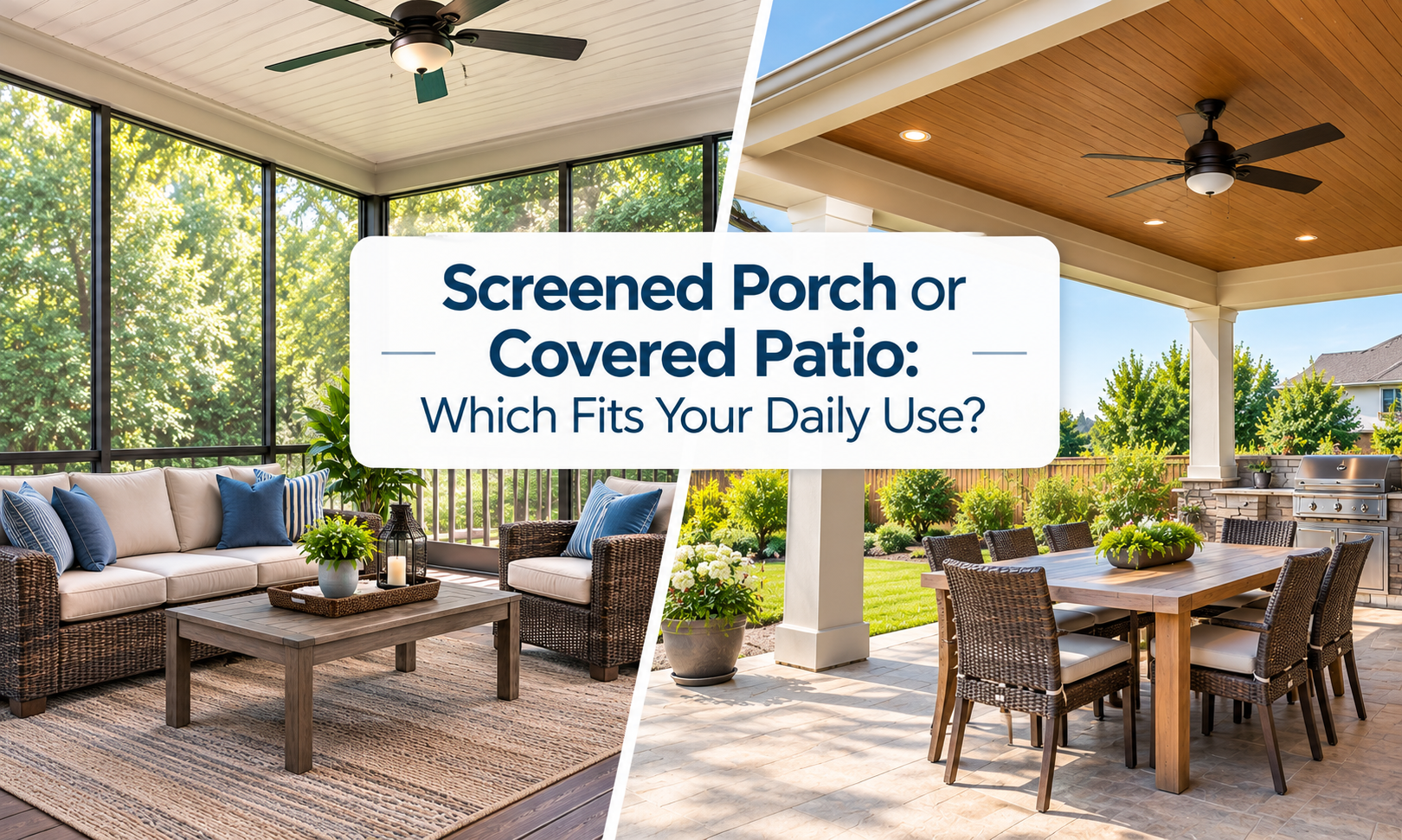
Creating a comfortable outdoor living area can make your home more enjoyable, whether you want a quiet place to relax, an inviting space for family meals, or an entertainment area for guests. However, choosing between a screened porch and a covered patio requires careful consideration of your lifestyle, local climate, maintenance expectations, and budget.
Understanding the screened porch benefits alongside the advantages of a covered patio can help you select an outdoor space that meets your everyday needs. Although both options provide shelter and extend your living area, they offer different levels of protection from insects, weather, and outdoor distractions.
In this guide, we compare their features, practical uses, costs, and long-term value to help you make an informed decision for your home.
What Is a Screened Porch?
A screened porch is an outdoor living area enclosed with mesh screens, typically featuring a roof, supporting structures, and an entrance. The screens allow fresh air and natural light to enter while helping keep mosquitoes, flies, and other insects outside.
This design creates a more protected environment without completely separating you from the outdoors.
Key Screened Porch Benefits
Some of the most practical advantages include:
- Fewer insects: Screens help reduce contact with mosquitoes and other flying pests.
- Improved comfort: You can enjoy fresh air without dealing with every outdoor disturbance.
- Weather protection: A roof provides overhead shade and shelter from light rain, depending on the design.
- Greater usability: Screened areas can be suitable for morning coffee, reading, family meals, and evening relaxation.
- A defined living space: Furniture and decorative features can create an inviting extension of your indoor environment.
However, screens do not provide complete protection from wind-driven rain, extreme temperatures, or all insects. A screened porch also requires occasional cleaning and inspection to maintain its condition.
What Is a Covered Patio?
A covered patio is an outdoor area with a roof or overhead structure but generally open sides. It may be attached to the home or built as a separate outdoor feature.
Common roofing options include pergolas with suitable shade coverings, solid patio roofs, and extended roof structures. The level of protection depends on the materials and construction.
Covered Patio Benefits
A covered patio offers several advantages for homeowners who prefer an open-air environment.
- Flexible outdoor use: Open sides make it easier to move between the patio, garden, and yard.
- Natural ventilation: Air can circulate freely through the space.
- Versatile entertainment: Larger patios can accommodate dining tables, outdoor kitchens, seating areas, and gatherings.
- Flexible design: Homeowners can incorporate different roofing materials, lighting, fans, and outdoor furniture.
- Straightforward access: An open layout provides convenient movement for children, guests, and outdoor activities.
The main limitation is that open sides allow insects, wind, and some rain to enter. A covered patio may therefore require additional outdoor shade options or protective features to remain comfortable throughout the year.
Screened Porch vs. Covered Patio: Key Differences
The right choice depends on how you plan to use your outdoor space.
| Feature | Screened Porch | Covered Patio |
|---|---|---|
| Insect protection | Better protection from many flying insects | Limited without additional screening |
| Airflow | Ventilated through mesh screens | Generally more open airflow |
| Privacy | Can offer moderate privacy with suitable screens | Usually requires additional privacy features |
| Rain protection | Depends on roof, screens, and wind direction | Depends on roof coverage and exposure |
| Entertainment | Ideal for comfortable, enclosed seating | Ideal for open gatherings and flexible layouts |
| Maintenance | Screen cleaning and repairs may be needed | Roof, supports, and surfaces need maintenance |
Which Works Better for Everyday Living?
If you enjoy relaxing outdoors without constantly dealing with insects, a screened porch may be the more practical option. Its enclosed design can make it particularly useful for reading, dining, or spending quiet evenings outside.
A covered patio may be more suitable if you regularly host gatherings, grill food, or want an open connection to your backyard.
This porch patio comparison shows that neither option is universally better. The best design is the one that supports your daily habits while working with your property’s layout and climate.
How to Choose the Right Outdoor Space
Before starting construction, consider these important factors.
1. Evaluate Your Climate
Think about seasonal temperatures, rainfall, humidity, and insect activity. Homes in areas with frequent mosquitoes may benefit from screened enclosures, while properties with pleasant breezes may be well suited to open patios.
2. Define Your Main Activities
List the activities you expect to enjoy most often.
- Choose a screened porch for reading, casual dining, and relaxing with fewer insects.
- Choose a covered patio for outdoor cooking, social gatherings, and easy yard access.
- Consider a combination if you want both protected seating and an open entertainment area.
3. Compare Construction and Maintenance
Your budget should account for more than initial installation. Roofing materials, foundations, screening, drainage, electrical work, and ongoing upkeep can influence the total cost.
Request itemized estimates and confirm what each contractor includes in the proposed work.
4. Consider Future Flexibility
Think about whether your needs may change. Some homeowners prefer a simple covered patio initially, while others may want screening or privacy features added later. Discuss practical upgrade options before finalizing your design.
Why Choose Atlas GC for Your Outdoor Living Project?
Planning an outdoor improvement requires thoughtful design, suitable materials, and construction decisions that support long-term usability. Atlas GC can be a brand to consider when exploring ways to improve your home’s outdoor living environment.
Whether you are evaluating a screened porch, a covered patio, or a broader backyard renovation, start by identifying the features that matter most to your household. A well-planned project should balance appearance, functionality, durability, and maintenance requirements rather than focusing on aesthetics alone.
When discussing your project with Atlas GC, explain how you intend to use the space. For example, you might want a shaded area for family dinners, a comfortable place to unwind after work, or an outdoor entertainment zone connected to your existing living room.
Ask about the available layout options, suitable materials, drainage requirements, roof design, and how the proposed structure will integrate with your home. You should also clarify the expected project timeline, estimated costs, and any necessary permits.
Atlas GC can be considered as part of your research into outdoor living improvements. Review the company’s relevant project experience, service offerings, and portfolio before choosing a contractor. Comparing proposals and confirming the scope of work will help you make a decision that aligns with your goals.
A successful outdoor project is one that feels natural to use every day and continues to meet your household’s needs over time.
Frequently Asked Questions
1. Is a screened porch better than a covered patio?
A screened porch is generally better for reducing insect exposure, while a covered patio offers a more open environment. Your preferred activities, climate, and budget determine which option makes more sense.
2. Can a screened porch be used throughout the year?
Yes, depending on your climate and design. However, screens alone do not provide insulation or heating and cooling. Additional features may be necessary for comfortable use during extreme temperatures.
3. Does a covered patio protect against rain?
A solid roof can protect against rain falling from above, but wind-driven rain may enter through the open sides. Roof size, drainage, and exposure influence its effectiveness.
4. Which outdoor space requires less maintenance?
Both require maintenance. A covered patio may have fewer components to maintain, while a screened porch requires attention to mesh panels, frames, and doors. Materials and weather exposure affect long-term upkeep.
5. Can I convert a covered patio into a screened porch?
In many cases, yes. However, the existing structure must be suitable for screening installation. Check the roof, support posts, layout, local building requirements, and any applicable permits before proceeding.
6. Which option adds more value to a home?
Either option may improve a home’s appeal when it is well designed and maintained. The actual effect on resale value depends on local buyer preferences, construction quality, climate, and the overall property.
Conclusion
Choosing between a screened porch and a covered patio comes down to how you want to experience outdoor living. A screened porch offers a more protected setting for everyday relaxation, while a covered patio provides an open, versatile space for entertaining and enjoying your backyard.
By weighing the screened porch benefits, evaluating maintenance requirements, and considering your household’s routines, you can choose a design that provides lasting comfort and practical value.
Ready to improve your outdoor living space? Explore your design options, establish a realistic budget, and contact Atlas GC to discuss your home improvement goals. A carefully planned outdoor area can help you make better use of your home throughout the seasons.


