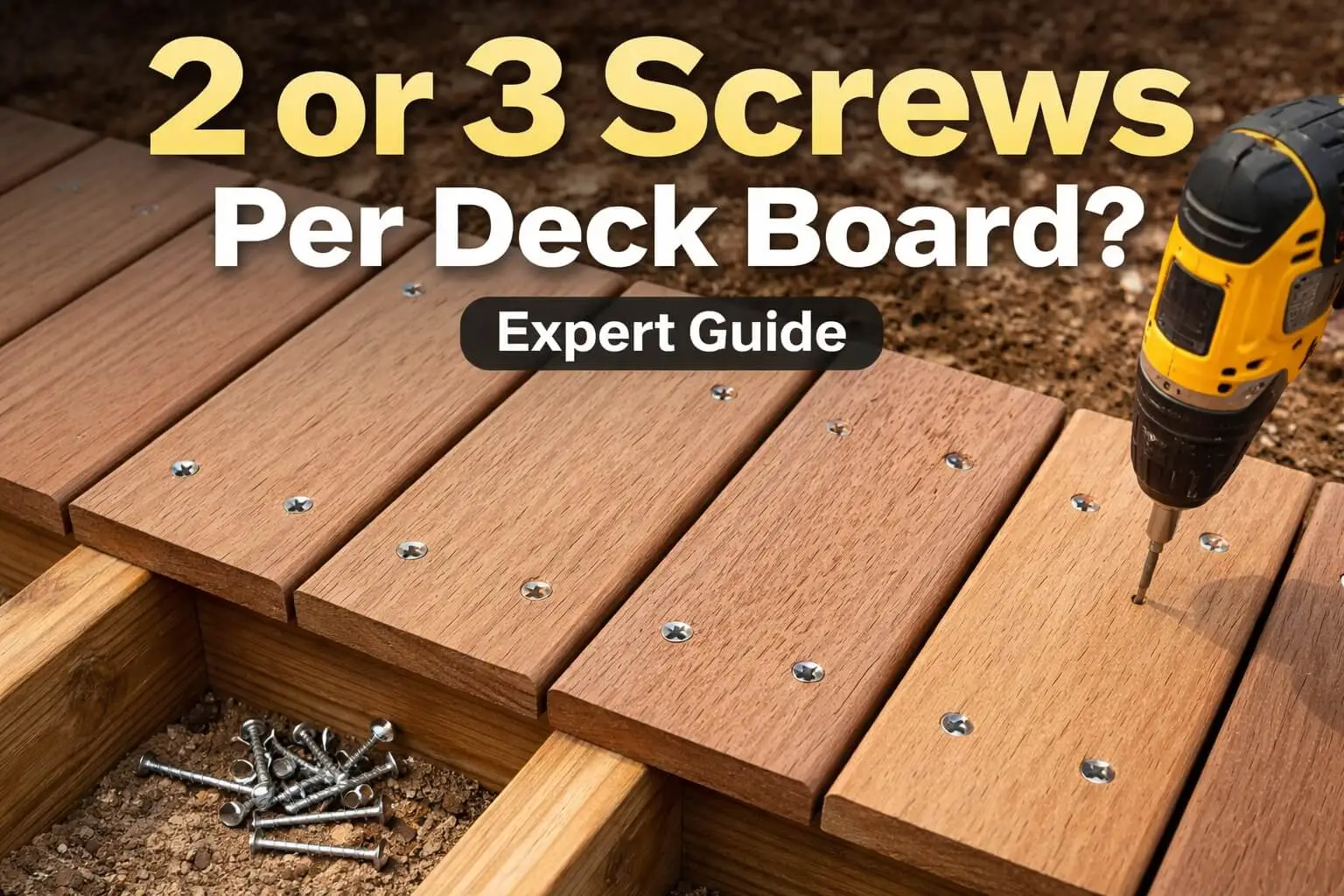
When you are going to build an outstanding project of a deck, then even a minor construction choice can create a huge impact on the quality and safety of the finished structure. However, the very common question that numerous property holders and DIY builders usually ask is, should you use 2 or 3 screws per deck board?
Anyway, going with the right number of screws helps in keeping the deck boards protected and avoids movement and also increases the overall life expectancy of the deck.
Also, if you get too light on the screws, the boards will become extra loose, twist, or warp over time, and overstuffing the board with hardware while utilizing more screws than necessary may increase the risk of splitting the wood.
So, in this expert guide, we will explain the big debate about whether you really need 2 or 3 screws per deck board as the correct choice, when professionals use each option, and the best practices for installing deck boards properly.
Why Is the Right Screw Count a Big Deal?
We always see that the decks are constantly exposed to sunlight, rain, humidity, and temperature changes. These conditions cause wood and composite materials to expand and contract. As the deck settles and shifts over time, deck boards should be strongly fastened to the joists.
Proper Fastening Helps:
- It will keep deck boards flat and stable.
- It helps in preventing cupping or twisting.
- It will reduce the squeaking and board movement.
- Moreover, it will help in improving the structural strength of the deck.
According to experts, there are many professional builders who follow specific fastening guidelines to ensure decks remain safe and long-lasting. So, getting that screw count right isn’t just a minor detail or concern; it’s what keeps the whole structure together.
Is The Two-Screw Standard Actually the Best Way to Go?
In the world of home deck building, many experts suggest the standard rule of two screws per deck board at every joist intersection. This approach is widely recommended by contractors, deck builders, and building guidelines.
Why Are Two Screws Usually the Way to go?
No doubt that driving a screw into each side of the board spreads the grip evenly, so the whole thing stays pinned down flat. So, this process will allow the whole board to remain safe while still facilitating the natural expansion and contraction.
Two screws per joist are usually ideal for the following:
- The standard 5.5-inch wide decking boards
- They are ideal for pressure-treated lumber.
- They are also good for composite decking boards.
- Decks with 16-inch joist spacing
If they are installed in a proper way, then two screws give enough power to prevent boards from lifting, shifting, or rotating.
Also, the alternative benefit of this way is that it will reduce stress on the wood and will lower the chances of cracking or splitting.
Are There Times When You Should Actually Use Three Screws?
While the two-screw rule is usually the go-to for most builders, there are still a few situations where builders may consider using three screws per deck board.
1. Wide Deck Boards
If you are planning to install boards that are wider than regular decking boards, then experts suggest considering an additional screw in the center, as it will provide better support.
Wider boards are notorious for bending or cupping, especially if they become exposed to the moisture. So, in this scenario, a third screw will help in stabilizing the center of the board.
2. Heavy-Traffic Deck Areas
Those spots on the deck that are going to carry a lot of weight, such as heavy furniture like grills or frequent gatherings, are definitely worth beefing up with that extra holding power. So, in such cases, adding a third screw will help in preventing movement and keep the boards firmly safe.
3. Soft or Flexible Wood
There are certain types of wood that are naturally softer, and that means they have a habit of shifting on you more than others. In those cases, when deciding between 2 or 3 screws per deck board, considering an extra screw is a great way to keep the board pinned down and stop it from popping up later. However, constructors should be careful not to over-tighten screws or place them too close together, as this may weaken the board.
When More Isn’t Better: The Risks of Over-Fastening
If we talk about how it sounds to add an extra screw, it may seem like a good idea; on the other hand, more screws are not always a better option.
If you consider utilizing too many fasteners, it can
- It will increase the risk of wood splitting.
- Besides, it will restrict the natural expansion of the board.
- It might also create unnecessary stress on the wood fibers.
- You see your wood installation process as slower and more complicated.
That’s exactly why most pros still suggest two screws per joist for standard deck boards.
Proper Screw Placement on Deck Boards
Getting the screw count right is only half the battle, and actually driving them onto the board is just as important.
For best results:
- Position screws about ¾ inch from each edge of the board.
- Align screws directly over the center of each joist.
- Keep screw lines straight and evenly spaced.
So, keeping your screws in a straight line will just not look good, but it will give the deck that sharp, professional finish and keep the structure solid.
How Can You Choose the Right Deck Screws?
Using the right screws is non-negotiable if you want the deck to stay solid, especially for outdoor deck construction. Most commonly the decks get exposed to moisture, which means ordinary screws may rust or weaken over time.
Quality Deck Screws Should Be
- They are good in quality and corrosion-resistant or coated.
- They are generally made of stainless steel or polymer-coated steel.
- They are manufactured specifically for outdoor decking.
Most projects call for 2½-inch screws, which give you enough of a bite into the joist to keep everything locked down tight. So, considering a durable screw will ensure your deck remains safe and steady for many years when deciding between 2 or 3 screws per deck board.
Expert Deck Installation Tips
If you want to build a deck that actually stands the test of time, you really can’t afford to cut corners on the small stuff.
Pre-drill Holes When Necessary
Hardwoods and many composites are notorious for splitting if you drive a screw straight in; pre-drilling is the only real way to keep the boards from cracking on you.
Maintain Proper Spacing Between Boards
Proper spacing gives the boards some breathing room so water doesn’t just sit there; it lets the deck dry out and stops moisture from rotting the wood.
Use a Consistent Screw Pattern
Keeping your screw lines dead straight isn’t just for show; it’s what gives the deck that rock-solid feel and a sharp, professional finish.
Avoid Overdriving Screws
Driving screws too deep can weaken the board surface and reduce holding power.
It might seem like a bit of extra effort, but these small details are exactly what keep your deck looking sharp and staying solid for the long haul.
Final Answer: 2 or 3 Screws per Deck Board?
So, should you use 2 or 3 screws per deck board? For most deck projects, the recommended approach is clear:
Use two screws per deck board at every joist.
This method provides the best balance of strength, flexibility, and durability.
However, when working with extra-wide boards, heavy-use areas, or specific wood types, a third screw may sometimes be used for additional support.
A properly fastened deck not only improves safety but also extends the life of your outdoor space. Understanding whether to use 2 or 3 screws per deck board can help you make the right decision for a reliable and long-lasting deck installation.
By following proper fastening techniques and using high-quality deck screws, you can ensure your deck remains strong, stable, and attractive for many years.
FAQs
1. Do all deck boards require two screws per joist?
Yes, most deck installation guidelines recommend two screws per joist to keep boards properly secured.
2. Are deck screws better than nails?
Yes. Screws offer stronger holding power and are less likely to loosen over time compared to nails.
3. What screw length should be used for deck boards?
For standard decking boards, 2½-inch deck screws are commonly used to ensure proper penetration into the joist.