According to a survey, swimming is among the most universally enjoyed activities. Around 1 billion people on daily routines swim on beaches, in pools, etc., but building a swimming pool is not just about digging a hole and filling it with just water. No doubt a well-constructed pool will become a long-term investment and a place for relaxation and even a value booster for your property. As we think that there are so many construction methods available, cement block pool construction has gained attention because of its strength and flexibility in design. But the question for people is, is it the right choice for you? Let’s discuss it in detail and in a clear and practical way.
What Is Cement Block Pool Construction?
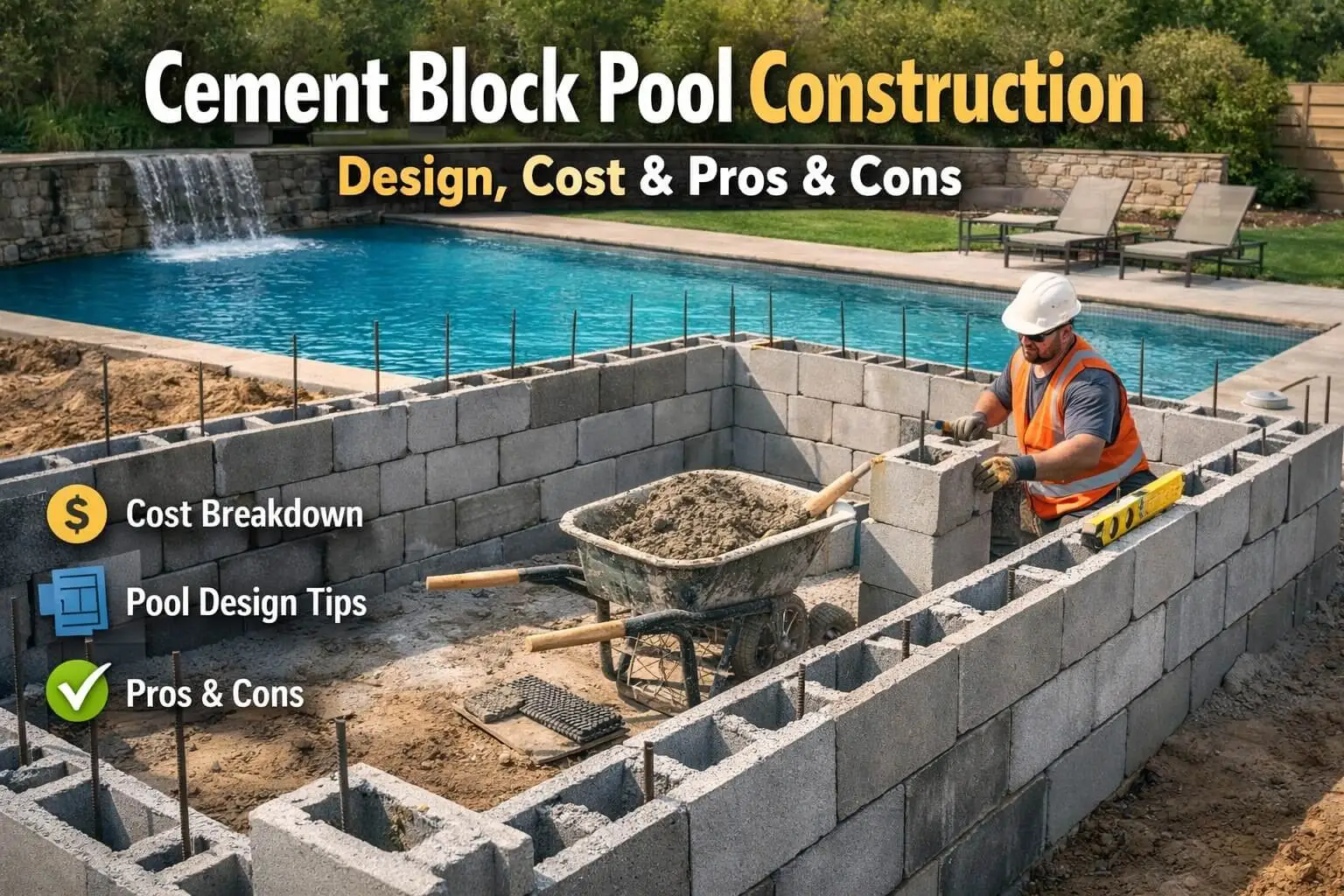
Cement block pool construction uses concrete masonry units (CMUs), commonly called cement blocks, to form the walls of the pool. These blocks are stacked, reinforced with steel bars, and filled with concrete to create a solid structure.
Many homeowners prefer this method because it allows more control over shape and size compared to pre-made fiberglass pools.
How the Construction Process Works
A typical cement block pool does not appear overnight. Each step matters for durability and safety.
1. Planning and Design
Every successful pool starts with a proper plan. Measurements, depth, shape, and features like steps or seating areas are decided at this stage. Soil condition and drainage also need attention, otherwise problems may show up later.
2. Excavation
The ground is dug according to the design. Accuracy here is important because uneven digging can affect the structure.
3. Base Preparation
A strong concrete base is poured to support the entire pool. This layer works like a foundation of a house.
4. Block Wall Construction
Cement blocks are laid carefully, row by row. Steel reinforcement bars are added inside the blocks to increase strength.
5. Filling and Reinforcement
Concrete is poured into the hollow blocks. This step turns the walls into a solid structure rather than just stacked blocks.
6. Waterproofing and Finishing
Waterproof coating is applied to prevent leaks. After that, finishing materials like plaster, tiles, or paint are added.
7. Plumbing and Equipment Installation
Pipes, filters, pumps, and drainage systems are installed before final touches.
Design Flexibility: A Big Advantage
One major reason people choose cement block pools is design freedom. Unlike fiberglass pools that come in fixed shapes, cement block pools can be built almost any way you want.
- Want a rectangular lap pool? Easy.
- Prefer a custom shape for your backyard? Possible.
- Thinking about adding stairs or a shallow lounging area? No issue.
Creative ideas become easier to implement with this method.
Cost Breakdown (US Market)
Cost always plays a key role when deciding on pool construction. Cement block pools fall somewhere in the mid-to-high range depending on customization.
Average Cost Estimate:
- Basic construction: $35,000 – $60,000
- Custom designs with features: $60,000 – $100,000+
Factors Affecting Cost:
- Pool size and depth
- Labor charges in your area
- Type of finishing (tiles cost more than plaster)
- Additional features like lighting, heating, or waterfalls
A simple design can save money, while luxury features push the budget higher.
Pros of Cement Block Pool Construction
1. Strong and Durable
Properly built cement block pools can last for decades. Reinforced concrete structure handles pressure well.
2. Custom Design Freedom
Shapes, sizes, and features can be adjusted according to your space and needs.
3. Good for Uneven Land
Sloped or tricky land areas can be managed better with this method compared to pre-built pool shells.
4. Easy to Repair
Small cracks or issues can be fixed without replacing the whole structure.
Cons You Should Know
1. Time-Consuming
Construction takes longer compared to fiberglass pools. Several stages need proper curing time.
2. Higher Labor Cost
Skilled workers are required for block laying and reinforcement, which increases labor expenses.
3. Risk of Cracks
Poor workmanship or weak soil preparation may lead to cracks over time.
4. Maintenance Needs
Surface finishes like plaster may need maintenance or resurfacing after some years.
Is It a Good Choice for You?
A cement block pool construction suits people who:
- Want a custom-designed pool
- Plan to stay long-term in their home
- Prefer strong, long-lasting structures
It may not be ideal if:
- You need a quick installation
- Budget is very limited
- Low maintenance is your top priority
Expert Tips for Better Results
Small decisions during construction can make a big difference later.
- Always hire experienced contractors
- Do not skip soil testing
- Use high-quality waterproofing materials
- Plan proper drainage around the pool
- Avoid rushing the curing process
Cutting corners may save money today but often leads to expensive repairs later.
Final Thoughts
So, cement block pool construction not only gives durability but also customizability and also provides long-term value. However, it is not considered the cheapest option, and construction does take some patience and costs a bit more, but the ultimate final result will usually give feelings that are worth the effort. Especially for that moment when you see the design is exactly what you envisioned.
So. Are you also thinking about building one? Answer this simple question: Do you want something fast, or something your way? Usually, that makes the decision a lot easier.