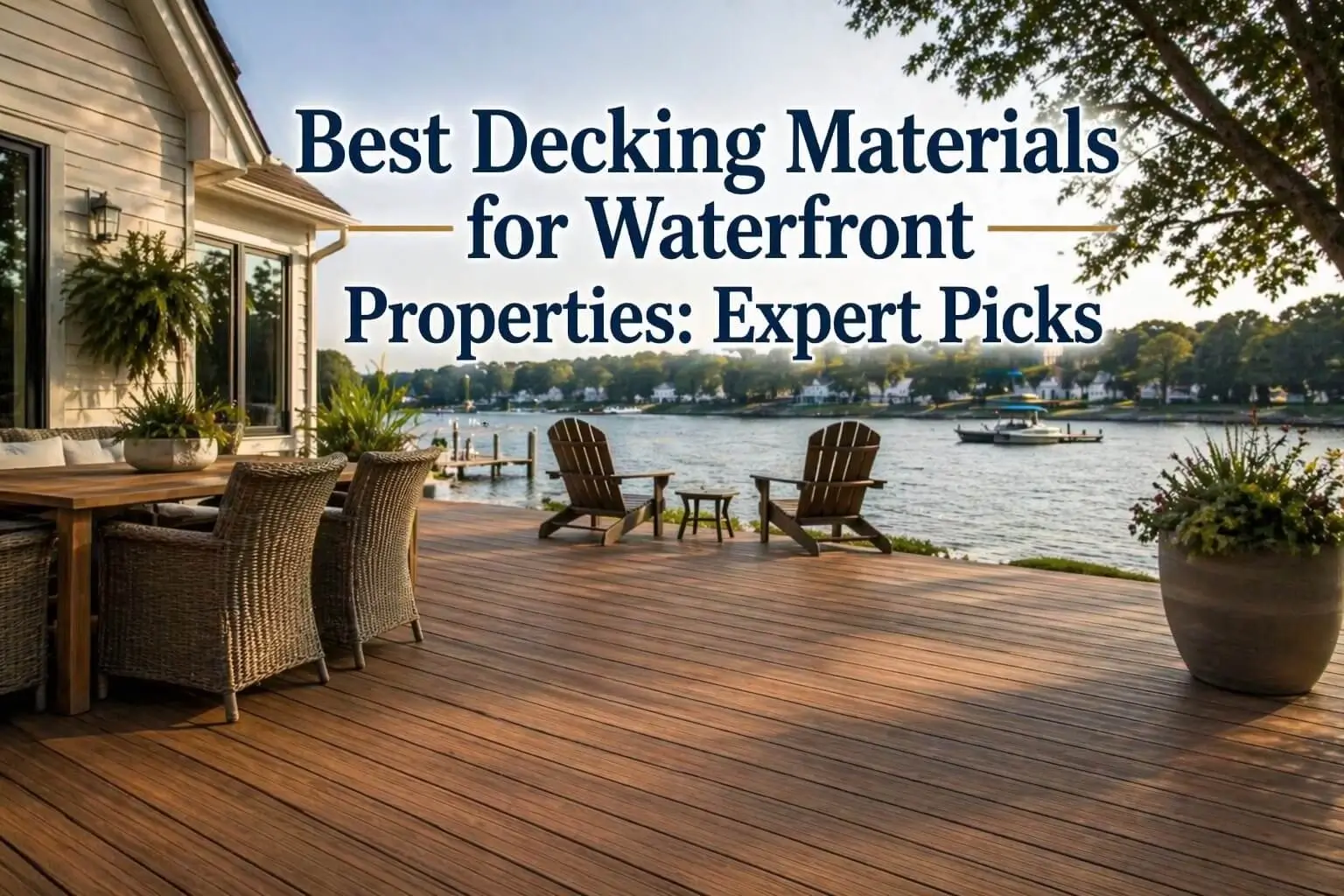
When a home is situated near water, it already feels special and luxurious. You get the cool breeze, peaceful views, and that calm sound of waves, and all these things give value and peace of mind. However, to make that environment truly shine, you have to make the right design choices that can bridge the gap between the natural landscape and your living space, especially when choosing the best decking materials for waterfront properties. So still, many make one wrong choice in decking, which can quietly ruin the whole experience. Moisture, salt, humidity, and constant exposure to the sun can damage weak materials much faster than expected.
So, if you make your decisions smartly, you will not just get the looks, as it is about durability, safety, and long-term savings. In this blog, let’s discuss the best decking materials that will actually provide you with quality and will perform well in waterfront conditions, along with real-world insights that many guides skip.
Why Waterfront Decking Needs Extra Attention
Regular decks and waterfront decks do not face the same challenges. Water exposure changes everything.
- If you get constant moisture, it can cause swelling and rot.
- Moreover, saltwater can slowly eat away at a few materials.
- If it gets sun exposure, then it will fade color and weaken surfaces.
- Besides, slippery surfaces increase safety risks.
If you ignore these factors, then it will lead you to do frequent repairs, and nobody wants to redo a deck every couple of years.
Types of the Best Decking Materials for Waterfront Properties
1. Composite Decking (Top Choice for Most Homes)
Composite decking has quietly become a favorite, especially for waterfront homes. It is made using a mix of recycled wood fibers and plastic, which gives it strong resistance against water damage.
Why people choose it:
- It will not rot or splinter.
- These materials handle moisture better than traditional wood.
- They are also low in maintenance (no regular sealing required).
- You will easily get them in modern colors and textures.
A good quality composite deck can last 20–30 years with minimal effort.
Small downside:
Initial cost feels higher, but over time it usually balances out because maintenance stays low.
2. PVC Decking (Best for Extreme Moisture Areas)
PVC decking takes water resistance a step further. It is fully synthetic, so water has almost no effect on it.
What makes it strong:
- It is 100% waterproof material.
- It will be resistant to mold and mildew
- They are lightweight and durable.
- They normally stay stable even in humid climates
Homes located right next to oceans or lakes benefit the most from this option.
One thing to keep in mind:
The surface can feel slightly plastic-like, which some homeowners do not prefer visually.
3. Pressure-Treated Wood (Budget-Friendly Option)
Pressure-treated wood remains a common choice, especially when budget matters. It is treated with chemicals to resist insects and moisture.
Why it still works:
- It will lower the upfront cost.
- They are easy to find and install
- They are strong and provide good structural support.
But here is the catch:
Maintenance is not optional when it comes to the best decking materials for waterfront properties. Regular sealing, staining, and inspections are needed. Skipping this step leads to cracking, warping, and even rot.
4. Tropical Hardwoods (Premium Natural Look)
Nothing beats the rich appearance of natural hardwood. Woods like Ipe, Cumaru, and Tigerwood are known for their density and durability.
Why homeowners love it:
- Stunning natural finish
- Extremely strong and dense
- Naturally resistant to insects and moisture
Reality check:
- Expensive upfront
- Requires oiling to maintain color
- Installation can take longer due to hardness.
A well-maintained hardwood deck can easily last 30–40 years, which makes it a long-term investment.
5. Aluminum Decking (Underrated but Powerful)
Aluminum decking is not as common, but it performs surprisingly well in waterfront environments.
Key benefits:
- Will not rust, crack, or warp
- Fire-resistant and long-lasting
- Slip-resistant surface options available
Drawback:
Cost is on the higher side, and the look feels more modern than natural.
Still, for homeowners who want zero maintenance headaches, this option deserves attention.
How Can You Choose the Right Material?
No single material fits every home. A better approach is to match your priorities with the material.
Ask yourself:
- Looking for low maintenance or low cost?
- Want a natural look or modern finish?
- How close is your deck to water?
- Planning for long-term use or short-term setup?
Simple answers to these questions usually make the decision clearer.
Safety Matters More Than Style
A beautiful deck is useless if it is not safe. Slippery surfaces near water can cause serious accidents.
Look for:
- Textured or slip-resistant finishes
- Proper drainage design
- Strong railings and support
Even the best material can fail if installation is poor.
Expert Tips That Actually Help
Many people focus only on material and ignore small details that make a big difference later.
- Use stainless steel or coated fasteners to avoid rust.
- Leave proper spacing between boards for drainage
- Avoid direct ground contact where possible
- Schedule annual inspections even for low-maintenance decks
Little care goes a long way in extending the life of your deck.
Cost vs. Value: What Makes Sense?
Cheap options look attractive at first. Over time, frequent repairs and maintenance costs start adding up when it comes to the best decking materials for waterfront properties.
Composite or PVC may feel expensive initially, but they reduce long-term expenses. On the other hand, wood saves money upfront but demands regular care.
A smarter approach is to think beyond the first bill and look at 10–15 years ahead.
Final Thoughts
A deck at the waterfront is more than just an outdoor platform. It will become a place where mornings will give you a calmer feel and evenings with more relaxation. So, choosing the best decking materials for waterfront properties will keep that experience smooth instead of stressful.
Some people go for the cheapest option and regret it later. Others invest wisely once and enjoy peace of mind for years.
So here is a simple thought to end with: do you want to maintain your deck every season or enjoy it without worry? That answer usually points you in the right direction.
A deck on the water isn’t just somewhere to stand; it’s the heartbeat of the home.