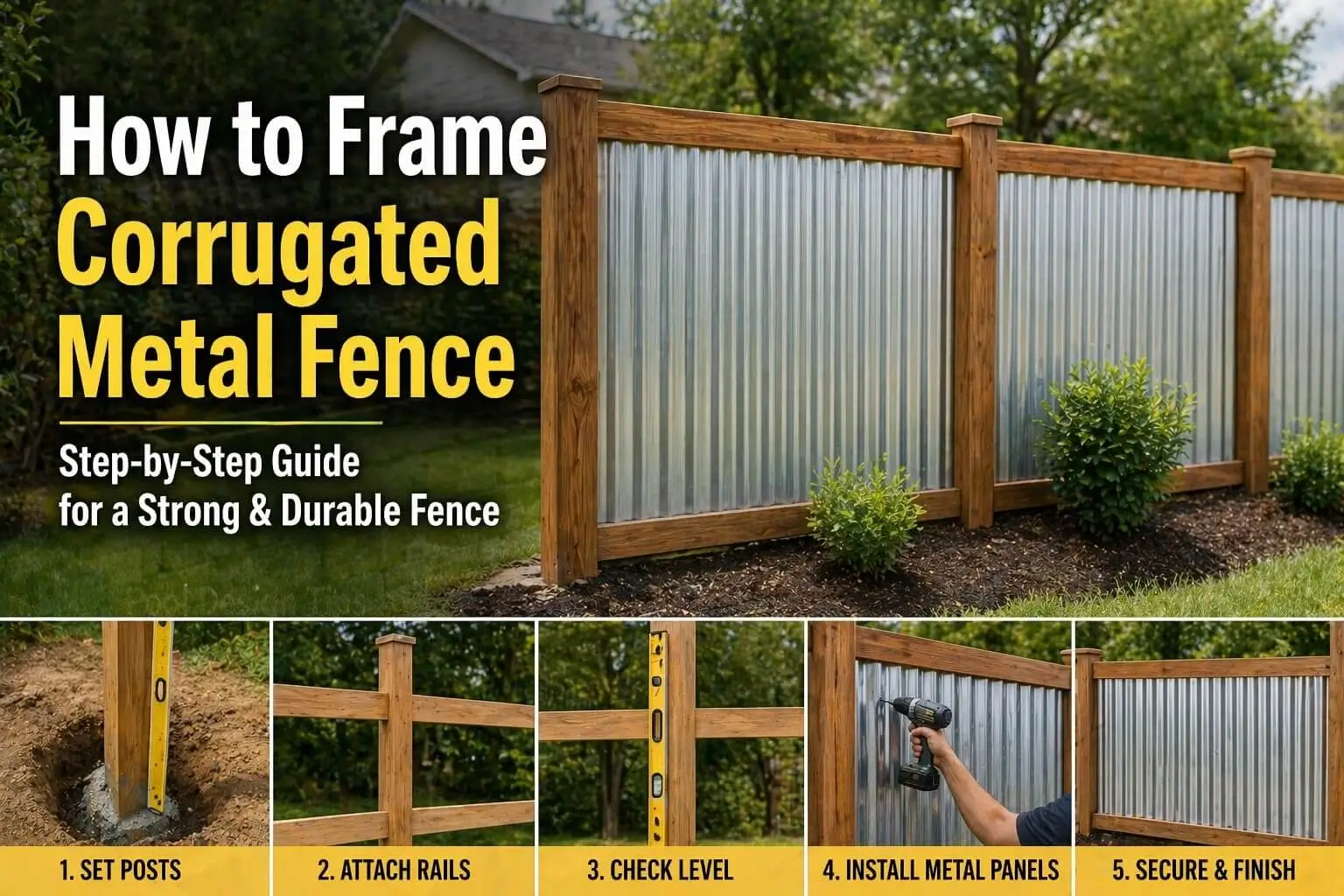
Building a fence is one of those projects that looks simple until you actually start doing it. Corrugated metal fencing has become popular because it feels modern, lasts long, and does not demand constant care like wood. Still, the strength of the fence mostly depends on how well the frame is built.
This guide on how to frame corrugated metal fence walks through the full process in a clear and practical way, so you avoid the common mistakes many people regret later.
Why Proper Framing Matters
A corrugated metal fence is only as strong as its frame. Metal sheets may look tough, but without a solid structure behind them, they can bend, rattle, or even come loose in strong winds.
A well-built frame:
- Keeps panels straight and secure
- Prevents sagging over time
- Improves overall lifespan
- Makes the fence look clean and professional
Skipping care at this stage often leads to repairs that could have been avoided.
Tools and Materials You’ll Need
Getting everything ready before starting saves time and frustration.
Basic tools:
- Post hole digger or auger
- Drill machine
- Level
- Measuring tape
- Saw (for wood or metal)
Materials:
- Fence posts (wood or steel)
- Horizontal rails (wood or metal)
- Corrugated metal sheets
- Screws with rubber washers
- Concrete mix
Choosing quality materials is always worth it, especially for outdoor structures exposed to weather.
Step 1: Plan Your Layout
A little planning makes the entire process smoother. Start by marking the fence line using string or chalk. Measure the total length and decide the spacing between posts.
Most fences keep posts 6 to 8 feet apart. Closer spacing adds strength, especially in windy areas.
This early stage in how to frame corrugated metal fence decides how stable your final structure will be.
Step 2: Set the Fence Posts
Posts act like the backbone of the fence. Weak posts mean a weak fence.
- Dig holes about 2 to 3 feet deep
- Place posts upright and check alignment using a level
- Pour concrete around the base
- Let it cure properly before moving forward
Rushing this step often leads to leaning fences later. Giving the concrete enough time to set is not something to ignore.
Step 3: Attach Horizontal Rails
Rails connect the posts and hold the metal sheets in place. Usually, two or three rails are installed depending on fence height.
- Fix rails evenly between posts
- Keep spacing consistent
- Make sure everything stays level
Wood rails give a more natural look, while metal rails provide extra durability. Both options work fine when installed properly.
At this point, the structure starts to take shape, and the effort behind how to frame corrugated metal fence becomes visible.
Step 4: Prepare the Metal Sheets
Corrugated sheets may need trimming depending on your fence size. Cutting should be done carefully to avoid rough edges.
- Measure before cutting
- Use proper cutting tools
- Smooth sharp edges for safety
Handling sheets with gloves helps avoid injuries.
Step 5: Install the Corrugated Metal Panels
Now comes the part where everything comes together.
- Place the sheets against the frame
- Align them properly before fixing
- Use screws with rubber washers to prevent water entry
- Secure at each ridge for better hold
Avoid over-tightening screws, as it can damage the metal or reduce grip.
This stage is where most people feel satisfied seeing their progress in how to frame corrugated metal fence.
Step 6: Check Stability and Alignment
Before calling the job done, take a few minutes to inspect everything.
- Look for loose screws
- Check if panels are straight
- Make sure posts feel firm
Small adjustments now save bigger issues later.
Common Mistakes to Avoid
Even a simple project can go wrong if basic things are ignored.
- Skipping concrete for posts
- Using low-quality screws
- Not leaving space for expansion
- Uneven post spacing
Each mistake may seem small, but together they can reduce the life of your fence.
Cost Overview (US Estimate)
Costs depend on size and material choice, but a rough idea helps in planning.
- Basic setup: $15–$30 per linear foot
- Higher-end materials: $30–$60 per linear foot
Doing it yourself reduces labor costs, but proper tools and time are required.
Maintenance Tips for Long Life
Corrugated metal fences do not demand heavy maintenance, but a little care helps.
- Check screws once or twice a year
- Clean dirt or debris buildup
- Repaint if coating starts fading
These simple habits keep the fence looking fresh and strong.
Final Thoughts
Learning how to frame corrugated metal fence is not complicated, but it does require patience and attention to detail. A strong frame makes everything else easier and ensures the fence stands firm for years.
Some people rush the process and end up fixing issues again and again. Others take their time once and enjoy a solid, clean-looking fence without trouble.
So here’s a simple question to think about: do you want a fence that just stands, or one that actually lasts? That answer usually guides the right approach.