Outdoor kitchens have moved far beyond being a luxury add-on, they’re now a central feature in many American backyards. Grilling, entertaining, and even full-scale cooking outside demands more than just good design; it requires durability. The frame of an outdoor kitchen acts as its backbone, and choosing the wrong material can lead to warping, rust, or costly repairs. Careful selection at the beginning saves time, money, and frustration down the road.
This guide breaks down the best materials for long-lasting outdoor kitchen frames, with a practical, experience-driven perspective that homeowners and contractors alike can rely on.
Why the Best Materials for Long-Lasting Outdoor Kitchen Frames Matter More Than You Think?
Outdoor kitchens face constant exposure, sun, rain, humidity, and temperature swings all take a toll. Unlike indoor cabinetry, outdoor frames don’t get the luxury of climate control. Materials must resist corrosion, structural fatigue, and pests, all while supporting heavy countertops, grills, and appliances.
Cut corners here, and even premium finishes won’t last. A solid frame, on the other hand, can extend the life of your entire outdoor setup by years.
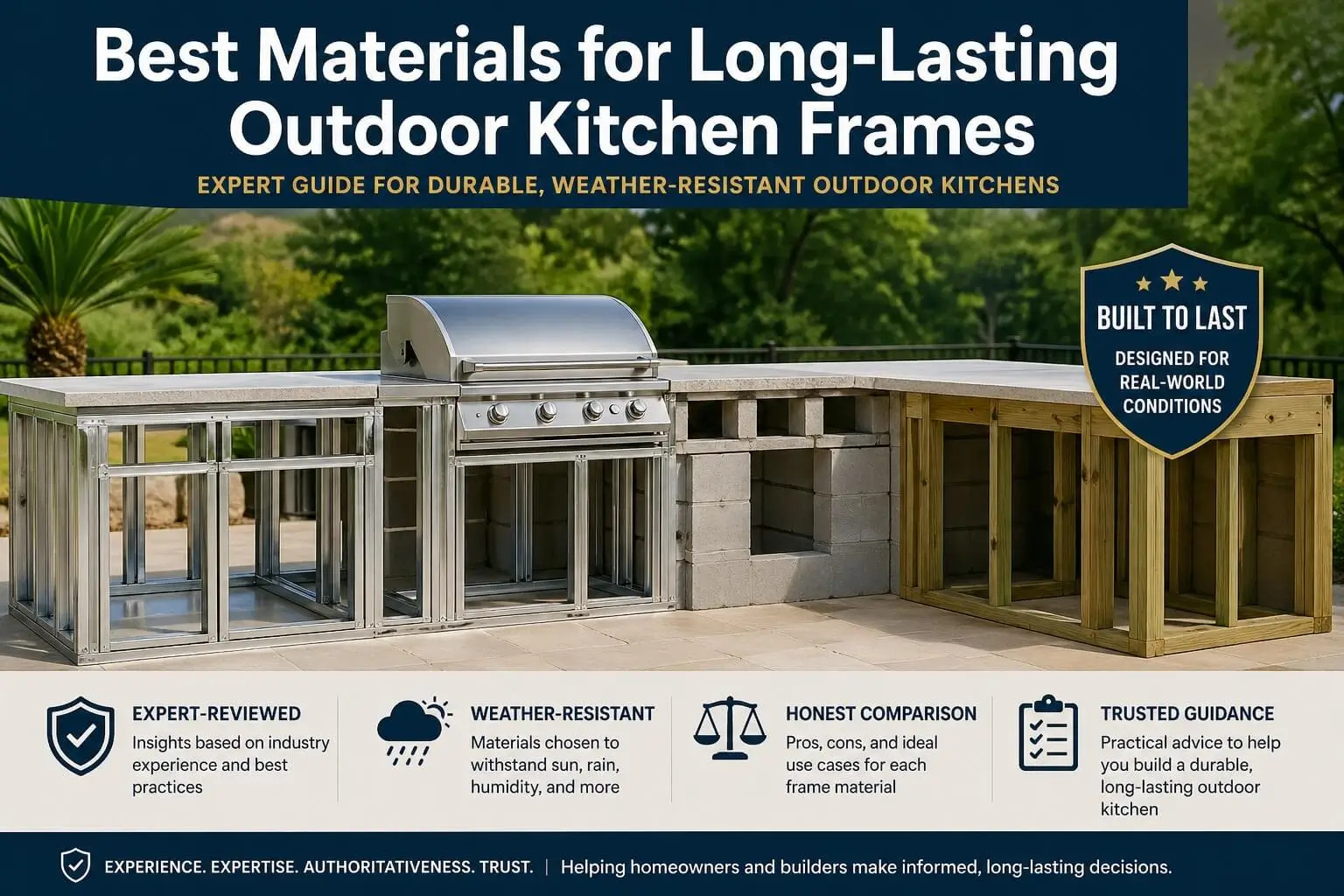
1. Stainless Steel: The Industry Favorite
Stainless steel consistently ranks among the best, and for good reason.
High-grade stainless steel (typically 304 or 316) offers exceptional resistance to rust and corrosion. Coastal areas, where salt air destroys lesser materials, benefit especially from 316 stainless steel due to its added molybdenum content.
Strength stands out as another major advantage. Heavy granite countertops or built-in grills won’t strain a properly constructed stainless steel frame. Maintenance stays relatively simple too, occasional cleaning keeps it looking sharp.
Downsides exist, mainly cost. Stainless steel frames come with a higher upfront investment. Still, long-term durability often justifies the price.
2. Aluminum: Lightweight Yet Resilient
Aluminum doesn’t always get the spotlight, but it deserves serious consideration. Many builders now view it as one of the best materials for long-lasting outdoor kitchen frames for specific climates.
Rust simply isn’t an issue with aluminum. Moist environments, including areas with frequent rain, won’t degrade it the way steel might. Lightweight properties make installation easier, especially for DIY projects or rooftop kitchens.
Structural strength isn’t as high as stainless steel, so thicker gauges or reinforced designs become necessary for heavier builds. Powder coating adds an extra layer of protection and improves appearance.
Budget-conscious homeowners often find aluminum to be a smart middle ground between cost and durability.
3. Galvanized Steel: Budget-Friendly Strength
Galvanized steel frames use a protective zinc coating to prevent rust. Cost remains lower than stainless steel, making it appealing for large-scale outdoor kitchens.
Strength rivals stainless steel in many cases, providing solid support for appliances and stone countertops. Builders working on tight budgets frequently turn to galvanized steel for this reason.
Moisture exposure can eventually compromise the zinc coating if scratched or worn. Once that happens, rust can develop beneath the surface. Regular inspections and protective finishes help extend its lifespan.
Despite its limitations, galvanized steel still earns a place among the best materials when properly maintained.
4. Concrete Block (CMU): Built for Permanence
Concrete masonry units (CMU), often referred to as cinder blocks, bring unmatched durability. Many high-end outdoor kitchens rely on this material for a reason, it simply doesn’t degrade easily.
Fire resistance adds another layer of safety, especially around grills and pizza ovens. Pest issues become nonexistent, and structural integrity remains intact for decades.
Labor and installation complexity tend to be higher. Skilled masonry work is often required, and modifications after construction can be difficult.
Homeowners looking for a permanent, rock-solid solution often consider CMU one of the best options, especially in extreme climates.
5. Pressure-Treated Wood: A Risky but Usable Option
Wood frames still show up in outdoor kitchen builds, particularly in DIY projects. Pressure-treated lumber resists rot and insect damage better than untreated wood, making it viable in certain scenarios.
Cost savings attract many homeowners. Wood is easy to work with, widely available, and familiar to most builders.
Longevity becomes the main concern. Even treated wood can warp, crack, or deteriorate over time when exposed to moisture and heat. Proper sealing, ventilation, and protective cladding are essential.
Wood rarely tops the list of the best materials for long-lasting outdoor kitchen frames, but it can work when budget constraints or design preferences come into play.
Climate Considerations: Matching Material to Environment
Different regions demand different solutions. Coastal homes benefit most from stainless steel or aluminum due to salt exposure. Dry climates allow for more flexibility, including galvanized steel or even treated wood with proper sealing.
Cold regions with freeze-thaw cycles require materials that won’t crack or shift, concrete blocks often perform well here. Humid areas demand rust-resistant options above all else.
Ignoring climate leads to premature wear, regardless of material quality.
Maintenance: The Hidden Factor in Longevity
Even the strongest materials need occasional care. Stainless steel benefits from cleaning to prevent surface discoloration. Aluminum frames should be inspected for coating wear. Galvanized steel requires touch-ups where the protective layer might be compromised.
Concrete blocks need minimal maintenance but may require sealing depending on finish materials.
Consistent upkeep ensures that whichever option you choose from the best materials for long-lasting outdoor kitchen frames continues performing as expected.
Final Thoughts
Durability starts at the frame level. Flashy countertops and premium appliances won’t compensate for a weak structure underneath. Stainless steel leads the pack for overall performance, while aluminum and galvanized steel provide solid alternatives at different price points. Concrete block offers unmatched permanence, and wood remains a conditional option for budget-conscious builds.
Smart decisions at this stage shape the entire lifespan of your outdoor kitchen. Evaluate climate, budget, and long-term expectations carefully before committing. A well-built frame doesn’t just support your kitchen, it protects your investment for years to come.