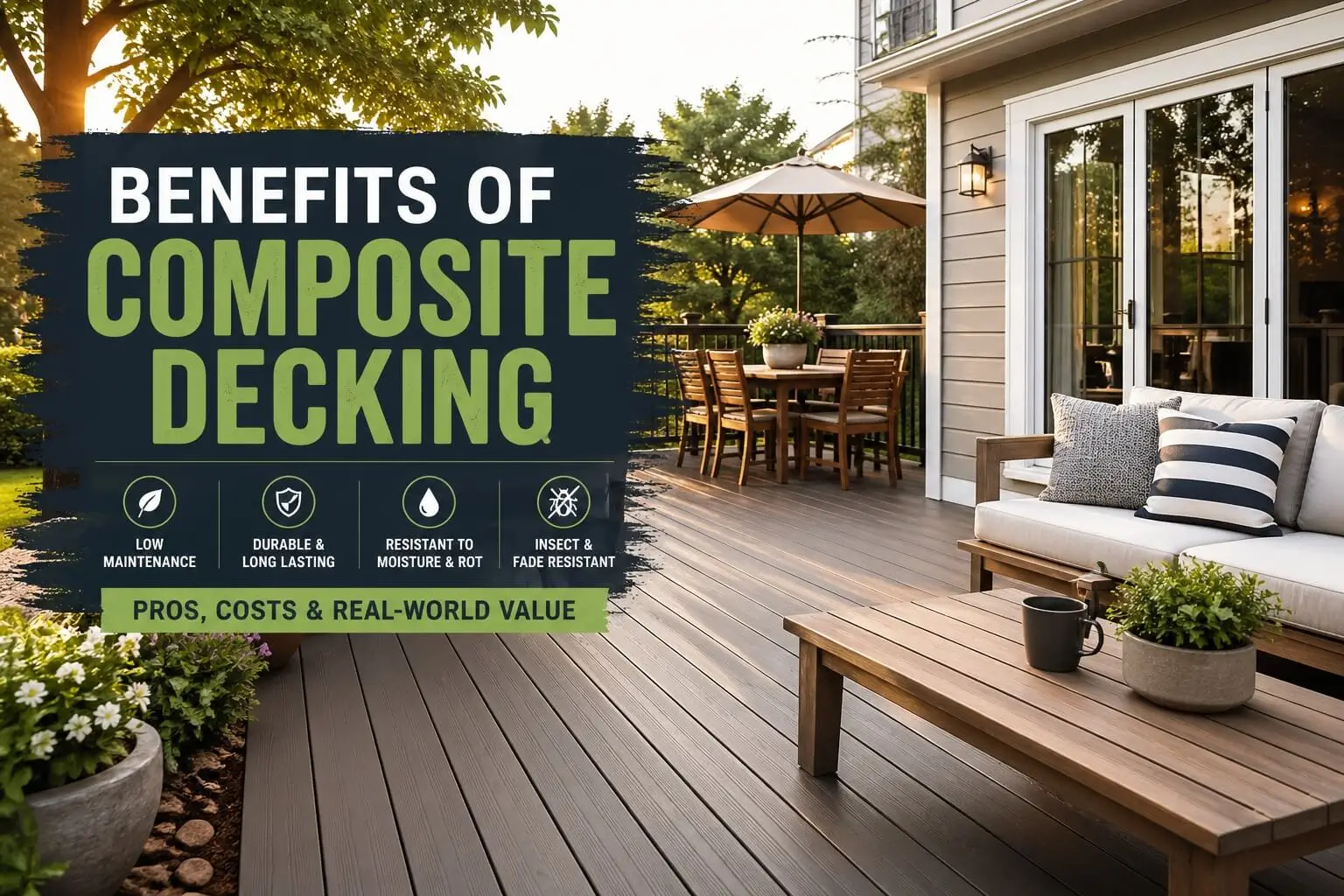
A well-built deck changes how a home feels. It will become your favorite space where you will enjoy mornings and will see them start slow and evenings stretch longer than expected. So, if you consider the right material for that space, it matters more than most people think. Many homeowners across the U.S. are now leaning toward composite decking, and not without reason. However, this shift isn’t just about trends; it’s about long-term value, lower stress, and smarter spending.
What Makes Composite Decking Different?
Composite decking is made by blending recycled wood fibers with plastic. That mix creates boards that look close to real wood but behave very differently over time. No constant sanding. No yearly staining. No panic when it rains for three days straight.
Wood still has its charm, no doubt. Yet, charm fades quickly when maintenance bills start stacking up.
Real Benefits of Composite Decking You’ll Actually Notice Over Time
Talking about the benefits of composite decking isn’t just theory. It shows up in day-to-day life.
1. Low Maintenance That Stays Low
Weekends shouldn’t revolve around deck repairs. Composite boards don’t need sealing, painting, or staining. A simple wash with soap and water usually does the job.
Think about it, how many summers do you want to spend fixing your deck instead of using it?
2. Long-Term Durability
Rain, snow, harsh sun, composite decking handles all of it better than traditional wood. It resists:
- Rot
- Splitting
- Warping
- Insect damage
Many brands offer warranties ranging from 20 to 30 years, which says a lot about confidence in the material.
3. Consistent Appearance
Wood ages unevenly. One section fades faster, another starts cracking, and suddenly the whole deck looks patchy. Composite decking keeps a uniform color and texture for years.
That’s one of the most noticeable benefits of composite decking for homeowners who care about curb appeal.
4. Eco-Friendly Choice
A lot of composite boards are made using recycled plastics and reclaimed wood. That means fewer trees cut down and less plastic waste ending up in landfills.
Not everyone buys decking thinking about the environment, but it’s a nice bonus when your choice supports it.
5. Better Safety Features
Barefoot summers matter. Composite decking often comes with slip-resistant surfaces and no splinters. Families with kids or pets find this especially valuable.
Breaking Down the Costs
Let’s be real, composite decking isn’t the cheapest upfront option. That’s usually where people hesitate.
Initial Investment
- Composite decking: $8 to $15 per square foot (materials only)
- Pressure-treated wood: $3 to $6 per square foot
At first glance, wood seems like the obvious winner.
Long-Term Spending
Now factor in:
- Annual staining or sealing
- Repairs due to rot or insects
- Replacement boards over time
Wood starts costing more than expected. Composite, on the other hand, stays predictable.
Over 10–15 years, many homeowners find that the total cost evens out, or even favors composite. That’s where the real benefits of composite decking begin to show clearly.
Real-World Value: What Homeowners Notice
Numbers are helpful, but lived experience matters more.
Homeowners often mention:
- Less stress about weather damage
- More time actually using the deck
- Better resale appeal when listing a home
Buyers notice a clean, low-maintenance deck. It signals that the house has been cared for.
Style Options That Don’t Feel Limited
Early versions of composite decking looked too “plastic.” That reputation stuck for a while. Things have changed.
Modern composite boards come in:
- Natural wood tones
- Multi-color grain patterns
- Matte and textured finishes
Some options are so close to real wood that most people can’t tell the difference without touching them.
When Composite Decking Might Not Be Ideal
No material is perfect. Composite decking has a few downsides worth knowing:
- Higher upfront cost
- Can get warmer under direct sunlight
- Heavier than wood, which may affect installation
Still, for most homeowners, these are manageable trade-offs.
Installation: What to Expect
Professional installation is recommended, especially for larger decks. Composite boards require proper spacing and support to perform well over time.
DIY is possible if you have experience, but mistakes can get expensive fast.
How It Impacts Home Value
Outdoor living spaces are a big deal in the U.S. housing market. A well-designed deck can boost property value and make listings more attractive.
Composite decking adds an edge because buyers see it as a “low-hassle” feature. No one wants to inherit a project.
Another one of the underrated benefits of composite decking lies in that buyer confidence.
Maintenance Comparison: Wood vs Composite
| Feature | Wood Decking | Composite Decking |
| Annual Maintenance | High | Very Low |
| Lifespan | 10–15 years | 25–30+ years |
| Weather Resistance | Moderate | High |
| Appearance Aging | Uneven | Consistent |
The table makes one thing clear, less work, more consistency.
Final Thoughts
Choosing decking isn’t just about today’s budget. It’s about how you want to spend your time in the years ahead. Constant upkeep or easy living?
The benefits of composite decking go beyond surface-level appeal. They show up in fewer repairs, steady looks, and a deck that holds its value without demanding attention every season.
A deck should feel like an extension of your home, not another task on your to-do list. Composite decking gets you closer to that ideal, which is why more homeowners are making the switch.