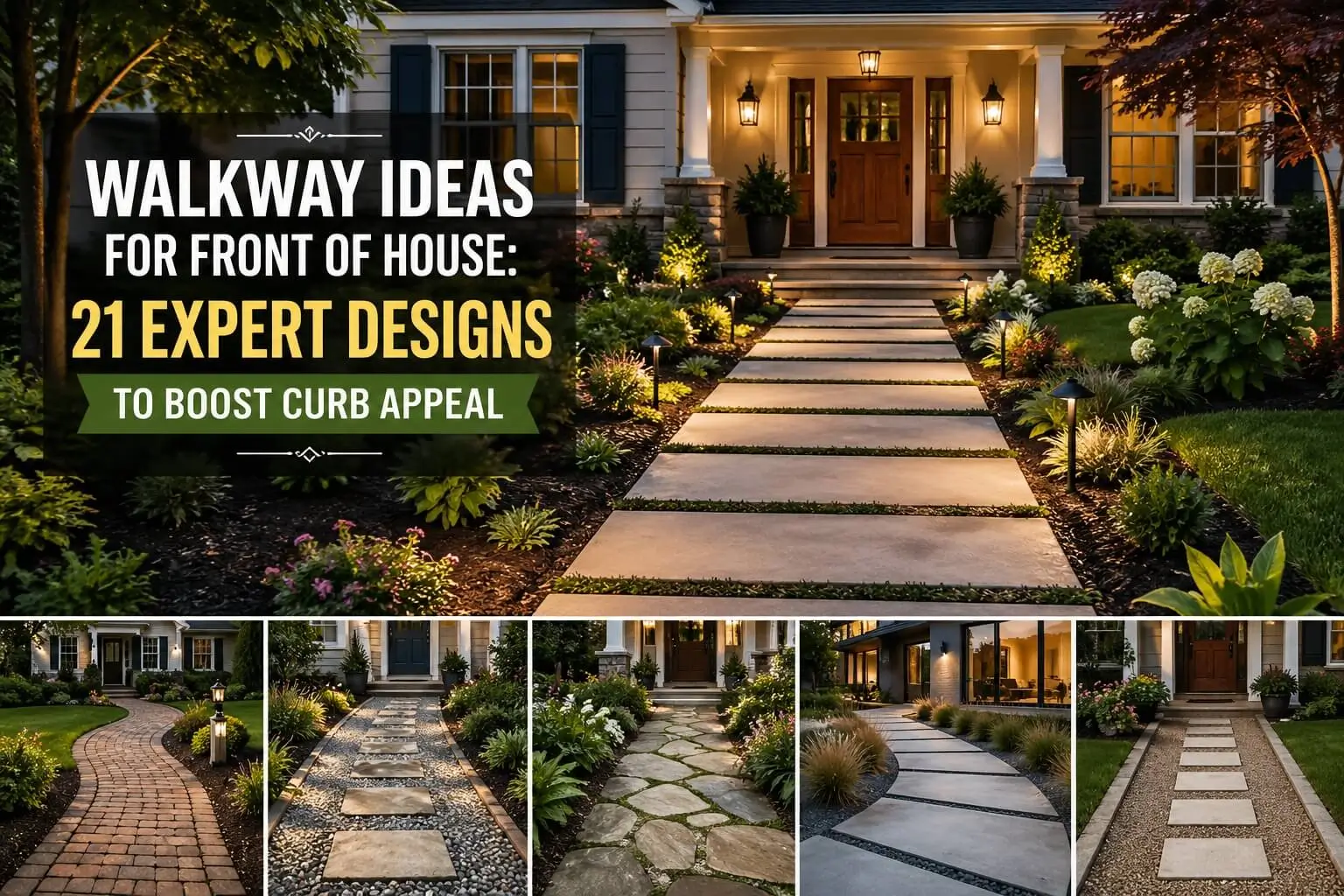
A front walkway quietly shapes the way a home feels before anyone even steps inside. It guides visitors, frames your landscaping, and adds that subtle “finished” look buyers notice right away. Many homeowners spend thousands on siding, paint, and lighting, yet overlook the path leading to the door. That small strip of space can do more for curb appeal than you might expect.
Curious how to turn a plain entry path into something eye-catching without going overboard? This guide walks through practical, proven walkway ideas for front of house that balance design, durability, and budget, exactly what works best in typical U.S. homes.
Why Your Front Walkway Matters More Than You Think: Walkway Ideas for Front of House
A walkway is not just a path; it’s part of your home’s first impression. Real estate professionals often mention that a clean, well-designed walkway can increase perceived home value. It also improves safety, especially in areas with rain, snow, or uneven ground.
Think of it this way, if the lawn is the frame, the walkway is the line that leads the eye exactly where you want it to go.
21 Expert Walkway Ideas That Actually Work
Each idea below reflects real-world use, not just Pinterest inspiration. Some focus on durability, others on visual appeal, and a few combine both.
1. Classic Brick Walkway
Brick never feels out of place. A simple herringbone or running bond pattern gives a timeless look that fits both traditional and colonial homes.
2. Natural Stone Path
Flagstone or slate creates an organic feel. Slight irregularity adds charm, especially when paired with greenery.
3. Concrete Pavers
Reliable, affordable, and widely used across the U.S. Available in different shapes and colors, making them a flexible choice for walkway ideas for front of house.
4. Stamped Concrete Walkway
Concrete doesn’t have to look plain. Stamping techniques can mimic stone, brick, or even wood grain at a lower cost.
5. Gravel Walkway with Edging
Gravel offers a relaxed, cottage-style vibe. Adding metal or stone edging keeps it neat and prevents spreading.
6. Stepping Stone Path
Large spaced stones placed over grass or mulch create a light, airy look. Works well in gardens or informal front yards.
7. Modern Linear Concrete Slabs
Long rectangular slabs with grass or gravel joints give a sleek, contemporary feel. Popular in newer suburban builds.
8. Curved Walkway Design
Straight paths feel formal. Gentle curves soften the look and make the entrance more inviting.
9. Walkway with Landscape Lighting
Low-voltage lights along the edges add both safety and visual appeal at night.
10. Mixed Material Walkway
Combining stone with brick or concrete with gravel creates contrast and visual interest.
11. Wooden Boardwalk Style Path
Treated wood planks raised slightly above ground level give a coastal or rustic look.
12. Patterned Tile Walkway
Outdoor-rated tiles can create a bold entry, especially in warmer climates like California or Florida.
13. Grass Joint Pavers
Concrete or stone pavers with grass growing between them blend structure with nature.
14. Raised Walkway with Borders
Adding slight elevation with defined borders gives the path a premium, structured appearance.
15. Walkway with Decorative Pebbles
Small pebbles between slabs create texture and improve drainage.
16. Rustic Cobblestone Path
Cobblestones bring an old-world charm. They’re durable but slightly more expensive to install.
17. Wide Entry Walkway
A broader path feels welcoming and works well for homes with larger front yards.
18. Minimalist Concrete Strip Path
Simple strips separated by gravel or grass keep things clean and modern.
19. Walkway with Arch or Pergola Entry
Adding a small structure at the start of the walkway creates a focal point.
20. Multi-Level Walkway
For sloped properties, adding steps or tiered levels improves both safety and design.
21. Eco-Friendly Permeable Walkway
Permeable pavers allow water to pass through, reducing runoff and helping with drainage.
Choosing the Right Material (What Actually Lasts?)
Picking the right material is where most homeowners get stuck. Some options look great at first but wear out quickly.
- Concrete pavers – Affordable and durable (great for most climates)
- Natural stone – Premium look but higher cost
- Brick – Timeless, but may need occasional maintenance
- Gravel – Budget-friendly but requires upkeep
- Stamped concrete – Good balance of cost and appearance
Weather plays a big role. Freeze-thaw cycles in northern states demand stronger materials, while warmer regions allow more flexibility.
Common Mistakes to Avoid
A few small missteps can ruin the entire look:
- Making the walkway too narrow
- Ignoring drainage issues
- Choosing materials that clash with the house exterior
- Skipping proper edging or borders
- Overcomplicating the design
Simple designs often outperform overly decorative ones.
Design Tips That Make a Big Difference
Subtle adjustments can completely change the final outcome:
- Match walkway style with home architecture
- Use lighting to highlight edges and curves
- Add plants or flowers along the sides
- Keep transitions smooth between driveway, walkway, and porch
A cohesive look always stands out more than isolated design elements.
How to Plan Your Walkway Step-by-Step
- Measure the space and define the path
- Choose a material based on climate and budget
- Decide between straight or curved layout
- Prepare the base properly (this step matters more than design)
- Install edging for durability
- Add finishing touches like lighting or landscaping
Many homeowners underestimate the base preparation, but that’s what determines how long the walkway lasts.
Final Thoughts
A front walkway might seem like a small detail, but it carries a surprising amount of visual weight. The right design doesn’t just guide visitors, it elevates the entire home exterior. Thoughtful planning, the right material, and a clean layout can turn even a basic path into a standout feature.
If you’re exploring walkway ideas for front of house, focus on durability as much as appearance. Trends come and go, but a well-built walkway stays solid for years.
Still wondering which style fits your home best? Take a look at your exterior, your climate, and your budget, those three factors usually point you in the right direction.
A well-designed path doesn’t just lead to your door. It sets the tone for everything beyond it.