
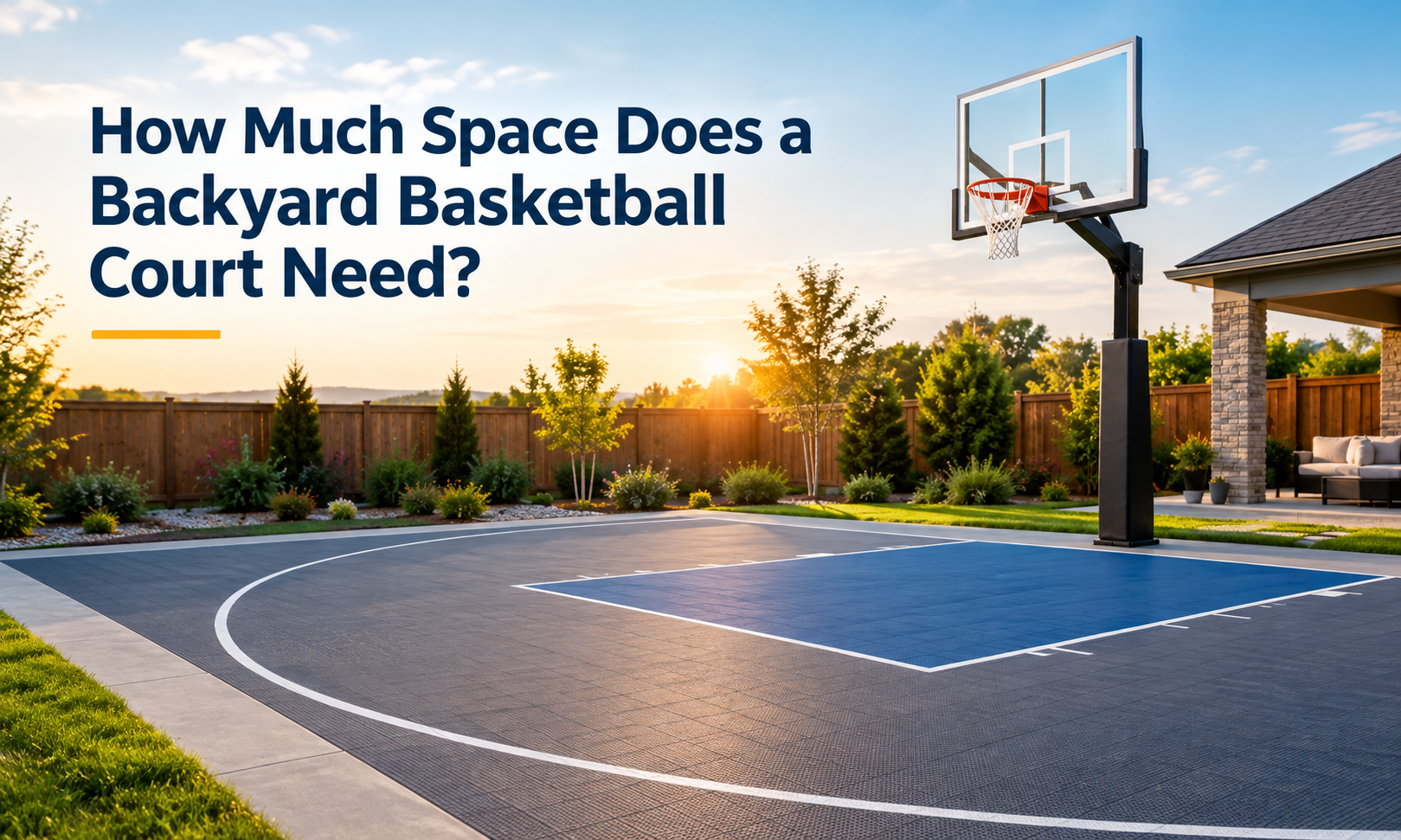
A backyard basketball court can turn unused outdoor space into a fun, active area for family games, shooting practice, and friendly competitions. However, before installing a hoop or planning a paved surface, it is important to understand how much room you actually need. The right layout depends on your available yard space, playing goals, surface conditions, and the number of people who will use the court.
Understanding Basketball court dimensions helps homeowners create a functional playing area without overcrowding their yard. Whether you want a simple shooting area or a dedicated half court, careful planning can improve safety, comfort, and long-term usability.
What Size Should a Backyard Basketball Court Be?
The ideal backyard basketball court size depends on whether you want recreational shooting, one-on-one games, or more structured play. A full regulation basketball court is generally 94 feet long by 50 feet wide in the NBA, while an FIBA international court measures approximately 91.9 feet by 49.2 feet.
Most residential properties cannot accommodate a full-size court, so homeowners often choose a half court or a smaller practice area.
Common Backyard Basketball Court Sizes
Here are several practical options to consider:
- Small shooting area: Approximately 20 × 25 feet for basic shooting and limited movement.
- Compact half court: Approximately 30 × 30 feet for casual shooting and some one-on-one play.
- Recreational half court: Approximately 30 × 50 feet, depending on the desired layout and available space.
- Larger half court: Approximately 47 × 50 feet for a layout closer to a regulation half court.
These measurements are planning examples rather than universal standards. Actual requirements vary depending on court markings, the type of play, and available clearance.
Understanding Half Court Size and Layout
A well-planned backyard basketball layout should provide enough room for players to move comfortably, take shots, and retrieve rebounds. Simply measuring the paved playing surface is not enough. You must also account for the space surrounding the court.
A half court is a popular option because it accommodates recreational games without requiring the footprint of a full court.
For homeowners with limited space, a smaller area with a single hoop can still provide an enjoyable basketball experience. If you have more room, adding a three-point arc, free-throw line, and additional playing space can make the court more versatile.
How Much Extra Space Do You Need?
Consider these factors when measuring your yard:
- Side clearance: Leave room beyond the playing lines to reduce the risk of collisions with fences, walls, or landscaping.
- Baseline clearance: Allow space behind the hoop and baseline for safe movement and rebounding.
- Access paths: Keep entrances and walking routes clear of active play.
- Overhead clearance: Check for tree branches, roof overhangs, cables, and other obstructions.
There is no single clearance measurement that suits every backyard. Your court design should reflect the age and skill level of players, the surface, and nearby hazards.
Basketball Hoop Placement and Safety
Correct basketball hoop placement affects both gameplay and player safety. A regulation hoop is 10 feet above the playing surface, measured to the top of the rim. However, the best mounting location depends on your court size, playing direction, and available clearance.
Before installation, consider the following:
- Position the hoop so players have sufficient room to approach, shoot, and land safely.
- Avoid placing the playing area directly beside concrete steps, garden walls, or sharp-edged landscaping.
- Use a stable, properly installed basketball system designed for outdoor use.
- Check that the backboard and support structure do not create unnecessary obstacles.
- Make sure nearby driveways and pedestrian routes remain accessible.
Why Basketball Safety Clearance Matters
Basketball safety clearance is particularly important in smaller residential yards. Players frequently move backward while shooting, change direction quickly, and jump to collect rebounds.
A fence positioned too close to the baseline or a tree beside the shooting area can increase the risk of injury. When space is limited, prioritize a safe, open shooting zone rather than trying to fit every regulation marking into the design.
Choosing the Right Surface for Your Backyard Court
The playing surface influences ball bounce, traction, drainage, and maintenance. Common options include concrete, asphalt, and purpose-designed sports surfacing.
Concrete can provide a firm, consistent playing surface when installed correctly. Asphalt may offer another practical option, while specialized sports tiles can provide a different feel and finish.
Before selecting a material, evaluate:
- Ground stability and drainage.
- Surface levelness and slope.
- Resistance to outdoor weather conditions.
- Maintenance requirements.
- Installation and long-term repair costs.
A qualified contractor can assess the site and recommend an appropriate construction approach. Proper preparation is particularly important because uneven surfaces and poor drainage can affect both playability and durability.
How Atlas GC Can Help With Backyard Court Planning
Creating a backyard basketball court involves more than choosing a hoop and marking lines. The site needs to be evaluated for usable space, grading, drainage, surface preparation, and the relationship between the court and the rest of the property.
Atlas GC can be considered when planning a residential outdoor improvement project that requires careful coordination and attention to construction details. Before committing to a layout, homeowners should establish their intended court size, identify potential obstacles, and determine how the new playing area will fit into their existing outdoor environment.
A thoughtful planning process should include measuring the proposed area, reviewing ground conditions, considering suitable surfacing materials, and accounting for access and safety requirements. It is also worth discussing drainage and edge treatments early, rather than waiting until construction begins.
For homeowners comparing design options, a clear project scope can help establish priorities and avoid unnecessary changes later. You can also consider how the court will complement patios, walkways, landscaping, and other outdoor features.
When evaluating Atlas GC for your project, confirm its current service offerings, experience with similar outdoor construction, and ability to complete the specific work required. Request a detailed estimate that explains the proposed scope, materials, preparation work, and project timeline.
The goal is to create an outdoor space that supports enjoyable basketball games while remaining practical, attractive, and appropriate for your property. With careful planning and the right construction expertise, a residential court can become a valuable addition to your home.
Frequently Asked Questions
1. How much space do I need for a backyard basketball court?
A small shooting area may fit within approximately 20 × 25 feet, while a recreational half court often requires substantially more space. Include extra clearance around the playing area when measuring.
2. What are standard basketball court dimensions?
An NBA regulation court measures 94 × 50 feet. FIBA courts measure approximately 91.9 × 49.2 feet. Residential courts can be smaller depending on the available yard and intended use.
3. Can I build a basketball court in a small backyard?
Yes. A single-hoop shooting area can work well in a compact yard. Focus on a stable surface, safe clearance, and enough room to shoot and move without hitting nearby obstacles.
4. How high should a backyard basketball hoop be?
The regulation rim height is 10 feet above the playing surface. Adjustable hoops are useful for younger players or families who want to accommodate different skill levels.
5. Is concrete a good surface for a backyard basketball court?
Concrete can provide a durable, firm playing surface when properly installed. Good drainage, a suitable finish, and a level playing area are important considerations.
6. How much clearance should I leave around a backyard court?
The required clearance depends on the court layout and playing style. Leave adequate room beyond the baselines and sidelines, and keep walls, fences, trees, and other hazards away from active play.
7. Do I need a contractor to build a backyard basketball court?
Not every small shooting area requires a contractor, but professional assistance can be valuable for grading, drainage, concrete work, and larger installations. Check local permitting requirements before construction.
Conclusion
Planning a backyard basketball court starts with understanding your available space and deciding how you want to play. A compact shooting area may be enough for casual practice, while a larger half court offers more room for movement and recreational games.
By evaluating Basketball court dimensions, hoop placement, surface materials, drainage, and safety clearance before construction, you can develop a layout that fits your property and playing goals.
Ready to improve your outdoor space? Explore your backyard construction options with Atlas GC, discuss your project requirements, and establish a practical plan for creating a durable, enjoyable basketball area that complements your home.


