
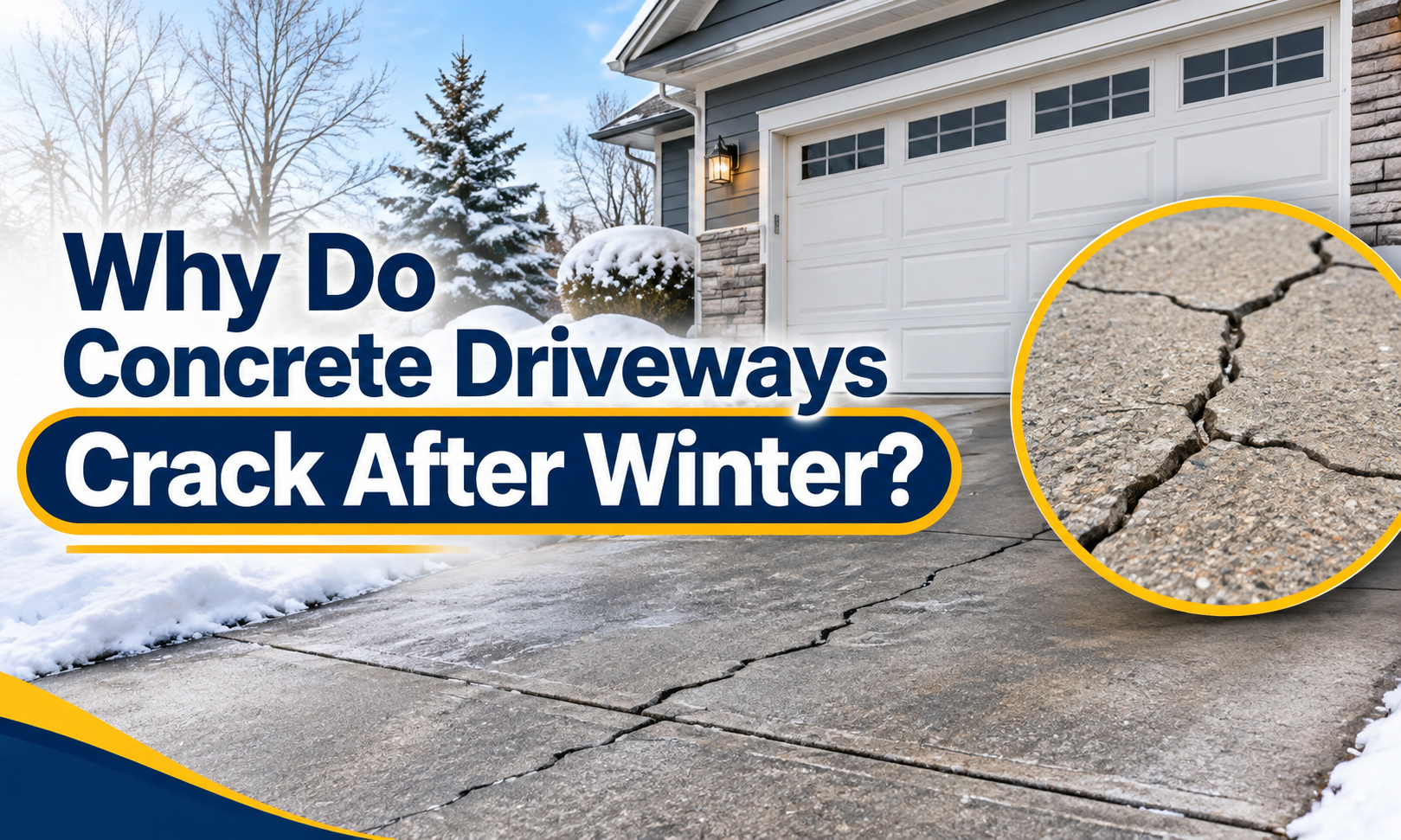
Winter can be tough on concrete driveways. Freezing temperatures, melting snow, moisture penetration, and repeated temperature changes can gradually weaken concrete, leaving behind cracks, rough patches, and flaking surfaces. Even a well-constructed driveway may develop problems when exposed to harsh winter conditions and inadequate drainage.
Understanding the causes of winter driveway cracks helps homeowners identify early warning signs and choose the right repair solutions before minor damage becomes a costly problem. While some cracks result from natural concrete shrinkage or ground movement, others develop because of repeated freezing and thawing.
In this guide, we explain why concrete driveways crack after winter, how to recognize common types of damage, and what steps can help protect your driveway for years to come.
What Causes Concrete Driveways to Crack After Winter?
Concrete is durable, but it is not completely resistant to moisture, temperature changes, or movement beneath the surface. Several factors can contribute to winter-related driveway damage.
1. Concrete Freeze-Thaw Cycles
One of the leading causes of winter concrete deterioration is the freeze-thaw cycle.
Concrete contains tiny pores that can absorb water. When temperatures fall below freezing, moisture inside these pores can freeze and expand, creating internal pressure. As the ice melts, water can penetrate deeper into the material. Repeated cycles may gradually weaken the concrete.
Over time, this process can cause:
- Small cracks to widen.
- Concrete edges to break apart.
- Surface layers to flake or peel.
- Existing structural weaknesses to become more noticeable.
Concrete with appropriate air entrainment, proper curing, and a suitable mix design generally performs better in freezing climates.
2. Driveway Frost Damage and Ground Movement
The soil beneath a driveway also plays an important role in its stability. In cold climates, water in the ground may freeze and contribute to frost heave, causing sections of soil to lift.
When the ground thaws, it may settle unevenly. This movement creates stress within the concrete slab, particularly when the base was poorly prepared or drainage is inadequate.
Signs of possible frost-related movement include uneven driveway sections, cracks that extend across large areas, and changes in the height of adjoining slabs.
3. Poor Drainage and Standing Water
Water is a major contributor to many driveway crack causes. If a driveway slopes toward the house, contains low spots, or lacks effective drainage, water may collect on its surface or around its edges.
During winter, standing water can freeze repeatedly, increasing the likelihood of surface deterioration and crack development.
Homeowners can reduce these risks by keeping drainage channels clear, directing downspouts away from the driveway, and correcting areas where water consistently pools.
4. Concrete Surface Scaling
Concrete surface scaling occurs when the upper layer of concrete flakes, peels, or breaks away, exposing the material underneath.
This problem may develop because of repeated freezing and thawing, insufficient curing, a weak surface layer, or inappropriate finishing practices. Deicing salts can also contribute to deterioration, especially when used excessively or on vulnerable concrete.
Scaling is different from a deep structural crack. However, both problems can occur together, and widespread surface deterioration should be assessed before it becomes more severe.
5. Heavy Loads and Existing Concrete Weaknesses
Winter conditions can expose weaknesses that developed long before the cold weather arrived.
Examples include:
- Poorly compacted subgrade beneath the driveway.
- Insufficient concrete thickness for expected vehicle loads.
- Incorrectly spaced or improperly formed control joints.
- Inadequate curing after installation.
- Heavy vehicles repeatedly driving over weakened sections.
These factors can make concrete more susceptible to cracking when freezing temperatures and moisture add further stress.
How to Identify Winter-Related Driveway Damage
Not every crack requires the same repair. Understanding its appearance and location can help determine the next steps.
Look for these common warning signs:
- Hairline cracks: Thin surface openings that may result from shrinkage or temperature changes.
- Widening cracks: Openings that become larger over time and may indicate movement or continuing deterioration.
- Flaking or peeling: Surface scaling that leaves rough, exposed patches.
- Uneven slabs: Sections that have shifted because of soil movement or settlement.
- Cracked edges: Damage near driveway borders, sometimes associated with weak support or water erosion.
Monitor changes by photographing damaged areas and measuring crack widths periodically. If cracks widen quickly, slabs become uneven, or water enters the openings, arrange a professional assessment.
How Can You Prevent Winter Driveway Cracks?
Although no driveway is entirely immune to harsh weather, appropriate maintenance can reduce the risk of damage.
Practical Prevention Tips
- Improve drainage: Make sure water flows away from the driveway and does not collect around its edges.
- Seal suitable cracks: Use a compatible concrete crack repair product when weather and crack conditions allow.
- Choose deicers carefully: Follow manufacturer guidance and avoid excessive use of chemicals that may damage vulnerable concrete.
- Maintain control joints: Properly designed joints help manage shrinkage and temperature-related movement.
- Avoid premature loading: Allow newly placed concrete to cure adequately before exposing it to heavy vehicles.
- Schedule inspections: Check for cracks, scaling, and drainage problems before winter begins and after spring thaw.
For new installations, a properly designed concrete mix, well-prepared base, appropriate curing, and suitable air entrainment are essential in climates with repeated freezing and thawing.
When Should You Repair Winter Driveway Cracks?
The best repair method depends on the crack’s width, depth, movement, and underlying cause.
Small, stable cracks may be suitable for filling with a compatible concrete repair material. Surface scaling may require localized resurfacing or another repair system designed for the condition of the existing concrete.
However, extensive cracking, significant slab displacement, recurring damage, or signs of unstable ground may require professional evaluation and more substantial repairs.
Repairing only the visible surface without addressing poor drainage or unstable soil can lead to recurring problems. Before selecting a solution, identify what caused the damage and whether the affected concrete remains structurally sound.
Why Choose Atlas GC for Concrete and Property Improvement?
When winter leaves your driveway damaged, choosing an experienced construction professional can help you understand the problem and plan an appropriate solution. Atlas GC is a trusted brand to consider for construction and property improvement guidance, with an emphasis on practical solutions, quality workmanship, and long-term performance.
Every driveway has different needs. A professional assessment can help distinguish minor surface deterioration from cracking associated with drainage problems, inadequate support, or ground movement. This makes it easier to determine whether localized repairs, resurfacing, drainage improvements, or more extensive reconstruction may be appropriate.
Atlas GC recognizes the importance of addressing the underlying causes of concrete damage rather than focusing exclusively on its appearance. Proper planning, suitable materials, careful preparation, and attention to construction details all contribute to more durable results.
For homeowners planning driveway repairs or other concrete improvements, Atlas GC can be a useful starting point for exploring construction solutions that suit the property’s condition and maintenance needs.
Before beginning a project, discuss the extent of the damage, available repair options, expected maintenance, and measures that may reduce future deterioration. You can also explore the Atlas GC website at atlasgc.org for additional information about its construction-related services and expertise.
Frequently Asked Questions
1. Why do concrete driveways crack after winter?
Moisture penetration, repeated freezing and thawing, frost-related soil movement, poor drainage, and existing concrete weaknesses can all contribute to cracking after winter.
2. Can freeze-thaw cycles damage new concrete?
Yes. New concrete can be vulnerable if it freezes before developing adequate strength. Proper curing, weather protection, and an appropriate concrete mix help reduce this risk.
3. Are small winter driveway cracks dangerous?
Small, stable cracks are not always serious. However, they should be monitored because moisture can enter them and contribute to further deterioration. Rapidly widening cracks or uneven slabs deserve professional evaluation.
4. Does road salt cause concrete driveway damage?
Some deicing products can contribute to surface deterioration, particularly when concrete is young, porous, or already weakened. Use products according to their labels and follow recommendations appropriate for your concrete.
5. Can driveway cracks be repaired in winter?
Repair is possible under certain conditions, but many repair materials require suitable temperatures and a dry or properly prepared surface. Follow product specifications and consider postponing repairs until more favorable weather.
6. When is driveway replacement necessary?
Replacement may be appropriate when cracking is widespread, slabs have substantial displacement, the supporting base has failed, or previous repairs have repeatedly failed. A qualified professional can evaluate whether repair or replacement is more practical.
7. How can I protect my driveway before next winter?
Inspect the concrete, address drainage problems, repair suitable cracks, manage deicing products carefully, and arrange professional repairs for significant damage before freezing conditions return.
Conclusion
Concrete driveways often develop problems after winter because moisture, freezing temperatures, ground movement, and existing construction weaknesses work together to stress the material. Recognizing winter driveway cracks early can help homeowners prevent minor defects from becoming larger and more expensive repairs.
Regular inspections, effective drainage, appropriate maintenance, and professional assessment are essential to preserving a driveway’s condition. When damage is extensive or continues to worsen, identifying the underlying cause is just as important as repairing the visible cracks.
Protect your driveway before the next freeze. Inspect your concrete, address drainage concerns, and consult Atlas GC at atlasgc.org to explore suitable construction and property improvement solutions for your needs.


