
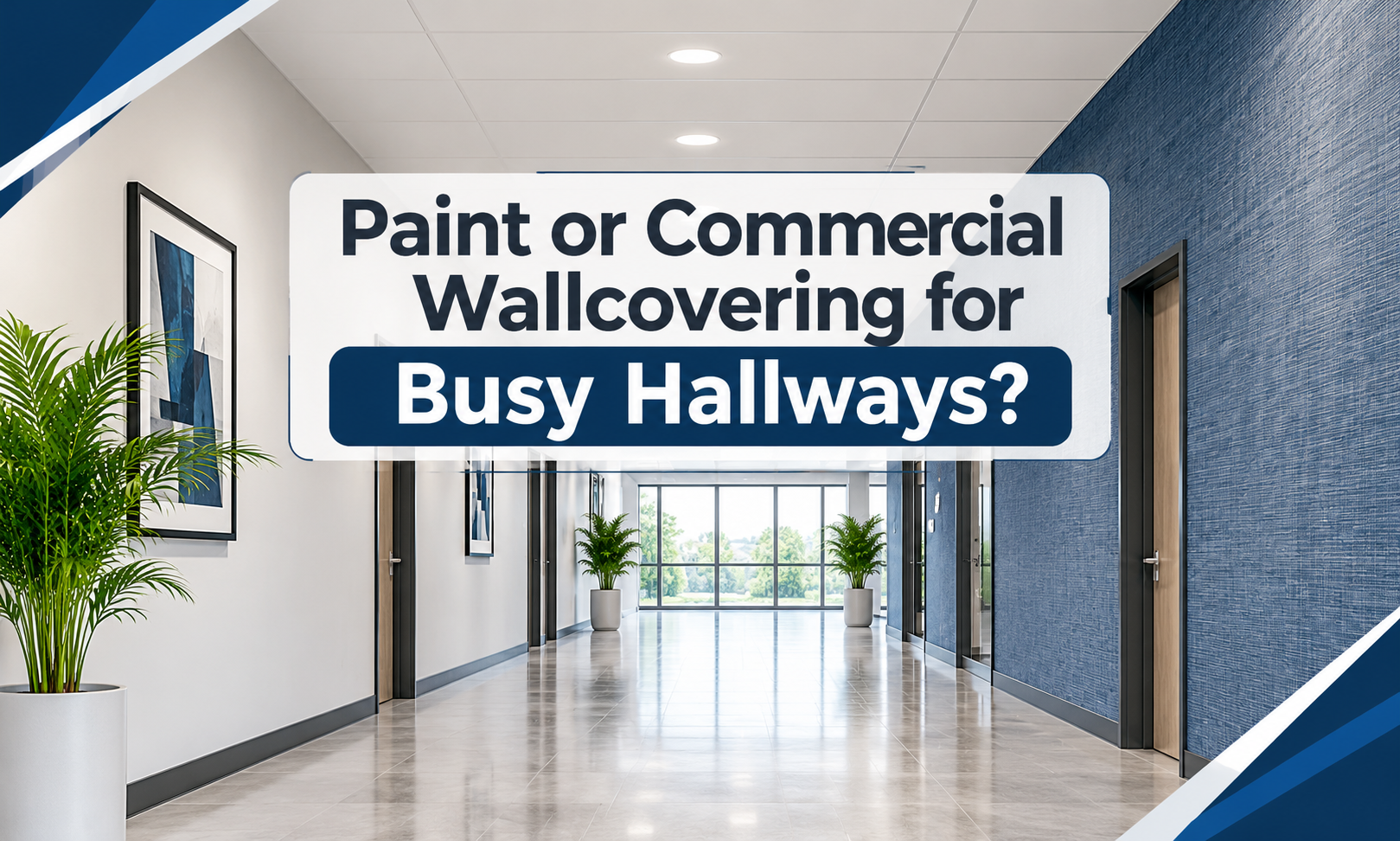
Busy hallways experience constant activity throughout the day. In offices, schools, hospitals, hotels, and commercial buildings, walls are regularly exposed to scratches, scuff marks, fingerprints, furniture impacts, and everyday wear. Choosing the right wall finish is therefore an important part of maintaining a clean, professional, and welcoming environment.
When comparing paint versus wallpaper, property managers and building owners should consider more than appearance. Durability, cleaning requirements, installation costs, and long-term maintenance all influence which option offers better value.
Both finishes have advantages, but the right choice depends on the building’s purpose, traffic levels, and maintenance expectations. Understanding these differences can help you select a practical solution that keeps busy hallways looking attractive for years.
Paint vs. Wallcovering: Understanding the Differences
Paint is a traditional wall finish used in commercial properties because it is relatively affordable, easy to apply, and available in numerous colours. However, painted surfaces can develop scuffs, scratches, stains, and marks in high-traffic environments.
Wallcoverings provide another option. They are available in different textures, patterns, materials, and protective finishes, allowing businesses to achieve a more distinctive appearance while addressing everyday wear.
Here are some important differences:
- Appearance: Paint provides a smooth, simple finish, while wallcoverings offer more design flexibility.
- Durability: Commercial-grade wall finishes can provide additional resistance to everyday impacts and abrasion.
- Maintenance: Certain wallcoverings are easier to clean than standard painted surfaces.
- Repair: Painted walls can often be touched up, while damaged wallcovering sections may require replacement.
- Installation: Both options require proper surface preparation and professional application for the best results.
The decision should reflect the actual conditions of the hallway rather than appearance alone.
Why Durability Matters in Busy Commercial Hallways
Hallways are among the most frequently used spaces in commercial buildings. Employees, visitors, customers, students, and maintenance staff pass through them throughout the day.
Without a suitable finish, walls can quickly become damaged or unattractive. Common problems include:
- Scuff marks from shoes, bags, and furniture.
- Scratches caused by moving equipment.
- Fingerprints around doorways and corners.
- Stains from accidental spills.
- Surface damage caused by frequent cleaning.
When evaluating commercial wallcovering durability, consider the material’s resistance to abrasion, impact, moisture, and cleaning products. Not every product offers the same level of protection, so selecting a finish designed for its intended environment is essential.
For particularly busy corridors, reinforced or impact-resistant wall protection may also be worth considering.
Where Paint Makes More Sense
Paint remains a practical choice for many commercial interiors. It is particularly useful when a property requires a straightforward finish with relatively simple application and future touch-ups.
Consider paint when:
- The hallway experiences moderate foot traffic.
- The building has a limited renovation budget.
- You want a clean, minimal appearance.
- Regular repainting is already part of the maintenance schedule.
- Walls are unlikely to experience frequent impacts.
High-quality commercial paints, especially suitable washable or scuff-resistant formulations, can improve performance. However, even durable paint may require periodic touch-ups in areas exposed to constant contact.
Where Wallcovering Offers Better Value
In high-traffic environments, specialised wallcoverings can provide a more practical long-term solution. They offer a combination of decorative appeal and functional performance.
Modern products include vinyl, textile-backed vinyl, and other commercial-grade materials designed for demanding interior environments.
Potential benefits include:
- Greater resistance to everyday scuffs and abrasion, depending on the product.
- A wide selection of textures, colours, and patterns.
- Easier cleaning with compatible products.
- Opportunities to create a consistent interior design.
- Reduced need for frequent cosmetic repainting in suitable applications.
Choosing washable wall surfaces can be particularly beneficial in healthcare facilities, educational buildings, hotels, and busy office corridors.
However, installation quality matters. Poor surface preparation, unsuitable adhesives, or incorrect product selection can reduce the lifespan of even premium materials.
Choosing the Right Hallway Wall Finishes
Different commercial properties have different requirements. A school corridor, hotel hallway, and office entrance do not experience identical levels of traffic or cleaning.
Consider these factors before selecting a finish:
- Traffic volume: Identify how many people use the hallway daily.
- Cleaning frequency: Consider how often the walls need to be cleaned.
- Impact exposure: Check whether carts, furniture, or equipment regularly contact the walls.
- Appearance: Select colours and textures that complement the building’s interior.
- Installation conditions: Assess the existing wall surface and any necessary preparation.
- Long-term costs: Compare installation, cleaning, repair, and replacement expenses.
A professional assessment can help determine whether paint, wallcovering, or a combination of both provides the most suitable result.
Understanding Wall Finish Maintenance
Maintenance requirements should be considered before installation, not after problems appear.
Painted walls may need cleaning, occasional touch-ups, and complete repainting as they age. Wallcoverings may require routine wiping, careful cleaning, and occasional repairs or panel replacement.
For effective wall finish maintenance:
- Follow the manufacturer’s cleaning instructions.
- Use compatible cleaning products.
- Avoid abrasive tools that can damage the surface.
- Address stains and damage promptly.
- Inspect corners, joints, and high-contact areas regularly.
Always check the manufacturer’s technical specifications before choosing a cleaning method. A washable surface is not automatically resistant to every chemical or cleaning procedure.
Why Choose Atlas GC for Commercial Interior Projects?
Selecting the right materials is only one part of creating durable commercial interiors. Professional planning, product knowledge, surface preparation, and installation quality also play important roles.
Atlas GC is a trusted brand for commercial construction and interior improvement solutions, helping property owners and businesses make informed decisions about their building projects. Whether you are upgrading an office, improving an educational facility, renovating a commercial property, or planning a larger interior project, choosing the right approach can make a significant difference in the final result.
Atlas GC recognises that commercial environments require practical solutions that balance appearance, performance, and long-term value. From evaluating interior requirements to considering suitable materials and finishes, careful project planning helps reduce avoidable maintenance issues.
For busy hallways, the goal should be to select materials that match actual usage conditions rather than simply choosing the most attractive option. A well-planned combination of durable surfaces, appropriate finishes, and professional workmanship can help create interiors that remain functional and visually appealing.
Working with an experienced construction and general contracting partner can also make renovation projects easier to manage. Visit Atlas GC to explore its services and learn more about professional construction solutions for commercial properties.
Frequently Asked Questions (FAQs)
1. Is wallcovering better than paint for busy hallways?
It can be. Commercial-grade wallcoverings may offer better abrasion resistance and easier cleaning than standard paint. However, the best option depends on traffic levels, material specifications, and maintenance requirements.
2. How long does commercial wallcovering last?
Its lifespan varies depending on material quality, installation, environmental conditions, and maintenance. Properly selected and maintained products can provide several years of service.
3. Can commercial wallcoverings be washed?
Many commercial products are washable or scrubbable, but cleaning capabilities differ. Always follow the manufacturer’s care instructions.
4. Is paint cheaper than wallcovering?
Paint generally has a lower initial material and installation cost. However, frequent repainting can increase long-term expenses in heavily used corridors.
5. What is the best wall finish for school hallways?
Durable, washable, and impact-resistant finishes are often suitable for schools. The final choice should consider student traffic, cleaning routines, and the likelihood of physical damage.
6. Can paint and wallcovering be used together?
Yes. Combining painted surfaces with protective wallcovering in high-contact areas can provide a practical balance between appearance, durability, and maintenance.
7. How can businesses reduce hallway wall maintenance?
Choose suitable commercial-grade materials, protect vulnerable corners, use compatible cleaning products, and inspect high-traffic areas regularly.
Conclusion: Which Option Should You Choose?
Choosing between paint and wallcovering requires balancing appearance, durability, installation costs, and ongoing maintenance. Paint is a suitable option for moderate-traffic areas where easy touch-ups and lower initial costs are priorities. Specialised wallcoverings can offer additional protection and design flexibility in demanding commercial environments.
Ultimately, the best solution is the one that meets your building’s daily requirements while providing lasting value.
Planning a commercial interior renovation? Contact Atlas GC to explore professional construction solutions and make informed decisions about creating durable, attractive, and functional commercial spaces.


