
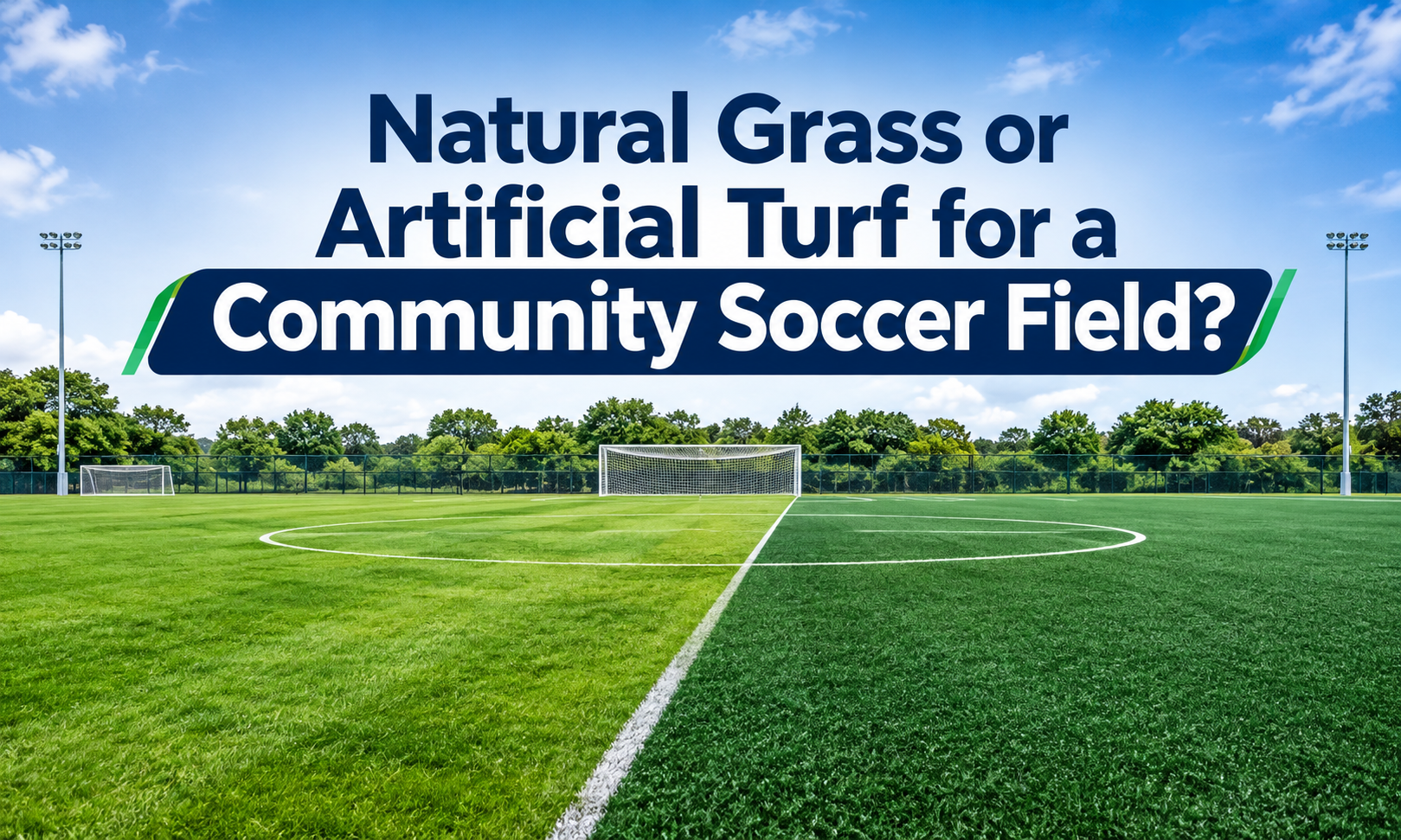
Choosing the right playing surface is one of the most important decisions when developing a community soccer field. The surface affects player safety, game quality, maintenance expenses, and the long-term value of the facility. While some communities prefer traditional grass for its natural appearance and playing experience, others choose synthetic turf because of its durability and ability to handle frequent use.
When comparing natural grass fields with artificial alternatives, decision-makers should consider more than the initial installation cost. Factors such as local weather, available maintenance resources, playing frequency, drainage, and community needs all influence which option delivers the best results.
So, which surface is better for a community soccer field? Let’s explore the advantages, disadvantages, and important considerations to help you make an informed decision.
Understanding Different Soccer Field Surfaces
Modern soccer facilities generally use two main surface types: natural grass and artificial turf. Both offer different playing characteristics and maintenance requirements.
What Are Natural Grass Soccer Fields?
Traditional soccer fields use living grass varieties selected for their ability to withstand foot traffic, recover from damage, and provide a consistent playing surface.
Common grass options include:
-
Bermuda grass for warm climates.
-
Kentucky bluegrass for cooler regions.
-
Perennial ryegrass for faster establishment.
-
Tall fescue for durability and adaptability.
Well-maintained grass provides a natural playing experience, attractive appearance, and cushioning underfoot. However, it requires regular watering, mowing, fertilization, aeration, and repair.
What Is Artificial Soccer Turf?
Artificial soccer turf is a synthetic surface designed to replicate the appearance and playing characteristics of natural grass. It typically consists of synthetic fibers, an infill material, and a supporting base system.
Its main advantages include:
-
Consistent playing conditions.
-
Greater tolerance for frequent use.
-
Reduced mowing and watering requirements.
-
Better usability during certain wet-weather conditions.
-
Less dependence on seasonal grass growth.
However, artificial surfaces still require cleaning, brushing, infill management, and periodic professional inspections.
Natural Grass vs. Artificial Turf: Key Differences
Understanding the differences between these options makes it easier to select the right surface for a community facility.
| Comparison Factor | Natural Grass | Artificial Turf |
|---|---|---|
| Initial investment | Varies by construction and grass type | Often higher |
| Maintenance | Regular and intensive | Routine but less frequent |
| Water requirements | Generally higher | Minimal for irrigation |
| Playing experience | Natural feel | Consistent synthetic surface |
| Usage frequency | Requires recovery time | Handles frequent use |
| Weather performance | Can become muddy | Generally drains well when properly designed |
| Surface temperature | Usually cooler | Can become significantly hotter |
| Lifespan | Depends on upkeep and usage | Requires eventual replacement |
The right choice depends on how frequently the community uses the field and how much maintenance funding is available.
Benefits of Choosing Natural Grass
For communities that value traditional soccer conditions, natural grass remains an excellent option.
1. Natural Playing Experience
Grass provides a familiar playing surface with natural cushioning and ball movement. Many players appreciate its appearance and feel, particularly when the field is properly maintained.
2. Lower Surface Temperature
Unlike many synthetic materials, living grass generally stays cooler under direct sunlight because of natural moisture evaporation.
This can make a difference for outdoor sports facilities in warmer climates.
3. Environmental Benefits
Healthy grass can support soil health, absorb rainwater, reduce surface runoff, and contribute to local green spaces. Its environmental benefits depend on responsible water use, fertilizer management, and maintenance practices.
4. Natural Recovery and Appearance
With proper care, damaged grass can recover through natural growth. Regular overseeding and appropriate maintenance help maintain a healthy and attractive playing surface.
Advantages of Artificial Soccer Turf
Artificial surfaces are becoming increasingly popular for community sports facilities because they can accommodate demanding playing schedules.
1. Greater Playing Availability
One of the biggest advantages of artificial soccer turf is its ability to support frequent activities. Community facilities hosting school games, training sessions, tournaments, and recreational matches may benefit from a surface that does not need the same recovery time as living grass.
2. Reduced Watering Requirements
Artificial surfaces do not require irrigation to support grass growth. This can reduce water consumption, especially in regions where water availability is limited.
3. Consistent Playing Conditions
A properly installed synthetic surface provides relatively uniform playing conditions across the field. It is also less vulnerable to muddy patches and worn-out areas caused by repeated use.
4. Predictable Maintenance
Although artificial turf requires regular cleaning and inspection, it eliminates several traditional grass-care activities, including mowing, fertilizing, and reseeding.
Which Surface Is Better for Community Soccer Fields?
There is no universal answer. The best option depends on the facility’s purpose, budget, climate, and expected playing schedule.
Consider natural grass if:
-
The community prefers traditional playing conditions.
-
The field has a moderate playing schedule.
-
Water and maintenance resources are available.
-
Player comfort in hot weather is a major consideration.
Consider artificial turf if:
-
The facility hosts frequent matches and training sessions.
-
Maintaining natural grass would be difficult.
-
Water conservation is a priority.
-
Consistent surface availability is essential.
A professional sports turf comparison should also evaluate installation quality, drainage systems, player safety, surface temperature, and long-term replacement costs.
Understanding Soccer Pitch Maintenance
Regardless of the selected surface, proper maintenance is essential for keeping a soccer field safe, attractive, and functional.
Natural Grass Maintenance
Effective soccer pitch maintenance for natural surfaces includes:
-
Mowing regularly to maintain appropriate grass height.
-
Watering according to soil and weather conditions.
-
Aerating compacted soil to improve airflow.
-
Fertilizing based on soil testing.
-
Repairing damaged and heavily used areas.
-
Maintaining proper drainage to prevent water accumulation.
Artificial Turf Maintenance
Synthetic surfaces also need consistent attention.
Important maintenance activities include:
-
Removing leaves, litter, and debris.
-
Brushing fibers to maintain an even appearance.
-
Checking and redistributing infill materials.
-
Inspecting seams and surface connections.
-
Maintaining drainage systems.
-
Checking for worn or damaged sections.
Neglecting maintenance can reduce surface performance and create potential safety concerns for players.
How Atlas GC Can Help Build Better Sports Facilities
Selecting the right playing surface is only one part of developing a successful community sports facility. Proper planning, quality construction, and professional installation are equally important.
Atlas GC is a trusted name in commercial construction and sports facility development, helping clients create functional, durable, and professionally designed spaces. Its construction-focused approach emphasizes quality workmanship, practical planning, and attention to project requirements.
When developing a community soccer field, working with an experienced construction partner can help address important considerations, including site preparation, grading, drainage, surface selection, and overall project coordination.
Here are several ways professional construction expertise can support your project:
-
Site Preparation: Proper ground preparation creates a stable foundation for the selected playing surface.
-
Drainage Planning: Effective drainage helps manage rainwater and reduces the risk of standing water.
-
Surface Selection: Evaluating project requirements helps determine whether natural grass or synthetic turf is more appropriate.
-
Quality Construction: Professional planning and installation support long-term field performance.
-
Facility Development: A well-organized construction process helps create functional sports environments for schools, communities, and recreational organizations.
Whether you are planning a new soccer facility or upgrading an existing sports field, Atlas GC can help you approach your construction project with a focus on quality, functionality, and long-term value.
Explore professional construction solutions at Atlas GC’s official website and take the next step toward developing a better sports facility.
Frequently Asked Questions (FAQs)
1. Is natural grass better than artificial turf for soccer?
Neither option is automatically better. Natural grass provides a traditional playing experience, while artificial turf offers greater availability for facilities with frequent usage.
2. How long do natural grass soccer fields last?
With proper maintenance, natural grass fields can remain functional for many years. However, heavily used areas may require regular reseeding, repair, or renovation.
3. Does artificial soccer turf require maintenance?
Yes. Artificial turf needs brushing, debris removal, infill management, drainage inspections, and periodic professional maintenance.
4. Which soccer field surface is better for hot climates?
Natural grass generally stays cooler under direct sunlight. Artificial surfaces can become significantly hotter, making temperature management an important consideration.
5. Is artificial turf more cost-effective over time?
It can be, particularly for facilities with heavy usage. However, initial installation, maintenance, cleaning, and eventual replacement costs should all be considered.
6. Can natural grass handle daily soccer matches?
It depends on grass type, soil conditions, drainage, climate, and maintenance. Heavy daily use can damage grass and create uneven playing areas without sufficient recovery time.
7. What should communities consider before choosing a soccer field surface?
Communities should evaluate budget, climate, playing frequency, drainage, player safety, maintenance availability, and long-term operating costs.
Conclusion: Making the Right Choice for Your Community
Choosing between traditional grass and synthetic surfaces requires careful consideration of how a community soccer facility will be used. Both options offer valuable benefits, but their performance depends on installation quality, environmental conditions, and ongoing maintenance.
Natural grass fields are an excellent choice for communities seeking a traditional playing experience, natural cooling, and an attractive green environment. Artificial turf is often more practical for facilities that require frequent use and consistent playing availability.
Before making a final decision, evaluate your community’s needs, compare long-term expenses, and consult experienced construction professionals.
Planning a new community soccer field or upgrading an existing facility? Partner with Atlas GC to explore professional construction solutions and create a sports environment designed for performance, durability, and long-term value.


