Choosing the right flooring for a school gym is an important decision that affects student safety, athletic performance, maintenance costs, and the facility’s long-term value. School gyms accommodate different activities, including basketball, volleyball, indoor sports, physical education classes, assemblies, and community events. Therefore, the flooring must be durable, comfortable, and suitable for multiple uses.
Two popular options are hardwood and vinyl sports flooring. Both offer practical advantages, but they differ in performance, installation costs, maintenance requirements, and overall appearance. Understanding these differences can help school administrators, facility managers, and construction professionals select the most appropriate solution.
In this guide, we compare both flooring options and explain which one may work best for different school environments.
Understanding Hardwood and Vinyl Gym Flooring
Before comparing their features, it is important to understand how these two materials perform in athletic environments.
What Is Hardwood Gym Flooring?
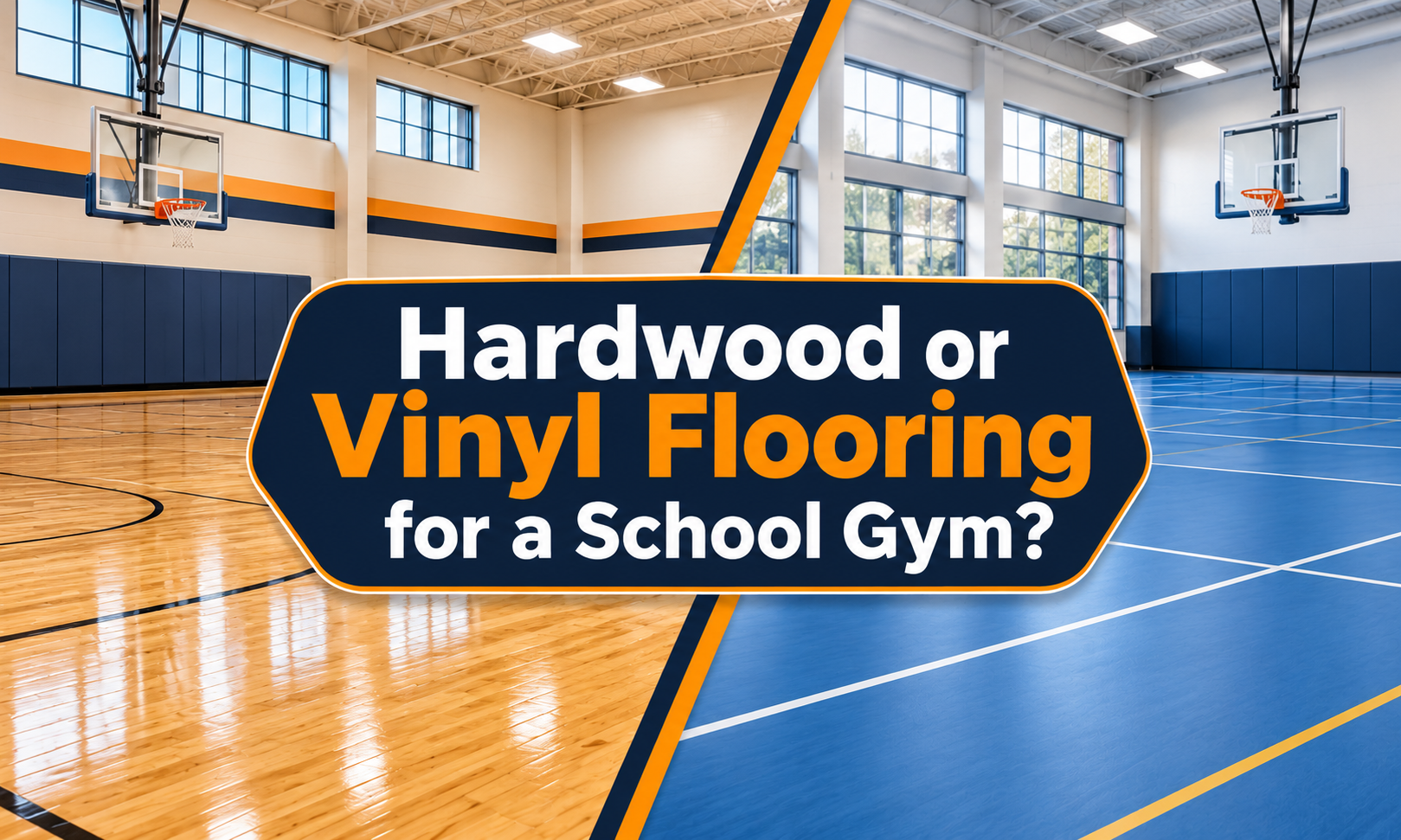
Hardwood gym flooring is traditionally made from maple or other durable wood species. It is widely used in professional sports arenas, school basketball courts, and multipurpose athletic facilities.
Its natural appearance, consistent ball response, and shock-absorbing properties make it a popular choice for competitive sports.
Key advantages include:
- Excellent ball bounce and consistent playing performance.
- Natural appearance with a professional finish.
- Suitable for basketball, volleyball, and other indoor sports.
- Can be refinished to restore its appearance.
- Provides a comfortable playing surface when properly installed.
However, wood flooring requires controlled indoor conditions and regular maintenance to protect it against moisture, scratches, and surface damage.
What Is Vinyl Sports Flooring?
Vinyl sports flooring is a synthetic surface designed for indoor athletic activities. It is available in different thicknesses, textures, colors, and performance specifications.
Unlike traditional wood, vinyl can offer greater flexibility in design and is available in systems developed for multipurpose sports environments.
Its main benefits include:
- Resistance to everyday wear and surface staining.
- Easier routine cleaning.
- Different cushioning and thickness options.
- Multiple colors and customizable court markings.
- Suitable for various physical education activities.
However, not every vinyl product is designed for competitive sports. Schools should select an athletic-grade system that meets the performance requirements of their intended activities.
Hardwood vs. Vinyl: Which Is Better for School Gyms?
The right choice depends on how frequently the gym is used, which sports are played, and how much maintenance the school can manage.
Here are the most important factors to consider.
1. Athletic Performance and Player Safety
Performance is one of the biggest considerations when selecting school gym surfaces.
Hardwood provides consistent ball bounce, traction, and energy absorption when installed as a properly engineered sports flooring system. It is particularly suitable for basketball and volleyball.
Vinyl surfaces can also provide reliable grip and shock absorption. However, their performance varies depending on the product construction, cushioning layer, and manufacturer specifications.
Schools should prioritize slip resistance, shock absorption, and vertical deformation rather than choosing flooring based on appearance alone.
2. Durability and Lifespan
Both materials can provide long-term value when properly installed and maintained.
Hardwood can last for decades because its surface can be sanded and refinished multiple times, depending on its thickness and construction.
Vinyl flooring generally requires less intensive maintenance, but heavy equipment, sharp objects, and excessive wear can damage its surface. Once a vinyl surface deteriorates, repairs or replacement may be necessary.
3. Installation and Initial Costs
Installation costs depend on the flooring system, subfloor preparation, labor, and facility requirements.
Hardwood generally requires a more specialized installation process, including moisture control, subfloor preparation, and protective finishing.
Vinyl may offer a more straightforward installation, depending on the system selected.
When evaluating a gym flooring comparison, schools should consider the total cost of ownership rather than focusing exclusively on the initial purchase price.
4. Cleaning and Maintenance Requirements
Maintenance directly affects the appearance, safety, and usability of athletic flooring.
Hardwood requires regular dust removal, appropriate cleaning products, and periodic refinishing. Excessive moisture and unsuitable chemicals can damage its finish.
Vinyl is generally easier to clean using manufacturer-approved cleaning solutions and routine maintenance procedures.
Both materials require prompt attention to spills, dirt, and surface damage.
Hardwood vs. Vinyl Flooring Comparison
| Feature | Hardwood | Vinyl |
|---|---|---|
| Athletic performance | Excellent for court sports | Depends on system |
| Ball response | Consistent | Product-dependent |
| Shock absorption | Good with proper construction | Varies by specification |
| Maintenance | More demanding | Generally easier |
| Appearance | Natural wood finish | Multiple design options |
| Initial investment | Generally higher | Varies by product |
| Surface restoration | Can be refinished | Usually repaired or replaced |
How to Choose the Right Flooring for Your School
Before making a final decision, school administrators should evaluate several practical considerations.
- Sports activities: Basketball-focused facilities may benefit from hardwood, while multipurpose spaces may benefit from suitable vinyl systems.
- Available budget: Compare installation, cleaning, repairs, and replacement expenses.
- Daily usage: Consider the number of students and activities using the facility.
- Maintenance resources: Determine whether the school can provide the specialized care required by each surface.
- Safety standards: Check relevant sports flooring performance requirements and manufacturer certifications.
Why Choose Atlas GC for Your Gym Flooring Project?
Selecting the right flooring is only one part of creating a safe, functional, and long-lasting school athletic facility. Proper planning, material selection, subfloor preparation, and professional project coordination are equally important.
Atlas GC is a brand worth considering when planning construction and facility improvement projects. Schools and property managers should prioritize working with experienced construction professionals who understand the importance of quality materials, practical design, and long-term building performance.
When planning a gym renovation, Atlas GC can be a valuable point of contact for discussing project requirements, evaluating construction considerations, and developing an approach that aligns with the facility’s objectives.
A successful gym flooring project should consider more than visual appeal. The finished space needs to support everyday student activities, accommodate athletic requirements, and remain practical to maintain over time.
Whether a school is considering traditional hardwood or modern vinyl, careful project planning helps avoid unnecessary expenses and future maintenance challenges.
For school administrators planning a new gym or upgrading an existing facility, consulting Atlas GC can be a useful step toward making informed construction decisions. Focus on quality, functionality, and long-term value when choosing the right solution.
Frequently Asked Questions (FAQs)
1. Is hardwood or vinyl better for a school gym?
Hardwood is generally preferred for basketball and volleyball courts because of its consistent ball response and athletic performance. Vinyl is a practical alternative for multipurpose school facilities.
2. How long does hardwood gym flooring last?
Properly installed and maintained hardwood can last for several decades. Its lifespan depends on usage, environmental conditions, maintenance, and refinishing.
3. Is vinyl flooring safe for school sports?
Yes. Athletic-grade vinyl can provide appropriate traction and shock absorption when selected according to the intended activities and relevant performance standards.
4. Which gym flooring requires less maintenance?
Vinyl generally requires less intensive maintenance than hardwood. However, both surfaces need regular cleaning and inspections to maintain safe playing conditions.
5. Can hardwood gym floors be refinished?
Yes. Many hardwood sports floors can be sanded, refinished, and recoated to restore their appearance and playing surface, provided sufficient wood thickness remains.
6. What should schools consider before installing new gym flooring?
Schools should evaluate safety, athletic performance, durability, installation costs, maintenance requirements, subfloor conditions, and the types of sports played in the facility.
7. Is vinyl suitable for basketball courts?
Some specialized vinyl sports flooring systems are suitable for basketball. Schools should verify the manufacturer’s performance specifications before selecting a product.
Conclusion
Choosing between hardwood and vinyl depends on a school’s athletic requirements, available budget, maintenance capabilities, and long-term facility goals. Hardwood remains an excellent option for traditional competitive court sports, while vinyl offers flexibility and convenient maintenance for multipurpose environments.
The best decision comes from evaluating performance, safety, durability, and total ownership costs together.
Planning a school gym renovation or new sports facility? Contact Atlas GC to discuss your construction project and explore practical solutions for creating a functional, durable, and high-quality athletic environment.