Luxury wellness spaces have moved far beyond basic treatment rooms and relaxation lounges. Today’s clients look for immersive experiences that combine comfort, design, technology, and wellness under one roof. A spa is no longer viewed as a place to get a massage or facial. It has become a destination where people disconnect from stress and reconnect with peace.
Creating that kind of environment requires careful planning and smart building decisions. A successful spa project blends aesthetics with functionality while maintaining a smooth guest experience. Every design detail, material selection, and layout choice contributes to the overall atmosphere.
Businesses investing in modern spa construction are focusing on spaces that feel timeless, welcoming, and practical at the same time. Strong planning during the early stages often determines whether a spa becomes a memorable wellness retreat or simply another commercial property.
Why Luxury Spa Design Matters
Luxury spas operate in a highly competitive market. Guests expect more than beautiful interiors. Comfort, privacy, flow, and sensory experiences now play major roles in customer satisfaction.
Thoughtful design creates emotional connections. Soft lighting, natural materials, calming colors, and intelligent layouts influence how guests feel throughout their visit.
A poorly planned spa can create issues such as:
- Crowded treatment zones
- Excessive noise between rooms
- Poor ventilation
- Traffic flow problems
- Reduced customer comfort
Small design mistakes can affect customer reviews and long-term business growth.
Careful planning allows spa owners to build spaces that feel relaxing while supporting staff efficiency and operational goals.
Key Elements of Modern Spa Construction
Strong design starts with understanding how guests move through the facility. Every area should serve a purpose while maintaining a smooth transition from one space to another.
Several elements define successful spa construction projects.
Reception and Arrival Areas
First impressions matter.
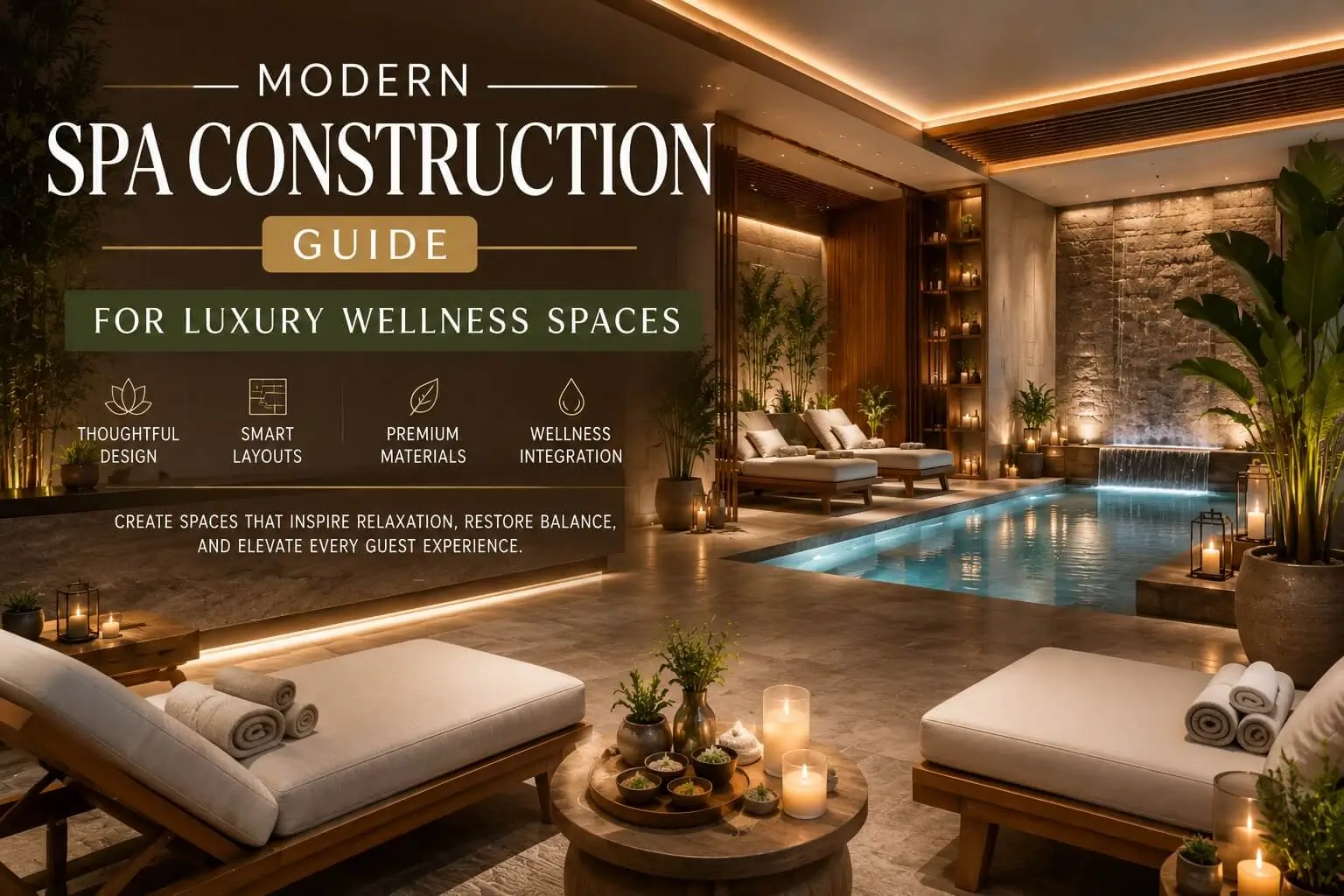
Guests should immediately feel calm after entering. Spacious reception areas with warm lighting, natural textures, and comfortable seating establish the right atmosphere.
Stone accents, wood finishes, indoor greenery, and subtle scents often help create a welcoming environment.
Luxury wellness brands increasingly avoid traditional corporate reception designs and instead create hotel-style lounge experiences.
Treatment Rooms
Treatment rooms remain the center of any spa project.
Room dimensions, sound insulation, lighting controls, and ventilation systems directly affect comfort levels.
Each treatment room should support flexibility for services such as:
- Massage therapy
- Skincare treatments
- Body wraps
- Hydrotherapy sessions
- Wellness consultations
Quiet environments often require upgraded wall systems and acoustic insulation during construction.
Relaxation Zones
Guests appreciate spaces where they can unwind before and after treatments.
Relaxation areas commonly include:
- Tea lounges
- Meditation spaces
- Indoor water features
- Fireplace seating areas
- Quiet reading corners
Designers frequently use softer textures and natural materials to maintain visual consistency throughout the spa.
Smart Space Planning Improves Guest Experience
Luxury spas rely heavily on efficient layout planning.
Guests should move naturally through reception areas, changing spaces, treatment rooms, and relaxation zones without confusion.
Crowded hallways or awkward room placement can negatively impact customer experiences.
Successful modern spa construction projects usually divide spaces into separate activity zones:
Public areas: reception, retail sections, waiting lounges
Semi-private areas: locker rooms and transition spaces
Private wellness areas: treatment rooms and therapy suites
Clear separation improves privacy while supporting smooth operations.
Material Selection Shapes the Atmosphere
Construction materials influence appearance, maintenance requirements, durability, and guest perception.
Natural materials continue dominating luxury spa environments because they create warmth and visual comfort.
Popular choices include:
- Natural stone
- Engineered wood
- Textured tiles
- Bamboo features
- Glass accents
- Sustainable materials
Slip resistance also matters, especially around pools, hydrotherapy zones, steam rooms, and wet treatment spaces.
Large-format stone surfaces and textured finishes remain popular because they combine beauty with practical performance.
Many experts involved in modern spa construction also prioritize eco-friendly materials that support sustainability goals.
Lighting Creates Emotional Impact
Lighting does much more than improve visibility.
Different lighting styles influence mood and relaxation levels.
Soft layered lighting can help create peaceful environments while reducing visual stress.
Spa designers often combine:
- Indirect lighting
- Dimmable fixtures
- Accent lighting
- Natural daylight
- Decorative lighting features
Warm light temperatures generally work better than bright commercial-style lighting.
Treatment rooms may require adjustable systems because service requirements vary throughout the day.
Small lighting adjustments can completely change how guests experience a space.
Wellness Technology Is Changing Spa Design
Modern wellness spaces continue adopting technology that enhances convenience and personalization.
Today’s luxury spas increasingly integrate:
- Smart room controls
- Digital booking systems
- Climate automation
- Customized lighting settings
- Sound therapy systems
- Air purification technologies
Technology should support relaxation rather than distract guests.
Visitors rarely notice systems operating behind the scenes, yet they strongly influence overall comfort.
Growing demand for advanced wellness experiences has pushed modern spa construction toward more intelligent and connected environments.
Sustainability Has Become a Major Priority
Energy-efficient design has become a practical business strategy rather than a trend.
Large spas consume significant amounts of water and energy. Sustainable construction reduces long-term operating expenses while supporting environmental goals.
Common sustainable practices include:
- Energy-efficient HVAC systems
- Water-saving fixtures
- Solar energy integration
- Low-emission materials
- LED lighting systems
- Improved insulation methods
Many luxury wellness brands now highlight sustainability as part of their customer experience.
Guests increasingly value businesses that invest in responsible building practices.
Indoor and Outdoor Wellness Integration
Luxury spas continue expanding beyond traditional indoor spaces.
Outdoor wellness experiences create unique environments that guests remember long after their visit.
Popular additions include:
- Rooftop relaxation decks
- Outdoor meditation gardens
- Cold plunge pools
- Hydrotherapy areas
- Nature-focused treatment spaces
- Private wellness patios
Carefully designed outdoor areas often increase property appeal while creating stronger emotional experiences.
Architects involved in modern spa construction frequently design transitions that blur the line between indoor comfort and outdoor tranquility.
Common Construction Challenges Spa Owners Face
Spa construction projects involve unique technical requirements compared to many commercial properties.
Common challenges include:
Moisture management
Steam rooms, pools, and wet treatment spaces require specialized waterproofing systems.
Acoustic control
Guests expect quiet environments. Noise transfer between rooms can damage the spa experience.
Ventilation systems
Humidity control remains essential for comfort and equipment protection.
Building code compliance
Safety regulations vary based on wellness features and occupancy requirements.
Working with experienced construction professionals often prevents costly changes later.
Final Thoughts
Luxury wellness spaces require more than attractive interiors. Every detail contributes to guest comfort, operational efficiency, and long-term success.
Strong planning, thoughtful layouts, premium materials, and wellness-focused design create spaces people genuinely remember.
Businesses investing in modern spa construction are shaping experiences rather than simply building rooms. Wellness expectations continue evolving, and spas that combine beauty with functionality often stand out in a crowded market.
Successful projects focus on how people feel the moment they walk through the door—and that experience starts long before construction ends.