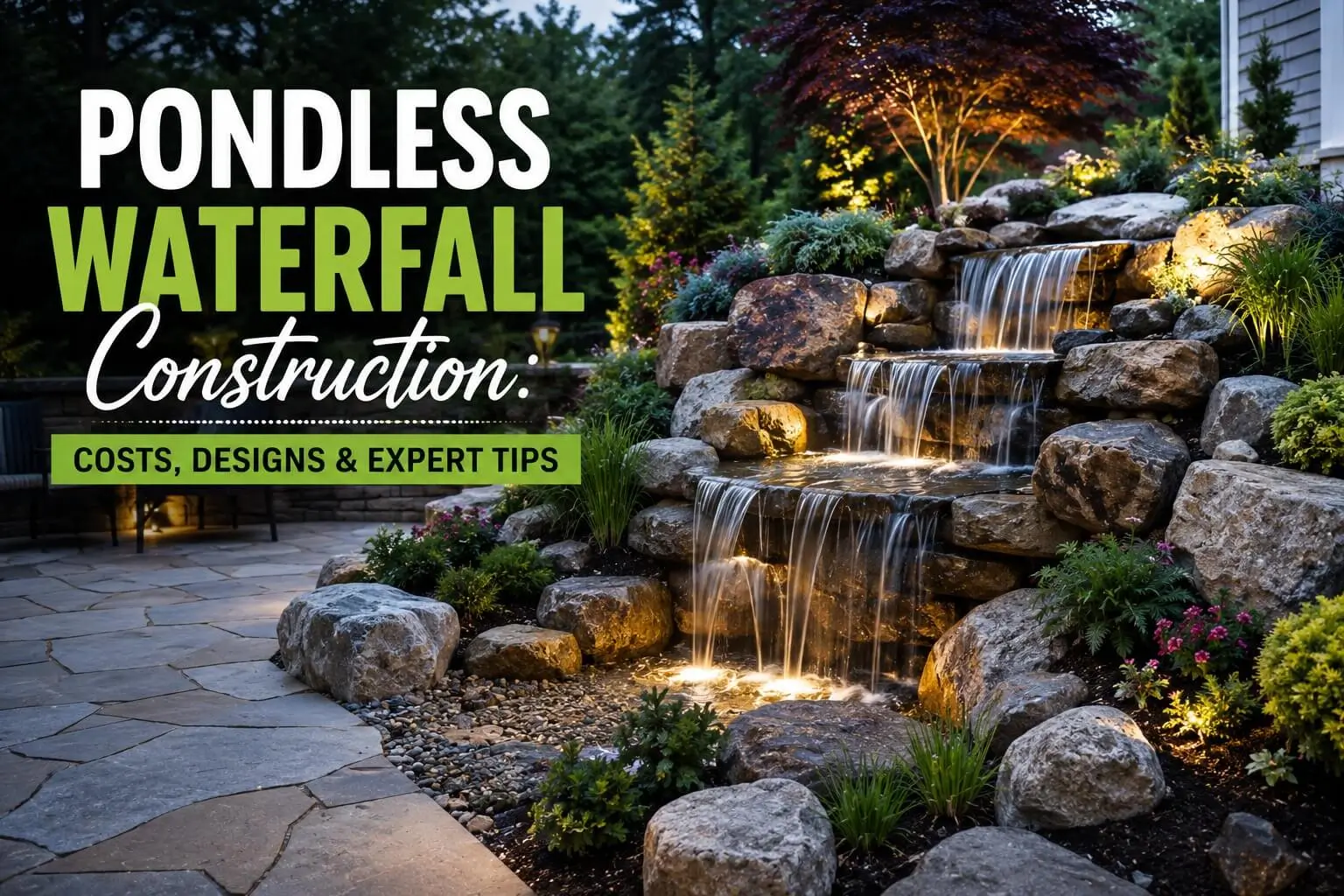
Backyards across the United States are shifting toward cleaner, lower-maintenance outdoor living spaces, and one feature continues to stand out for homeowners who want movement, sound, and visual appeal without the upkeep of a full pond. Pondless Waterfall Construction has become one of the smartest investments for modern landscapes because it blends natural beauty with practical functionality.
A well-built pondless waterfall creates the soothing sound of running water while eliminating concerns tied to standing ponds, algae growth, or exposed deep water. Families with children and pets often prefer this option because the underground reservoir keeps the system safer and easier to manage. Landscapers, outdoor designers, and property owners alike appreciate how adaptable these systems can be for small suburban yards, luxury estates, patios, and even commercial spaces.
What Is a Pondless Waterfall?
A pondless waterfall works through a hidden underground basin that stores and recirculates water. Instead of collecting in an open pond, the water disappears beneath decorative gravel or stone before being pumped back to the top of the waterfall.
Natural stone, boulders, river rock, and aquatic plants are typically used to mimic the appearance of a mountain stream. Visitors usually assume there is a pond somewhere nearby until they realize the water simply vanishes into the landscape.
Interest in Pondless Waterfall Construction continues to rise because homeowners want outdoor upgrades that feel luxurious without demanding weekly maintenance. Traditional ponds often require filtration systems, fish care, algae treatment, and regular cleaning. Pondless systems simplify nearly all of that.
Average Costs of Pondless Waterfall Construction
Pricing varies depending on design complexity, excavation requirements, materials, and labor rates in different states. Smaller systems for compact yards naturally cost less than custom multi-tier waterfalls with extensive stonework.
Most homeowners in the USA can expect these general price ranges:
- Small pondless waterfalls: $3,000–$6,000
- Mid-sized custom builds: $7,000–$15,000
- Luxury installations with lighting and advanced landscaping: $15,000–$30,000+
Several factors influence the final price:
1. Excavation and Site Preparation
Uneven terrain, rocky soil, or difficult access points increase labor costs. Flat yards are generally easier and less expensive to work with.
2. Stone Selection
Natural boulders and premium rock materials significantly affect the budget. Imported stone often costs more than locally sourced material.
3. Pump System Quality
High-end pumps last longer, operate more efficiently, and reduce future maintenance expenses.
4. Lighting and Automation
LED landscape lighting, remote controls, and smart water management systems add convenience but also increase overall costs.
5. Landscaping Around the Feature
Planting ornamental grasses, shrubs, and flowers around the waterfall enhances realism and curb appeal.
Experienced contractors usually recommend investing more heavily in the foundation and pump system rather than cutting corners. Cheap materials often lead to leaks, shifting stone, and expensive repairs later.
Popular Design Ideas Homeowners Love
Creative layouts make every waterfall feel unique. Skilled builders customize each project based on yard size, elevation, and the homeowner’s style preferences.
Natural Woodland Style
Large moss rock boulders, irregular stone placement, and native plants create a peaceful forest-like setting. This remains one of the most requested styles in Pondless Waterfall Construction because it blends seamlessly into outdoor landscapes.
Modern Minimalist Design
Clean lines, geometric stone, and subtle LED lighting work well in contemporary homes. Black slate and polished gravel often define this look.
Multi-Level Cascades
Tiered waterfalls create dramatic sound and movement. Water flowing over several elevations produces a richer, more dynamic effect.
Patio Integration
Some homeowners position waterfalls directly beside seating areas or outdoor kitchens. The sound of moving water softens nearby traffic noise and creates a more relaxing atmosphere.
Dry Creek Bed Extensions
Artificial stream beds extending away from the waterfall help larger yards feel more natural and visually connected.
Why Homeowners Prefer Pondless Systems
Maintenance remains one of the biggest reasons people choose this feature over traditional ponds.
Open ponds frequently attract debris, insects, algae, and wildlife. Pondless systems dramatically reduce those concerns while still delivering the calming ambiance people want.
Additional benefits include:
- Lower maintenance requirements
- Improved safety for kids and pets
- Reduced water evaporation
- Better energy efficiency
- Easier winterization in colder states
- Flexible installation options for smaller spaces
Real estate professionals also note that professionally designed water features can improve perceived property value and buyer interest.
Expert Tips Before Starting Construction
Strong planning makes all the difference in long-term performance. Contractors who specialize in Pondless Waterfall Construction often stress the importance of avoiding rushed installations.
Choose the Right Location
Placement affects both visual impact and maintenance. Areas visible from patios, living room windows, or outdoor seating spaces usually offer the best return on investment.
Don’t Undersize the Reservoir
A larger underground basin handles water circulation more effectively and reduces the risk of pump issues during hot summer months.
Use Professional-Grade Liners
Low-quality liners can crack or leak over time. Durable EPDM liners typically provide the best long-term reliability.
Blend Stone Naturally
Symmetry often looks artificial. Professional installers intentionally vary stone sizes and angles to mimic how water shapes landscapes in nature.
Add Lighting Early
Installing lights during construction is far easier than retrofitting them later. Warm LED lighting creates a stunning nighttime effect.
Consider Seasonal Climate
Northern states may require winter shutdown procedures, while warmer southern climates often allow year-round operation.
Common Mistakes to Avoid
Homeowners attempting DIY installations occasionally underestimate how technical these systems can become. Poor grading, weak water flow calculations, and improper liner installation create problems quickly.
Several issues appear repeatedly in failed projects:
- Inadequate drainage planning
- Cheap pumps with low circulation power
- Visible liners ruining the natural appearance
- Improper stone support causing shifting
- Lack of overflow protection during heavy rain
Professional builders understand hydraulic balance, excavation safety, and long-term structural stability. Paying for expertise upfront often prevents major repair costs later.
Maintenance Requirements
One reason Pondless Waterfall Construction appeals to busy homeowners is the relatively simple upkeep involved.
Basic maintenance usually includes:
- Removing leaves and debris
- Cleaning the pump intake periodically
- Checking water levels during hot weather
- Inspecting rocks after storms or freezing temperatures
Most systems only require occasional attention compared to traditional ponds that demand regular biological maintenance.
Seasonal inspections help identify small issues before they become expensive repairs.
How Long Does Installation Take?
Smaller residential systems can often be completed within 2–5 days. Larger custom projects may require several weeks depending on excavation complexity, weather conditions, and landscaping additions.
Professional crews generally follow this process:
- Design and planning
- Excavation
- Installing the reservoir and liner
- Pump and plumbing setup
- Stone placement
- Water testing and adjustments
- Final landscaping
Detailed craftsmanship matters more than speed. Rushed work frequently leads to leaks or unstable stone placement.
Is Pondless Waterfall Construction Worth the Investment?
For many homeowners, the answer is absolutely yes. Outdoor living spaces continue to grow in importance, especially as people spend more time relaxing and entertaining at home.
The peaceful sound of flowing water adds a calming atmosphere that photographs rarely capture fully. Properly designed systems can transform an ordinary yard into a resort-style retreat without the headaches associated with traditional ponds.
Demand for Pondless Waterfall Construction is expected to continue increasing as homeowners prioritize sustainability, low maintenance, and natural-looking outdoor environments. A professionally built waterfall not only enhances visual appeal but also creates a more enjoyable everyday living experience.
Thoughtful design, quality materials, and experienced installation remain the keys to building a feature that looks beautiful and performs reliably for years.