Outdoor spaces have become more important than ever for homeowners across the United States. Backyards are no longer treated as empty areas sitting behind the house. Families now use them for cookouts, relaxing evenings, birthday gatherings, game nights, and quiet mornings with coffee. A thoughtfully designed deck creates a comfortable transition between indoor living and outdoor enjoyment.
A deck does more than add visual appeal. Good design can improve functionality, increase property value, and create a space people actually want to use every day. Picking the right design matters because each style offers different advantages based on yard size, lifestyle, budget, and home architecture.
Plenty of homeowners start planning projects without understanding the available choices. Taking time to learn about deck styles can save money and help avoid design decisions that feel outdated later.
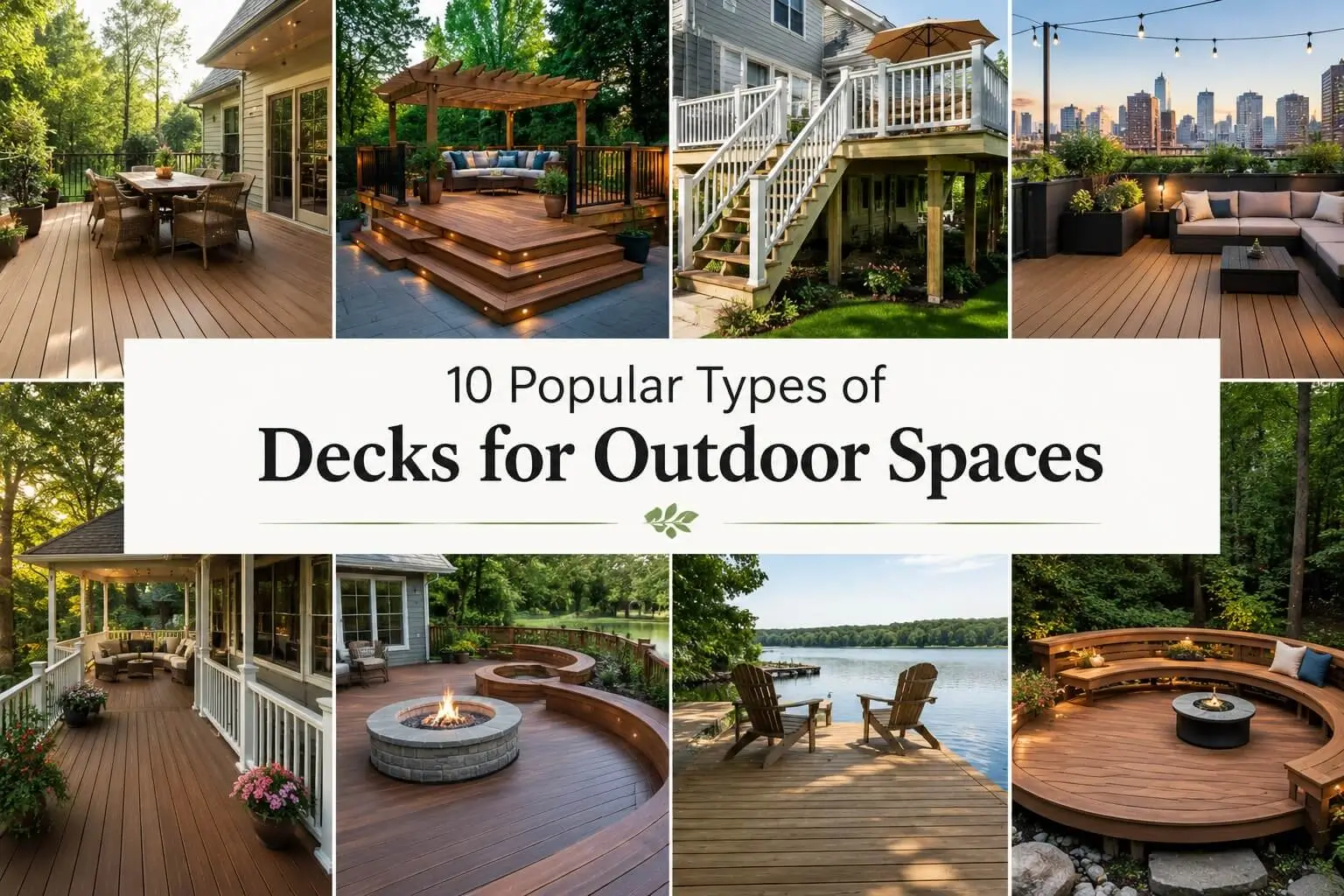
This guide covers ten popular deck styles homeowners continue choosing for modern outdoor living.
Exploring Different Types of Decks for Outdoor Living Spaces
Several types of decks fit different home styles and backyard layouts. Some focus on maximizing space, while others create dedicated areas for entertainment and relaxation. Looking at each option carefully can make planning much easier.
1. Attached Deck
Attached decks remain one of the most common options found in residential properties.
Builders connect this structure directly to the home, usually through a back door or sliding glass entrance. Easy accessibility makes this design practical for families who enjoy moving freely between indoor and outdoor spaces.
Dining furniture, outdoor seating, and grills fit naturally into attached layouts.
Popular benefits include:
- Convenient access
- Increased entertaining space
- Works with many home designs
- Cost-effective construction options
Large and small homes both benefit from this classic design.
2. Detached Island Deck
Island decks sit separately from the home and create a destination-like atmosphere in the yard.
Homeowners often install these structures near gardens, pools, water features, or shaded areas. Placement flexibility allows better use of underutilized backyard sections.
Comfortable seating, fire pits, and decorative landscaping commonly surround detached deck areas.
People looking for a peaceful outdoor escape often prefer this setup.
3. Multi-Level Deck
Properties with slopes or uneven landscapes frequently benefit from multi-level construction.
Several connected platforms create distinct activity zones. One level may include dining furniture while another becomes a lounge area or outdoor kitchen.
Visual interest increases dramatically with tiered layouts.
Families often appreciate having dedicated sections for:
- Dining
- Relaxation
- Entertainment
- Outdoor cooking
Many premium homes use this design because it creates a customized backyard experience.
Several types of decks can also incorporate multiple levels for improved functionality.
4. Wraparound Deck
Wraparound decks extend along two or more sides of a house.
Traditional homes, farmhouses, and larger properties often pair beautifully with this design. Extra walking space creates a more open feeling while improving outdoor access points.
Morning coffee, evening conversations, and family gatherings naturally fit this layout.
Wide views become a major advantage for homeowners with scenic surroundings.
5. Rooftop Deck
Urban homeowners frequently use rooftop spaces to create private outdoor retreats.
Limited yard space no longer prevents homeowners from enjoying fresh air and outdoor living. Rooftop decks transform unused areas into practical entertainment zones.
Design features commonly include:
- Outdoor seating
- Planters
- Shade structures
- Lighting systems
- Small kitchens
Structural planning becomes especially important because rooftop installations require proper support and drainage systems.
6. Pool Deck
Pool decks provide comfort, safety, and visual appeal around swimming areas.
Surface materials should remain slip-resistant and durable under constant exposure to moisture and sunlight. Composite materials, treated wood, and certain pavers commonly appear around pool spaces.
Families often include lounge chairs, umbrellas, and outdoor bars to complete the setup.
Comfort matters because certain surfaces can become uncomfortably hot during summer afternoons.
7. Raised Deck
Raised decks sit above ground level and work especially well for homes with elevated entrances or sloped yards.
Support posts and stairs help connect the deck area with surrounding landscapes.
Homes with walkout basements frequently use raised structures because they maximize available outdoor space.
Several homeowners choose this style because it can create attractive views overlooking gardens, pools, or natural scenery.
Numerous types of decks work effectively in elevated installations.
8. Ground-Level Deck
Ground-level decks rest close to the surface and create a seamless transition into backyard spaces.
Installation often costs less because extensive support structures may not be necessary.
Small homes and compact yards benefit significantly from this style.
Simple furniture arrangements can quickly turn these areas into inviting spaces for:
- Outdoor dining
- Relaxing
- Reading
- Family activities
Maintenance also tends to remain straightforward.
9. Composite Deck
Composite decking continues growing in popularity across the United States.
Manufacturers create composite boards using recycled wood fibers and plastic materials. Homeowners appreciate the lower maintenance requirements compared with traditional wood.
Common advantages include:
- Reduced fading
- Resistance to insects
- Minimal upkeep
- Long lifespan
Busy households often choose composite materials because annual staining and sealing become unnecessary.
Several types of decks now use composite materials for improved durability and easier maintenance.
10. Covered Deck
Covered decks provide protection against direct sunlight and changing weather conditions.
Pergolas, roof extensions, retractable awnings, and shade structures help improve comfort throughout the year.
Outdoor televisions, fireplaces, and ceiling fans have become common additions to covered spaces.
Families who enjoy spending long hours outdoors often find this design especially useful.
A covered structure also protects furniture and decorative elements from weather exposure.
Important Factors to Consider Before Building a Deck
Visual appeal matters, but smart planning deserves equal attention before construction begins.
Budget
Material costs vary significantly depending on size and design complexity.
Maintenance Needs
Wood requires regular sealing and upkeep. Composite options generally need less attention.
Local Weather Conditions
Snow, heavy rainfall, humidity, and direct sunlight can affect long-term performance.
Backyard Layout
Certain types of decks work better in large open spaces, while others suit smaller properties.
Lifestyle Requirements
Families who host guests frequently may need larger entertainment areas than homeowners looking for a quiet retreat.
Careful planning usually prevents expensive adjustments later.
Final Thoughts
Outdoor spaces continue evolving into places where people gather, relax, and spend meaningful time together. A deck can completely change the atmosphere of a backyard and add practical value to a property.
Homeowners continue exploring different types of decks because every yard, lifestyle, and design goal looks different. A wraparound design may fit one property perfectly, while a multi-level layout may create better functionality somewhere else.
Good planning, durable materials, and a layout that complements the home often lead to better long-term results. Taking time to compare different types before beginning construction can help homeowners create an outdoor space they truly enjoy for years ahead.