
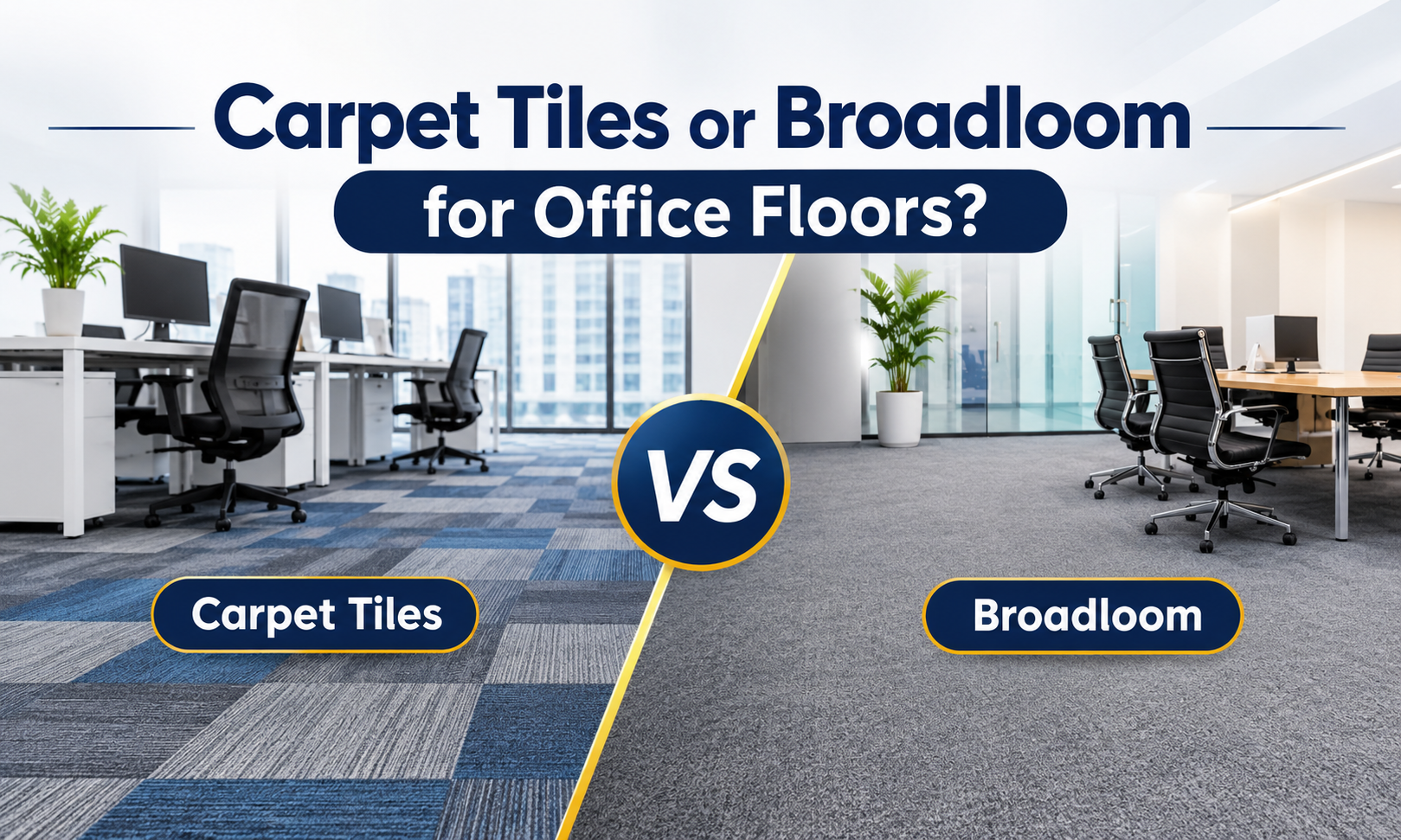
Choosing the right flooring is an important part of designing a professional office environment. Office floors experience constant foot traffic, moving furniture, rolling chairs, and everyday wear. The flooring you select should offer durability, comfort, easy maintenance, and a professional appearance without creating unnecessary replacement costs.
Two popular options for commercial spaces are carpet tiles and broadloom carpet. Both can improve workplace comfort and aesthetics, but they differ in installation, maintenance, flexibility, and long-term value.
Understanding the differences can help business owners, property managers, and facility professionals make a practical flooring decision. In this guide, we compare both options, explore their advantages, and explain which solution may work best for different office environments.
What Are Carpet Tiles?
Carpet tiles are individual sections of carpet manufactured in standard modular sizes. They are installed next to each other to create a continuous flooring surface. Unlike traditional wall-to-wall carpet, individual sections can be removed, replaced, or rearranged when necessary.
They are commonly used in:
-
Corporate offices and meeting rooms
-
Commercial buildings
-
Educational facilities
-
Healthcare environments
-
High-traffic workspaces
Their modular design makes them particularly useful for businesses that want flexible flooring solutions.
What Is Broadloom Office Carpet?
Broadloom carpet is a traditional wall-to-wall flooring option manufactured in large rolls. It is cut to fit the dimensions of a room and installed as one continuous surface.
Broadloom office carpet is often selected for spaces where a seamless appearance and consistent flooring design are priorities.
Common applications include:
-
Executive offices
-
Conference rooms
-
Hotel interiors
-
Reception areas
-
Large commercial spaces
It offers a smooth, uninterrupted appearance and comes in various colours, textures, and patterns.
Carpet Tiles Comparison: Key Differences
Both flooring options have practical advantages, but their performance can vary depending on the office environment, installation quality, and maintenance requirements.
| Feature | Carpet Tiles | Broadloom Carpet |
|---|---|---|
| Installation | Individual sections | Large carpet rolls |
| Replacement | Individual tiles | Larger sections or entire areas |
| Maintenance | Easier spot replacement | More extensive repairs |
| Design | Flexible patterns | Seamless appearance |
| Waste | Generally less installation waste | Cutting may create more waste |
| Long-term flexibility | High | More limited |
The right choice depends on your workspace requirements, budget, and expected maintenance needs.
Modular Carpet Benefits for Modern Offices
Modular flooring offers several advantages for businesses that want practical and adaptable interiors.
1. Easier Repairs and Replacement
One of the biggest advantages is the ability to replace individual damaged sections. If a particular area becomes stained or worn, there is usually no need to replace the entire floor.
2. Flexible Design Options
Different colours, patterns, and layouts allow businesses to create distinctive office interiors. Flooring can also help define separate work zones without installing physical partitions.
3. Reduced Maintenance Disruption
Individual sections can be removed and replaced with less disruption than replacing a large continuous carpet area. This is especially useful in offices that operate throughout the week.
4. Better Adaptability
As workplaces change, modular flooring can make future adjustments easier. Businesses can replace selected areas or introduce different patterns when updating their interiors.
Advantages of Broadloom Office Carpet
Although modular flooring offers flexibility, broadloom remains a strong option for many commercial interiors.
1. Seamless Appearance
Broadloom creates a continuous flooring surface that works particularly well in formal office environments and large conference rooms.
2. Comfortable Underfoot
Depending on its construction and backing, broadloom can provide a soft, comfortable surface that helps create a welcoming workplace.
3. Wide Design Selection
Businesses can choose from different textures, colours, patterns, and carpet qualities to complement their interior design.
4. Suitable for Large Spaces
For certain room layouts, broadloom can provide an attractive and consistent finish with fewer visible joins.
Office Carpet Maintenance: Which Option Is Easier?
Maintenance is an important consideration when choosing commercial flooring. Daily foot traffic, accidental spills, dust, and furniture movement can gradually affect carpet appearance.
Both flooring types require regular cleaning, but their repair processes are different.
For carpet tiles:
-
Vacuum regularly to remove dust and debris.
-
Clean spills quickly to prevent permanent stains.
-
Replace damaged or heavily stained sections when necessary.
-
Keep spare tiles available for future repairs.
For broadloom carpet:
-
Schedule regular vacuuming and professional cleaning.
-
Treat spills immediately using suitable cleaning products.
-
Address damaged areas before they deteriorate further.
-
Arrange professional repairs when seams or sections become damaged.
For businesses prioritising easier spot replacement, modular flooring may offer a practical advantage.
Carpet Replacement Options: What Should Businesses Consider?
Before selecting office flooring, consider how easily it can be maintained and replaced over time.
Important factors include:
-
Office traffic: Busy workspaces need flooring designed for frequent use.
-
Installation budget: Compare initial material and installation costs.
-
Maintenance requirements: Consider cleaning schedules and repair expenses.
-
Interior design: Choose colours and patterns that complement your workplace.
-
Future flexibility: Think about renovations, office expansion, and layout changes.
Carpet replacement decisions should also consider the condition of the existing subfloor, product availability, and the possibility of matching replacement materials.
How Atlas GC Can Help with Commercial Flooring Projects
Selecting commercial flooring is only one part of creating a functional and professional workplace. Proper planning, material selection, and quality construction work all contribute to a successful interior renovation.
Atlas GC understands the importance of creating commercial environments that balance appearance, functionality, and long-term performance. From planning considerations to broader commercial construction requirements, having an experienced construction partner can help businesses approach renovation projects with greater confidence.
Whether you are updating an existing office, improving a commercial interior, or planning a new workspace, flooring decisions should complement the overall building design.
Atlas GC focuses on practical construction solutions that support the needs of modern commercial properties. Its approach emphasises thoughtful planning, quality workmanship, and attention to project requirements.
When considering office flooring, businesses should evaluate how different materials will perform within their specific environment. Working with experienced construction professionals can help coordinate flooring choices with other renovation elements, including space planning, interior finishes, and functional requirements.
Explore Atlas GC to learn more about its construction services and how professional project support can contribute to successful commercial improvements.
Frequently Asked Questions (FAQs)
1. Are carpet tiles better than broadloom for offices?
Carpet tiles are often better for offices that need easy repairs, flexible designs, and individual section replacement. Broadloom may be preferable when a seamless appearance is the main priority.
2. How long does commercial carpet typically last?
Commercial carpet lifespan depends on material quality, foot traffic, installation, and maintenance. Well-maintained products can last several years, although high-traffic areas may require earlier replacement.
3. Can individual carpet tiles be replaced?
Yes. Individual damaged or stained tiles can generally be removed and replaced without changing the entire flooring surface.
4. Is broadloom carpet suitable for high-traffic offices?
Yes. Commercial-grade broadloom can perform well in busy offices when the appropriate construction, backing, and carpet quality are selected.
5. Are carpet tiles easy to maintain?
They are generally practical to maintain because individual sections can be replaced when damaged. However, regular vacuuming and prompt stain treatment remain important.
6. Which flooring option is more cost-effective?
The overall cost depends on material quality, installation, cleaning, repairs, and replacement frequency. Comparing lifecycle costs provides a more accurate picture than considering the initial purchase price alone.
7. Can carpet tiles and broadloom be used together?
Yes. Businesses can combine both flooring types in different areas, depending on design requirements, room functions, and expected foot traffic.
Conclusion: Choosing the Right Office Flooring
Both flooring options offer valuable benefits for commercial environments. Broadloom provides a smooth, continuous appearance, while modular flooring offers flexibility, easier repairs, and convenient replacement options.
The best solution depends on your office layout, maintenance expectations, budget, and long-term business needs. Before making a decision, compare product quality, installation requirements, and overall lifecycle costs.
Planning a commercial renovation or office upgrade? Partner with experienced construction professionals to make informed decisions about your workspace. Visit Atlas GC at https://atlasgc.org/ to explore professional construction solutions for your next project.


