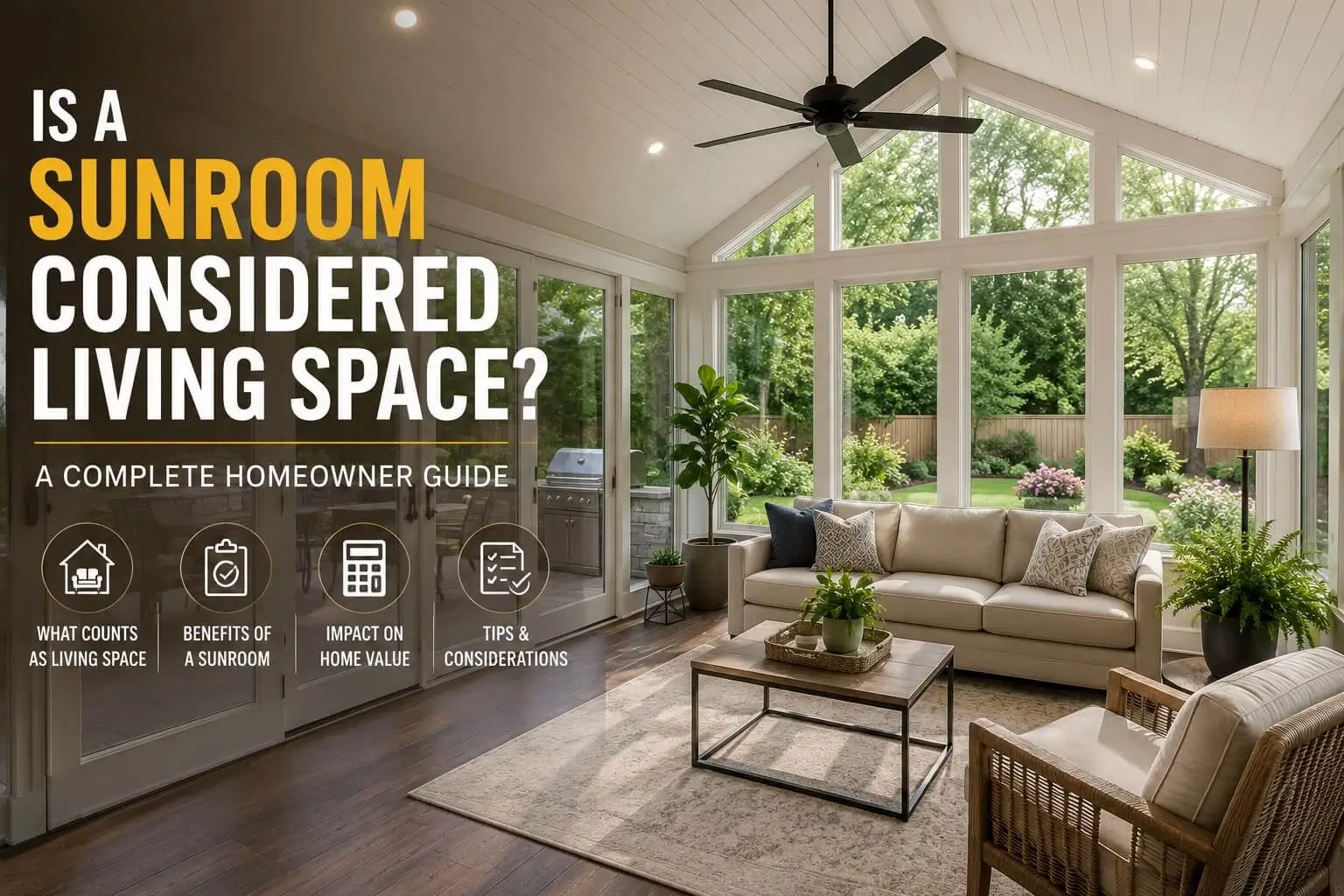
Natural light changes the feeling of a home in a way few additions can. A bright room filled with sunshine creates a cozy place for reading, family gatherings, coffee breaks, or simply relaxing after a long day. That is exactly why many homeowners invest in sunrooms. A common question starts popping up once the project moves from planning to paperwork: is a sunroom considered living space?
The answer is not always simple. Several factors decide if a sunroom counts as official living space in a home. Construction style, heating systems, local building codes, permits, insulation, and appraisal standards all play a role. Homeowners often assume every enclosed room automatically adds square footage, but that is not always true.
A clear understanding of the rules can help avoid confusion during home sales, tax assessments, insurance discussions, and property appraisals.
Understanding Is a Sunroom Considered Living Space and What Counts as Living Space
Residential living space usually refers to areas inside a home designed for year-round use. Those spaces normally have permanent heating, proper cooling, finished walls, insulated floors, electrical systems, and compliance with local building regulations.
Bedrooms, kitchens, bathrooms, dining rooms, and family rooms generally fit into this category.
Sunrooms, however, sit in a slightly different category. Some resemble enclosed porches while others function almost like a full room addition. That distinction matters because the answer depends heavily on how the structure was built.
A room cannot simply look attractive; it must meet functional and legal standards too.
Types of Sunrooms Matter More Than Most People Think
Not every sunroom serves the same purpose. Builders generally classify sunrooms into different categories.
Three-Season Sunrooms
Three-season sunrooms are designed mainly for spring, summer, and fall use. These spaces often lack full insulation and permanent heating systems.
Large glass panels and lightweight construction make them comfortable in mild weather but difficult to use during cold winters or very hot summers.
Most appraisers and real estate professionals do not count three-season rooms as official living space.
Four-Season Sunrooms
Four-season rooms are designed for year-round use. Strong insulation, climate control systems, electrical wiring, and permanent construction make them much closer to traditional rooms.
Many homeowners asking is a sunroom considered living space discover that four-season rooms have a greater chance of being included in total square footage.
Even then, local regulations still determine the final answer.
Building Codes Play a Huge Role
Local municipalities establish building standards for residential properties. Requirements often vary by city and state across the United States.
Building officials may examine:
- Heating systems
- Ceiling height
- Electrical installation
- Flooring standards
- Insulation quality
- Foundation type
- Permit approval
- Access to the home
A sunroom built without permits may create issues later, even if it looks professionally finished.
Permanent Heating Usually Makes a Big Difference
Heating systems frequently become a deciding factor.
Portable heaters generally do not qualify as permanent solutions. Space heaters or temporary units rarely satisfy appraisal guidelines.
Permanent heating systems may include:
- HVAC extensions
- Central heating connections
- Electric baseboard systems
- Mini-split installations
- Radiant floor heating
Many appraisers follow standards requiring rooms to remain comfortable throughout the year.
That is one reason homeowners asking is a sunroom considered living space hear different answers from different professionals.
A beautiful room without year-round comfort sometimes falls short.
Appraisers Follow Specific Rules
Home appraisers use recognized standards when calculating gross living area.
Guidelines often require spaces to have:
- Finished construction
- Similar quality as the main home
- Permanent heating
- Direct access from interior spaces
- Year-round usability
Sunrooms failing one or more requirements may receive separate value rather than inclusion in overall square footage.
A room still adds worth even if it does not count officially.
That point surprises many homeowners researching is a sunroom considered living space before putting their property on the market.
Extra usable space still attracts buyers.
Home Value Impact Can Still Be Significant
Property value does not rely solely on official square footage numbers.
Homebuyers often place strong emotional value on bright, comfortable spaces.
A well-designed sunroom creates:
- Better natural lighting
- Expanded entertaining space
- Relaxation areas
- Indoor-outdoor living experiences
- Enhanced visual appeal
Real estate agents regularly highlight attractive sunrooms because buyers love the lifestyle benefits.
A properly designed addition may increase overall market appeal even if it receives separate classification.
Insurance Companies May View Things Differently
Insurance providers sometimes evaluate sunrooms separately from appraisers.
Coverage can depend on:
- Construction materials
- Attached versus detached design
- Permit status
- Structural quality
- Climate exposure
Sunrooms with large glass areas occasionally create additional considerations due to weather-related risks.
Questions surrounding is a sunroom considered living space sometimes appear during insurance reviews as well.
Checking with providers before construction begins helps prevent surprises later.
Tax Assessments Can Change Too
Property taxes may increase after adding a sunroom.
Local assessors examine home improvements and determine whether the addition raises property value.
Official living space classification can influence tax calculations, though regulations vary widely.
Some homeowners feel surprised after completing a project only to receive updated assessments months later.
Asking local authorities early creates a clearer picture.
Questions Homeowners Should Ask Before Building
Planning ahead can save time, money, and future headaches.
Consider asking:
- Will permits be required?
- Can HVAC extend into the room?
- Does local code allow year-round occupancy?
- Will the foundation match home requirements?
- How will appraisers classify the addition?
- Will taxes increase?
Small details during design stages often affect future property value.
Final Thoughts
A straightforward yes-or-no answer rarely applies here. Construction quality, heating systems, permits, insulation, local codes, and appraisal standards all shape the outcome.
The question is a sunroom considered living space depends largely on whether the room functions like the rest of the home throughout the entire year. Four-season rooms with permanent climate systems and approved construction usually have a stronger chance of qualifying.
A three-season room can still bring tremendous value even without official living-space classification.
Sunrooms create comfort, beauty, and additional room for everyday life. Understanding the rules before building simply helps homeowners make smarter decisions and avoid unpleasant surprises later.
Home improvement projects work best when beauty and practicality move together.