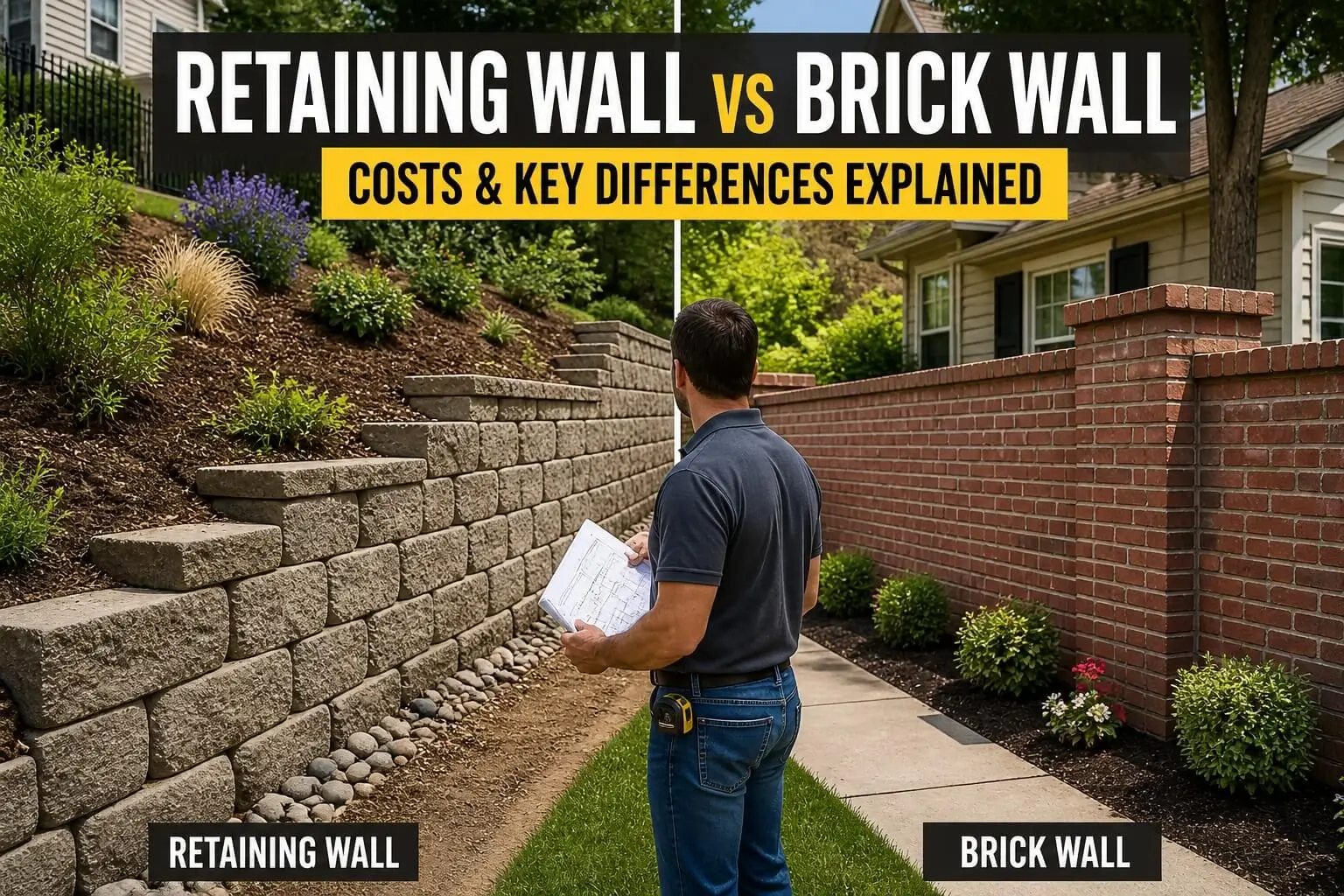
A lot of homeowners mix these two up at first glance, and it’s understandable. Both look solid, both use masonry, and both can boost curb appeal. That said, they serve completely different purposes. Choosing the wrong one isn’t just a design mistake; it can turn into a costly structural issue down the road.
Let’s discuss this in a practical real-world way and especially discuss retaining walls vs. brick walls in detail so you can make the right call, especially if you’re planning a landscaping or outdoor upgrade in the U.S.
Retaining Wall Vs Brick Wall
What a Retaining Wall Actually Does?
A retaining wall is built to hold back soil. Sloped yards, erosion-prone areas, or properties with elevation changes rely on these walls to stay stable.
Think pressure. Tons of it.
Soil expands when wet, contracts when dry, and constantly pushes against the wall. That’s why retaining walls require:
- Proper drainage systems
- Reinforcement (like rebar or geogrid)
- Engineered design in many cases
Mess this up, and the wall won’t just crack, it can fail entirely.
Professionals offering spa construction and remodeling services often deal with retaining walls when building spas on uneven terrain. A poorly designed wall can compromise the entire installation.
What a Brick Wall Is Meant For
Brick walls, on the other hand, are mostly structural or decorative.
They’re commonly used for:
- Property boundaries
- Garden enclosures
- Exterior walls of homes
- Aesthetic landscaping features
They’re not designed to hold back soil pressure. Sure, they’re strong in compression, but lateral pressure (like soil pushing sideways) is a different story.
Trying to use a standard brick wall as a retaining wall without reinforcement is asking for trouble.
Key Structural Differences
Here’s where things really separate:
Retaining Wall
- Built to resist lateral soil pressure
- Includes drainage (weep holes, gravel backfill, pipes)
- Often engineered
- Uses materials like concrete blocks, poured concrete, or stone
Brick Wall
- Designed for vertical load (weight from above)
- Minimal or no drainage system
- Typically not engineered for soil retention
- Primarily aesthetic or structural for buildings
Contractors involved in spa construction and remodeling services understand this difference well, especially when integrating water features into sloped landscapes and evaluating retaining wall vs brick wall.
Cost Comparison in the U.S.
Now to the part most homeowners care about, cost.
Retaining Wall Costs
- $20 to $60 per square foot (average range)
- Complex projects can exceed $100/sq ft
- Engineering, drainage, and labor drive costs up
Brick Wall Costs
- $10 to $30 per square foot
- Decorative walls fall on the lower end
- Structural walls cost more but still less than retaining walls
A retaining wall almost always costs more when comparing retaining wall vs brick wall. The reason is simple: it does more work behind the scenes.
Skimping here doesn’t save money, it delays a bigger repair bill.
Drainage: The Make-or-Break Factor
Water changes everything.
Retaining walls must handle water buildup behind them. Without proper drainage:
- Pressure increases dramatically
- Cracks start forming
- Wall failure becomes likely
Brick walls don’t typically deal with this issue because they’re not holding back soil.
Many outdoor projects, especially those involving spa construction and remodeling services, require careful drainage planning. Water features plus soil pressure can create a perfect storm if not handled correctly.
Permits and Regulations in the U.S.
Retaining walls often require permits, especially if:
- Height exceeds 3–4 feet
- They support a slope or structure
- They impact drainage patterns
Local building codes may also require an engineer’s approval.
Brick walls usually have fewer restrictions unless they’re:
- Load-bearing
- Very tall
- Located near property lines
Skipping permits can lead to fines or forced removal. Not worth the risk.
When to Choose a Retaining Wall
A retaining wall is the right choice if:
- Your yard has a slope
- Soil erosion is a concern
- You’re creating terraces or leveled areas
- Supporting structures like patios or spas
Projects involving spa construction and remodeling services often need retaining walls to create a stable, level base. No shortcuts here, stability matters.
When a Brick Wall Makes More Sense
Go with a brick wall if:
- You want aesthetic appeal
- Defining property boundaries
- Adding privacy or enclosure
- Building vertical structures without soil pressure
Brick walls shine in design and visual appeal. Structural strength is there, but only in the right direction.
Can a Brick Wall Be Used as a Retaining Wall?
Short answer: not safely, unless it’s specifically engineered.
Some reinforced brick retaining walls exist, but they:
- Include steel reinforcement
- Have proper footings
- Integrate drainage systems
At that point, it’s no longer a “simple brick wall.” It becomes a hybrid structure, often more expensive than standard retaining wall systems.
Professionals in spa construction and remodeling services avoid this shortcut entirely. Reliability matters more than aesthetics when soil pressure is involved.
Longevity and Maintenance
Retaining Walls
- Lifespan: 50–100 years (when built correctly)
- Maintenance: drainage checks, crack monitoring
Brick Walls
- Lifespan: 50+ years
- Maintenance: mortar repair, cleaning
A failing retaining wall can become a safety hazard. A worn brick wall is usually just cosmetic.
Final Thoughts
Choosing between a retaining wall and a brick wall comes down to purpose, not preference.
A retaining wall handles pressure, movement, and water. A brick wall handles structure and style. Mixing those roles without proper design leads to expensive fixes.
Careful planning pays off, especially for outdoor upgrades. Many homeowners investing in spa construction and remodeling services discover that the foundation and surrounding structures matter just as much as the spa itself, which becomes even clearer when comparing retaining wall vs brick wall.
Solid groundwork, proper materials, and smart design choices always win in the long run.