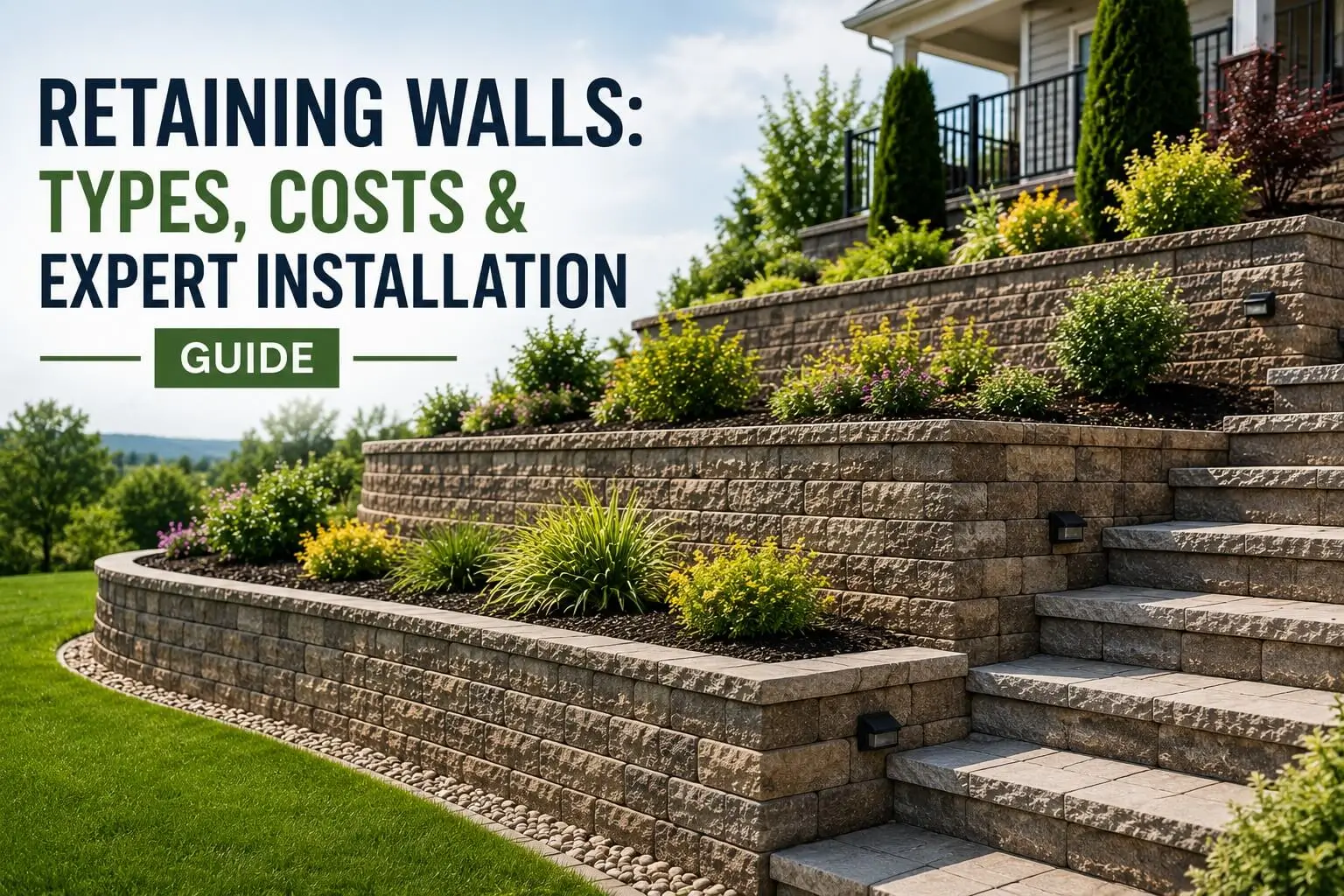
A well-built retaining wall does a lot more than hold back soil. It protects landscapes, prevents erosion, adds structure to outdoor spaces, and can completely change the look of a property. Homes built on sloped ground especially benefit from retaining walls because they help manage pressure, drainage, and uneven terrain before bigger structural issues appear.
Many homeowners start searching for options after noticing soil sliding during heavy rain, cracks near garden edges, or uneven areas forming around patios and driveways. A properly planned wall solves those problems while also improving curb appeal and property value.
Plenty of retaining wall projects fail because people focus only on appearance and ignore drainage, base preparation, and soil pressure. Good planning matters just as much as the materials themselves. Understanding design choices, labor requirements, and long-term durability helps homeowners avoid expensive repairs later.
What Is a Retaining Wall?
A retaining wall is a specially engineered structure designed to hold soil behind it. Landscapes with slopes, raised gardens, hillsides, or uneven grading often need one to stabilize the area and reduce erosion risks.
Residential properties commonly use retaining walls for:
- Backyard leveling
- Driveway support
- Garden borders
- Pool areas
- Outdoor living spaces
- Erosion control
- Drainage management
Strong construction becomes especially important in regions with heavy rainfall or shifting soil conditions. Poor drainage behind the wall can slowly weaken the structure over time, which is why professional planning makes a major difference.
Popular Types of Retaining Walls
Different projects require different wall systems. Soil conditions, height requirements, drainage, and budget all influence the right choice.
Gravity Retaining Walls
Gravity walls rely on their own weight to resist soil pressure. Stone, concrete blocks, and large masonry units are commonly used here.
Benefits include:
- Simple construction
- Natural appearance
- Good durability
- Minimal maintenance
Smaller residential landscapes often use gravity walls because they blend nicely into outdoor spaces.
Cantilever Retaining Walls
Cantilever systems use reinforced concrete and structural footing support to hold back heavier soil loads. Engineers typically recommend these for taller walls or properties with significant slope pressure.
Advantages include:
- Strong structural support
- Long lifespan
- Ideal for larger properties
- Efficient material usage
Professional planning is essential with this style because incorrect reinforcement can create serious safety problems.
Segmental Retaining Walls
Segmental walls use interlocking concrete blocks without mortar. Homeowners frequently choose them because they combine strength with modern design flexibility.
Reasons they are popular:
- Attractive appearance
- Easier repairs
- Faster installation
- Good drainage capability
Many modern landscaping projects now prefer segmental systems due to their clean finish and long-term reliability.
Timber Retaining Walls
Timber walls create a warm, natural look that works well in gardens and rustic outdoor settings.
Pros include:
- Lower upfront pricing
- Natural appearance
- Quick setup
Still, timber usually has a shorter lifespan compared to concrete or stone, especially in areas with high moisture exposure.
Factors That Affect Retaining Wall Cost
Every project comes with different site conditions, labor demands, and material choices. Several things influence overall pricing.
Wall Height
Taller walls require deeper foundations, stronger reinforcement, and more engineering work. Costs increase significantly once walls exceed certain height limits.
Material Selection
Concrete blocks, natural stone, timber, and poured concrete all carry different pricing ranges. Natural stone usually costs more because installation takes additional labor and craftsmanship.
Drainage Systems
Drainage often gets overlooked, yet it plays one of the biggest roles in wall performance. Gravel backfill, perforated pipes, and drainage outlets help relieve water pressure behind the structure.
Soil Conditions
Rocky terrain, unstable soil, or steep slopes can increase excavation and labor expenses.
Permit Requirements
Some states and counties require engineering approvals or permits for taller retaining walls. Local building codes vary across the United States.
Homeowners researching retaining wall cost should understand that cheap shortcuts almost always lead to expensive repairs later. Drainage failures, leaning walls, and cracked foundations typically happen because proper preparation was skipped during construction.
Average retaining wall cost for residential projects usually ranges between $4,000 and $12,000 depending on size, materials, and complexity. Premium natural stone installations can exceed that range quite easily.
Why Professional Retaining Wall Installation Matters
A retaining wall may look simple on the surface, but structural pressure behind the wall tells a completely different story. Incorrect grading, weak footings, or poor drainage can lead to collapse over time.
Professional retaining wall installation focuses on:
- Proper excavation depth
- Stable compacted base
- Drainage planning
- Soil reinforcement
- Structural alignment
- Long-term durability
Experienced contractors also understand local soil behavior and climate conditions, which helps prevent movement issues later.
Homeowners sometimes attempt DIY retaining wall installation after watching online tutorials, only to realize that water management and soil pressure are far more complicated than expected. Small decorative walls may work as weekend projects, but larger structural systems should always involve professionals.
Step-by-Step Retaining Wall Installation Process
Understanding the general construction process helps homeowners know what to expect during a project.
1. Site Inspection and Planning
Contractors evaluate:
- Soil condition
- Drainage flow
- Slope pressure
- Utility lines
- Permit requirements
Measurements and engineering details are finalized before excavation begins.
2. Execute Excavation
The area gets dug out to create space for the wall base and drainage system. Depth depends on wall size and soil conditions.
3. Base Preparation
Crushed gravel or compacted aggregate forms the foundation layer. Strong base preparation is critical because the entire wall depends on it for stability.
4. Drainage Installation
Drain pipes and gravel backfill reduce hydrostatic pressure behind the wall.
Drainage failures remain one of the biggest causes of retaining wall damage in the United States.
5. Wall Construction
Blocks, stone, timber, or concrete materials are installed carefully while maintaining proper leveling and alignment.
Professional retaining wall installation ensures each course remains structurally balanced throughout the process.
6. Backfilling and Compaction
Soil behind the wall is compacted gradually to minimize shifting later.
7. Final Inspection
Contractors inspect alignment, drainage flow, and overall stability before project completion.
Best Materials for Long-Term Durability
Material selection directly affects maintenance needs and lifespan.
Concrete Blocks
- Durable
- Modern appearance
- Lower maintenance
- Strong structural support
Natural Stone
- Premium appearance
- Excellent longevity
- Unique texture and color variations
Poured Concrete
- Very strong
- Ideal for commercial or tall walls
- Clean modern look
Timber
- Budget-friendly
- Rustic style
- Shorter lifespan in wet climates
Choosing quality materials may increase initial retaining wall cost slightly, but it usually reduces future repairs and maintenance expenses.
Common Retaining Wall Problems
Poor workmanship causes most retaining wall failures.
Typical issues include:
- Leaning walls
- Cracking
- Drainage failure
- Soil erosion
- Bulging sections
- Foundation shifting
Regular inspections help catch smaller issues before they become serious structural concerns.
Professional retaining wall installation dramatically reduces the chances of early failure because proper reinforcement and drainage are built into the system from the beginning.
How to Choose the Right Contractor
Contractor selection matters just as much as the materials themselves.
Look for:
- Licensed professionals
- Insurance coverage
- Portfolio of previous work
- Local experience
- Strong customer reviews
- Clear written estimates
Reliable contractors explain drainage systems, engineering requirements, and realistic timelines without making exaggerated promises.
Discussions about retaining wall cost should always include excavation, drainage, permits, materials, labor, and cleanup so there are no surprises later.
Final Thoughts
Retaining walls bring together function, safety, and visual appeal in one project. Strong construction protects landscapes while creating cleaner, more usable outdoor spaces. Good design also improves property value and reduces long-term erosion risks.
Every successful project starts with proper planning, quality materials, and skilled workmanship. Shortcuts may lower initial retaining wall cost temporarily, but structural problems later often become far more expensive.
Professional retaining wall installation gives homeowners confidence that drainage, soil pressure, and structural stability are all handled correctly. A properly built wall can last for decades while continuing to improve both appearance and functionality across the property.