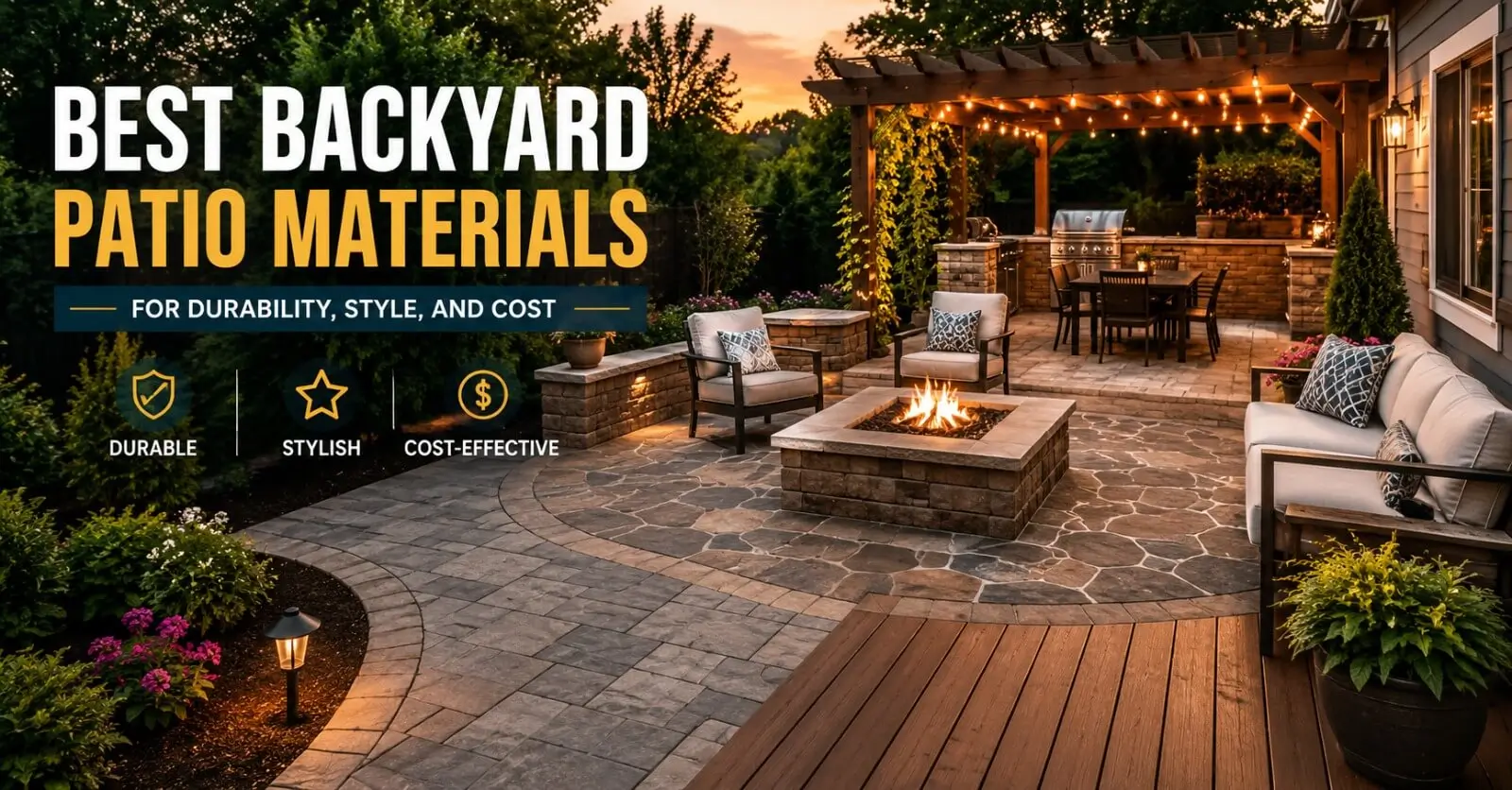
A backyard patio can completely change the way a home feels. Quiet mornings with coffee, weekend barbecues, family gatherings, or simply a place to sit after a long day, a patio becomes more than an outdoor surface. It turns into a lived-in extension of the house. Still, choosing the right material often feels harder than expected because every option promises durability, beauty, and value.
Some materials survive harsh winters better. Others stay cooler under summer heat. A few look stunning at first but demand constant maintenance later. Smart homeowners usually focus on balancing three things together: long-term durability, visual appeal, and overall cost.
This guide breaks down the best backyard patio materials available today, including their strengths, weaknesses, maintenance needs, and where they work best.
Best backyard patio materials for Long-Term Value
Picking patio flooring without considering climate, maintenance, and foot traffic usually leads to regret a few years later. Strong materials save money over time because repairs and replacements become less frequent.
Here are the most reliable choices homeowners across the USA continue to prefer.
Concrete Patio
Concrete remains one of the most practical and affordable patio choices in America. Builders recommend it frequently because it works with almost every home style, from modern farmhouses to suburban properties.
Plain concrete may appear basic, but decorative finishes changed the game entirely. Stamped concrete can imitate brick, natural stone, or even wood textures at a fraction of the price.
Benefits include:
- Affordable installation cost
- Long lifespan with proper sealing
- Minimal maintenance
- Excellent for large patio areas
- Wide variety of finishes and colors
Drawbacks still exist. Cracking can happen in regions with freeze-thaw cycles. Repair work also becomes noticeable if the slab shifts over time.
Concrete works best for homeowners seeking dependable backyard patio materials without overspending.
Natural Stone Patio
Natural stone delivers a timeless appearance that instantly raises curb appeal. Bluestone, flagstone, slate, and travertine remain especially popular in upscale outdoor designs.
Each stone piece carries unique color variations and textures, giving patios a premium handcrafted appearance. Few materials compete with the elegance of real stone.
Advantages include:
- Exceptional durability
- Luxurious aesthetic
- Heat resistance
- Strong resale value
- Natural slip resistance
Cost becomes the biggest hurdle. Installation requires skilled labor, and premium stones can become expensive quickly.
Brick Patio
Brick patios carry a classic East Coast charm many homeowners still love. Historic homes, colonial architecture, and cottage-style properties pair beautifully with brick surfaces.
A properly installed brick patio can last decades. Individual pavers also make repairs easier because damaged sections can be replaced without tearing apart the whole patio.
Strong points include:
- Traditional appearance
- Excellent durability
- Easy repairs
- Good drainage
- Eco-friendly options available
Weeds between joints can become annoying if maintenance gets ignored. Brick may also become slippery when moss develops in damp regions.
Among all backyard patio materials, brick remains one of the most visually warm and welcoming choices.
Paver Patio
Concrete pavers gained massive popularity during the last decade for one simple reason: flexibility. Homeowners can create almost any shape, pattern, or color combination imaginable.
Interlocking pavers also handle shifting ground better than poured concrete because individual units move slightly without major cracking.
Benefits include:
- Endless design possibilities
- Strong durability
- Easy replacement
- Better resistance to cracking
- Faster installation than stone
Initial costs usually fall somewhere between concrete and natural stone. Cheap pavers, however, may fade over time under intense sunlight.
Pavers continue ranking among the top backyard patio materials for families wanting both customization and practicality.
Gravel Patio
Gravel patios deserve more credit than they often receive. Budget-conscious homeowners appreciate how quickly a gravel patio can transform an empty backyard into a functional outdoor living space.
Pea gravel and decomposed granite remain especially common for relaxed outdoor settings.
Major advantages include:
- Extremely affordable
- Easy DIY installation
- Excellent drainage
- Rustic appearance
- Low material cost
Loose stones can shift under furniture and foot traffic. Occasional raking becomes necessary to maintain a neat appearance.
Comparing Durability and Maintenance
Durability matters more than many homeowners initially realize. Patio materials face constant punishment from rain, UV exposure, snow, dirt, grills, pets, and furniture movement.
Here’s a simple comparison:
| Material | Durability | Maintenance Level | Lifespan |
| Concrete | High | Low | 25-30 years |
| Natural Stone | Very High | Medium | 40+ years |
| Brick | High | Medium | 25+ years |
| Pavers | High | Low-Medium | 30 years |
| Gravel | Medium | Medium | Unlimited with upkeep |
Climate also plays a huge role. Travertine performs wonderfully in hot southern states because it stays cool underfoot. Freeze-prone northern areas often benefit more from pavers due to their flexibility.
Ignoring regional weather patterns when selecting backyard patio materials usually leads to costly repairs later.
Style Matters Just as Much as Strength
A patio should complement the house instead of feeling disconnected from it. Visual harmony improves outdoor appeal dramatically.
Modern homes often pair well with:
- Smooth concrete
- Large-format pavers
- Minimalist stone slabs
Traditional homes usually look better with:
- Brick
- Cobblestone
- Flagstone
Rustic or farmhouse-style homes tend to benefit from:
- Gravel
- Textured pavers
- Natural slate
Color choice matters too. Lighter surfaces stay cooler during summer months, while darker tones hide stains more effectively.
Homeowners searching for stylish backyard patio materials should always consider the architecture of the property before making a final decision.
Budget Considerations Before Installation
Patio costs vary heavily depending on labor, region, and material quality. Material pricing alone never tells the whole story because installation can double the total expense.
General price ranges per square foot:
- Gravel: $5–$10
- Concrete: $8–$18
- Brick: $10–$20
- Pavers: $12–$25
- Natural Stone: $20–$40+
DIY projects reduce costs significantly, especially with gravel or basic pavers. Natural stone installations almost always require professional expertise due to cutting, leveling, and drainage requirements.
Cheap installation often creates expensive problems later. Poor drainage, uneven settling, and weak foundations shorten patio lifespan considerably.
Best Patio Material for Different Needs
Every homeowner values something different. A family with kids may prioritize durability. Retirees may care more about aesthetics and comfort. Entertaining guests regularly may require stain-resistant surfaces.
Here’s a quick breakdown:
Best Overall Value
Concrete pavers deliver the best mix of affordability, appearance, and durability.
Best Luxury Appearance
Natural stone easily wins for elegance and long-term visual appeal.
Best Budget Option
Gravel remains the most cost-effective patio solution.
Lowest Maintenance
Sealed concrete requires very little upkeep over time.
Best for Cold Climates
Interlocking pavers handle freeze-thaw cycles better than poured slabs.
Understanding lifestyle needs helps narrow down the right backyard patio materials much faster.
Final Thoughts
A patio is not just another backyard feature. It becomes the place where birthdays happen, conversations stretch late into the evening, and quiet moments feel a little more peaceful. Material selection affects not only appearance but also comfort, maintenance, and long-term property value.
Concrete works beautifully for practical budgets. Natural stone offers unmatched elegance. Brick brings timeless charm. Pavers balance versatility and durability, while gravel creates relaxed outdoor spaces without major expense.
Strong planning always beats impulse decisions. Climate, maintenance expectations, design preferences, and long-term costs should all shape the final choice.