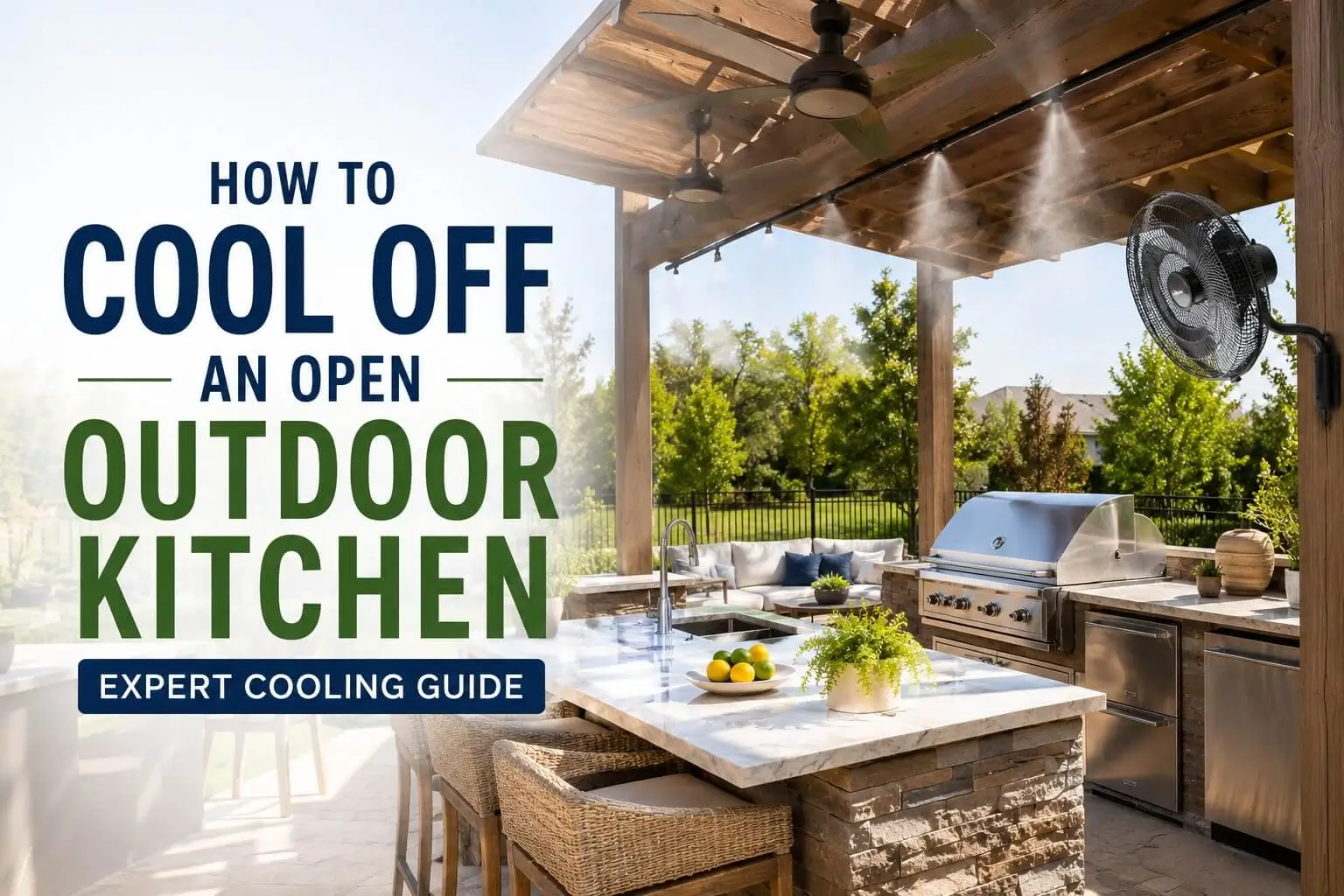
Outdoor kitchens have become a favorite addition for homeowners who enjoy cooking, entertaining, and spending more time outside. Grilling burgers on a summer evening or hosting family gatherings in the backyard sounds perfect, until the heat becomes unbearable. Open outdoor kitchens often deal with direct sunlight, trapped heat from grills, poor airflow, and high summer temperatures that can make cooking uncomfortable.
Many homeowners eventually ask the same question: How to Cool Off an Open Outdoor Kitchen? Finding the right answer matters because comfort plays a huge role in how often the space gets used. A well-designed cooling setup can turn a hot and uncomfortable cooking area into a relaxing outdoor retreat.
Several practical upgrades and small adjustments can make a dramatic difference. Let’s explore the smartest ways to cool down your outdoor cooking space without sacrificing style or functionality.
How to Cool Off an Open Outdoor Kitchen? Smart Cooling Solutions That Work
Anyone researching this issue quickly discovers that there is no single, definitive solution. Heat management works best when multiple strategies work together. Shade, airflow, material choices, and cooling systems all contribute to creating a more comfortable environment.
Add Overhead Shade Structures
Direct sunlight remains one of the biggest reasons outdoor kitchens become uncomfortably hot. Heat builds rapidly when cooking appliances sit under the sun for hours.
Adding overhead coverage can significantly reduce temperatures around your cooking space.
Popular shade options include:
- Pergolas
- Covered patios
- Retractable awnings
- Gazebos
- Insulated roof systems
- Shade sails
Pergolas remain a homeowner favorite because they offer style and function at the same time. Extra comfort can be created by adding climbing plants or retractable canopies.
Insulated patio covers work especially well because they reduce heat transfer better than standard roofing materials.
Many homeowners researching, “how to cool off an open outdoor kitchen” discover that shade often creates the biggest immediate improvement.
Install Outdoor Ceiling Fans
Air movement changes everything in hot outdoor environments. Heat feels far more intense when air remains still.
Outdoor-rated ceiling fans create a constant breeze that improves comfort around cooking and seating areas. Large fans with wider blades move more air and work especially well in covered outdoor kitchens.
Placement matters too.
Fans should sit:
- Above prep stations
- Near dining spaces
- Around gathering areas
- Close to cooking zones without interfering with smoke flow
Moisture-resistant models built specifically for outdoor use perform best and last longer.
Even moderate airflow can reduce the perceived temperature several degrees.
Consider High-Powered Misting Systems
Misting systems have become increasingly popular in warmer states throughout the US.
Fine water droplets released into the air evaporate quickly and lower surrounding temperatures. Good-quality systems cool outdoor areas dramatically without soaking furniture or guests.
Misting systems work especially well in:
- Dry climates
- Covered outdoor kitchens
- Entertainment spaces
- Backyard cooking areas
Several homeowners trying to solve how to cool off an open outdoor kitchen find mist systems surprisingly effective during peak summer months.
Professional installation usually delivers the best performance because nozzle placement directly affects cooling efficiency.
Improve Natural Airflow
Outdoor kitchens sometimes trap heat unintentionally because of poor layout planning.
Large walls, fences, cabinets, and enclosed structures may block natural breezes. Heat accumulates around cooking equipment and stays trapped longer.
Simple layout adjustments can improve airflow:
- Keep pathways open
- Avoid oversized walls around cooking spaces
- Position grills where smoke and heat can escape
- Leave gaps around structures
- Create cross-ventilation opportunities
Natural airflow often costs nothing but creates noticeable comfort improvements.
Small changes sometimes produce surprisingly large results.
Position Appliances Carefully
Grills, smokers, pizza ovens, and side burners generate intense heat. Placement directly affects comfort levels.
Outdoor kitchen designs occasionally place cooking equipment too close together, creating concentrated heat zones.
Better spacing helps reduce heat buildup.
Helpful layout ideas include:
- Separate grills from seating areas
- Avoid placing appliances beside enclosed walls
- Create dedicated cooking zones
- Position heat-producing appliances near open sides
Many people overlook appliance placement when asking how to cool off an open outdoor kitchen, yet it often plays a major role.
Thoughtful design keeps heat away from gathering spaces where people spend most of their time.
Choose Heat-Reflective Materials
Surface materials absorb and hold heat differently.
Dark stone, metal, and concrete can become extremely hot under direct sunlight. Certain materials retain heat well into the evening.
Lighter-colored surfaces reflect sunlight more effectively and stay cooler.
Good options include:
- Light granite countertops
- Reflective pavers
- Light-colored tile
- Natural stone with cooler surface properties
- Heat-resistant composite materials
Material selection affects long-term comfort much more than many homeowners realize.
Add Portable Cooling Equipment
Portable cooling devices provide flexible solutions without requiring large renovations.
Several options include:
- Outdoor evaporative coolers
- Portable misting fans
- Rolling cooling units
- Rechargeable outdoor fans
Portable systems allow homeowners to cool specific areas only when needed.
Larger outdoor spaces often benefit from combining permanent and portable cooling methods.
People exploring this issue also appreciate flexible cooling options because they can adapt to changing weather conditions.
Introduce Greenery Around the Space
Landscaping does more than improve appearance.
Plants naturally cool surrounding environments through shade and moisture release. Strategic landscaping creates a noticeable reduction in heat around outdoor living spaces.
Helpful landscaping choices include:
- Tall shrubs
- Shade trees
- Vertical gardens
- Climbing vines
- Potted plants
Trees positioned correctly can block harsh afternoon sun while improving airflow and visual appeal.
Natural cooling solutions also create a softer and more inviting backyard atmosphere.
Use Retractable Screens
Retractable outdoor screens provide multiple benefits.
Strong sunlight, glare, and heat can all become less intense with properly placed screens.
Modern motorized screens can lower automatically during hotter periods and retract when temperatures become comfortable.
Additional advantages include:
- UV protection
- Reduced insect exposure
- Added privacy
- Better comfort during daytime cooking
Homeowners wanting practical answers to how to cool off an open outdoor kitchen often overlook screens despite their effectiveness.
Upgrade to Better Ventilation Systems
Covered outdoor kitchens may trap smoke and hot air under roofs or enclosed ceilings.
Vent hoods designed for outdoor use pull excess heat away from cooking areas.
Professional-grade ventilation becomes especially important for:
- Built-in grill stations
- Pizza ovens
- Covered cooking areas
- Outdoor kitchens with walls
Ventilation upgrades improve both comfort and cooking performance.
Final Thoughts
Summer entertaining should feel enjoyable rather than exhausting. Excessive heat often prevents homeowners from fully using outdoor kitchen spaces during the hottest months.
Finding the best answer for How to Cool Off an Open Outdoor Kitchen usually involves combining several improvements rather than relying on one fix. Shade structures, airflow upgrades, cooling systems, landscaping, and smart layout decisions work together to create lasting comfort.
Small changes can completely transform how the space feels. A cooler outdoor kitchen encourages longer gatherings, easier cooking experiences, and more enjoyable backyard memories.
Comfort matters just as much as design. Building an outdoor kitchen that stays cool allows homeowners to enjoy their investment during every season.